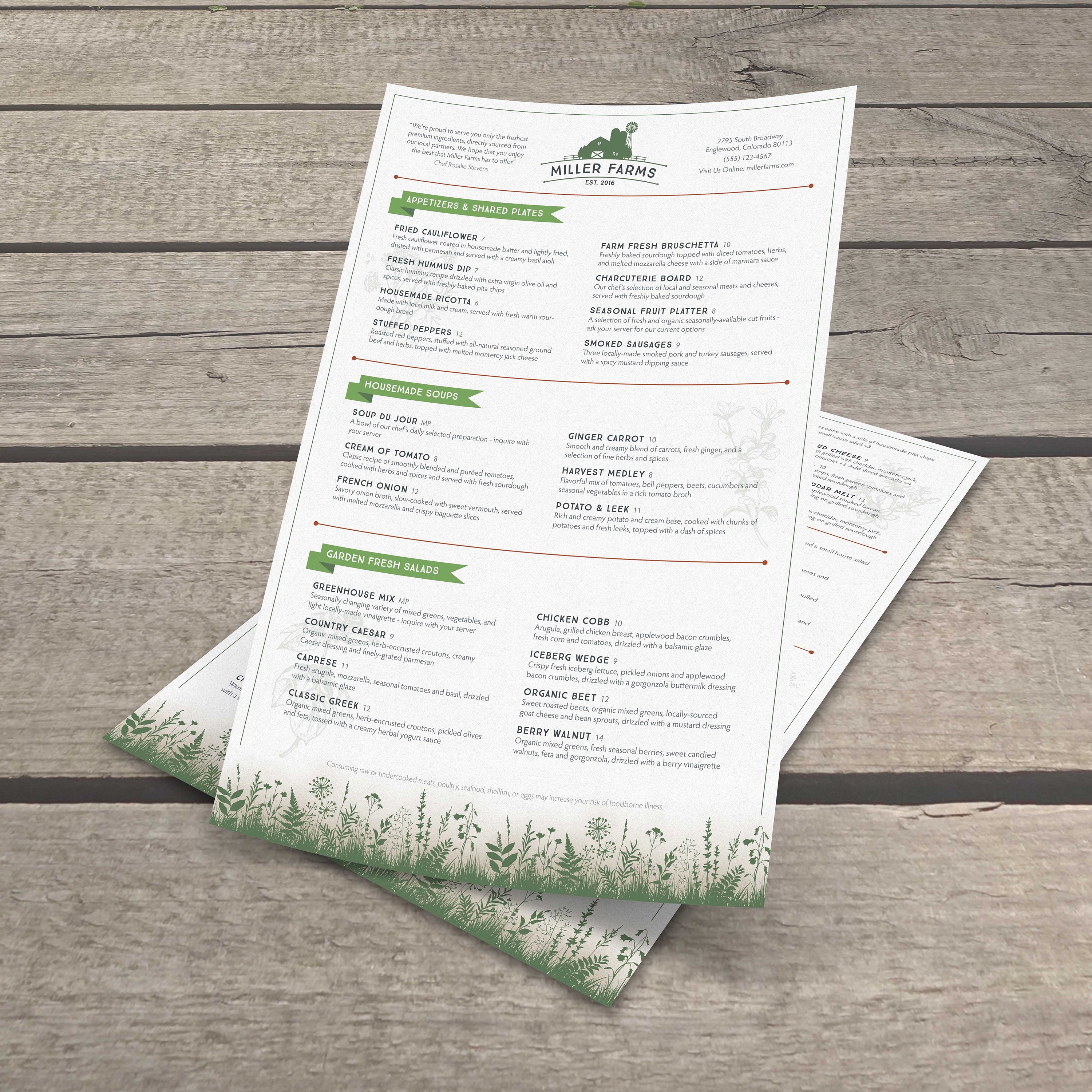
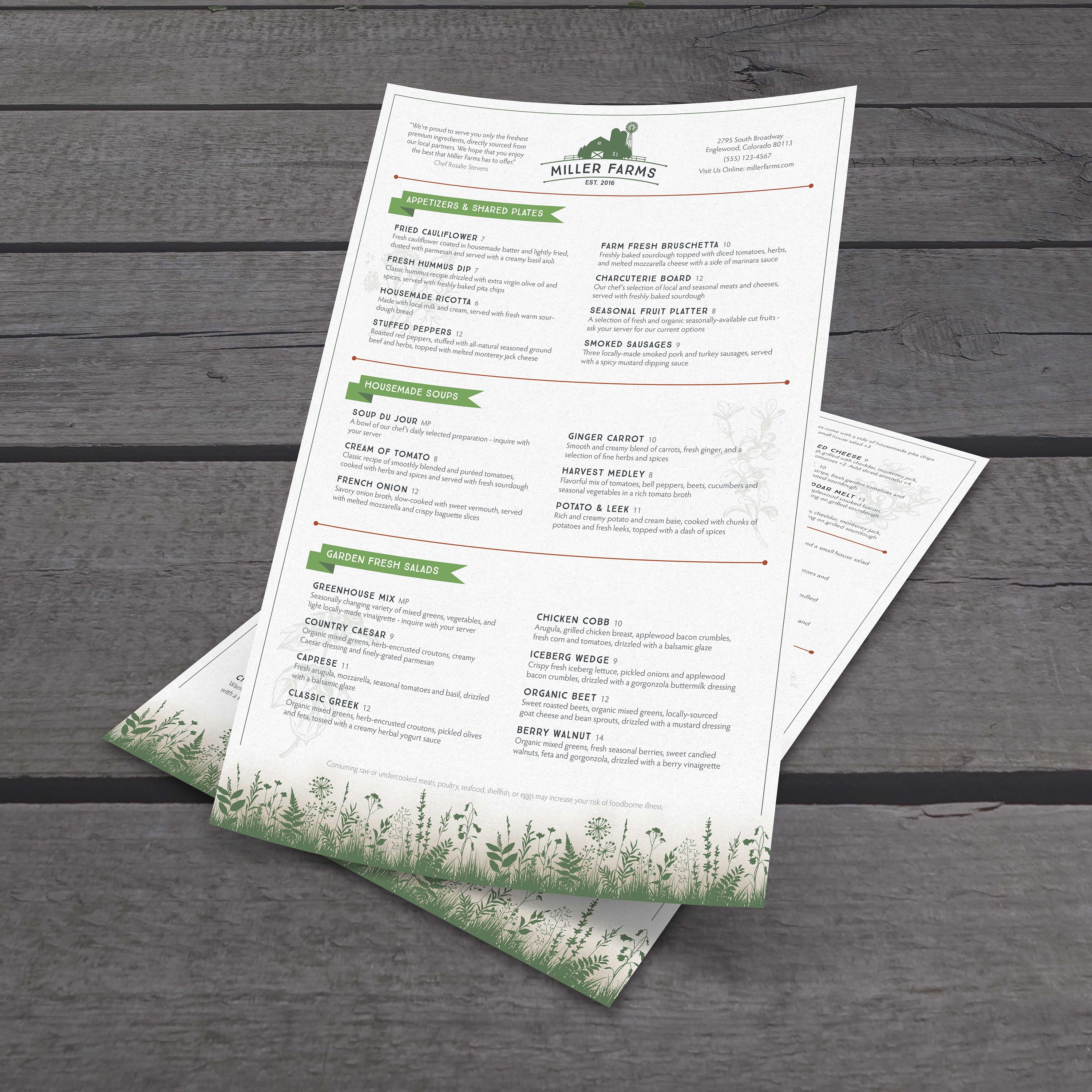
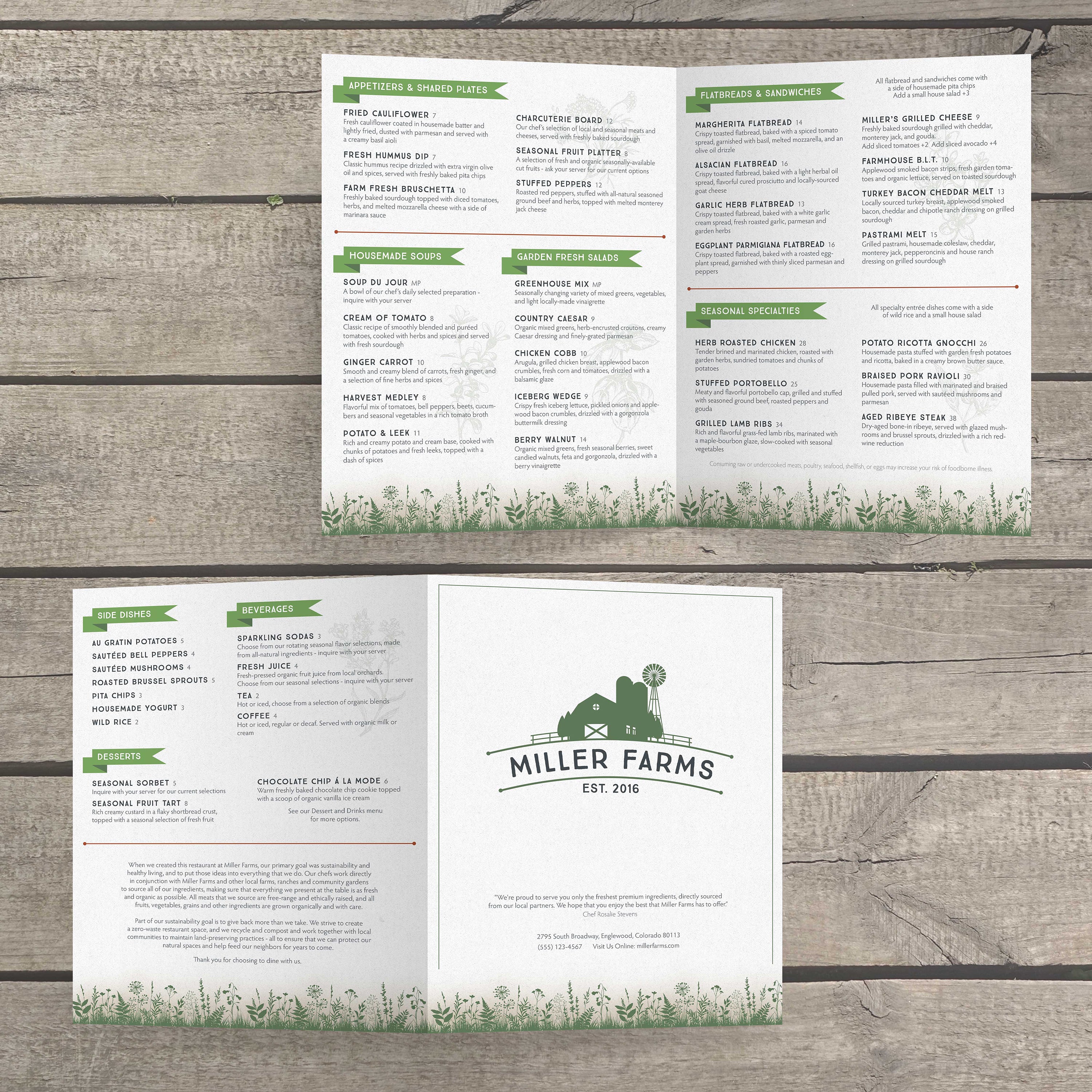
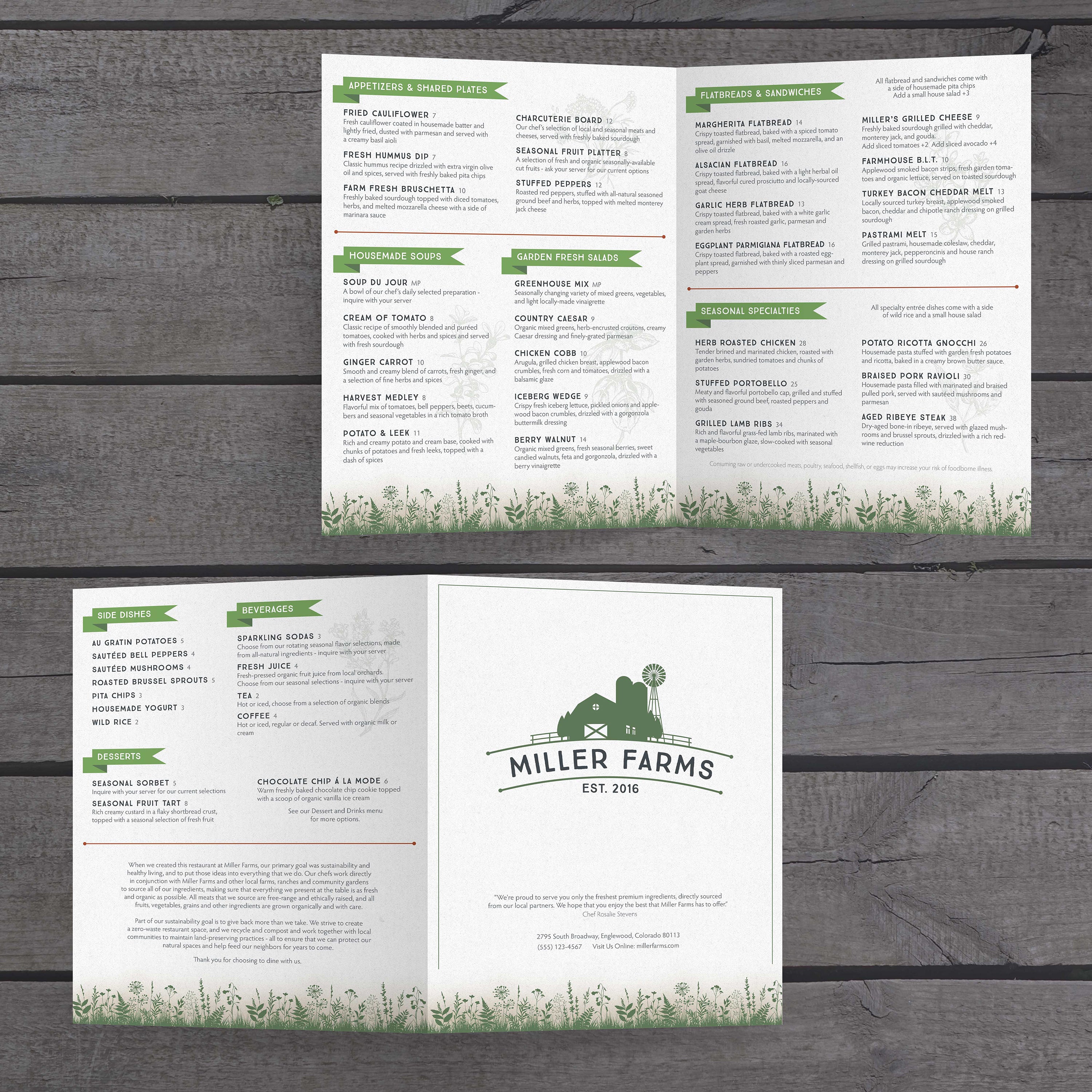
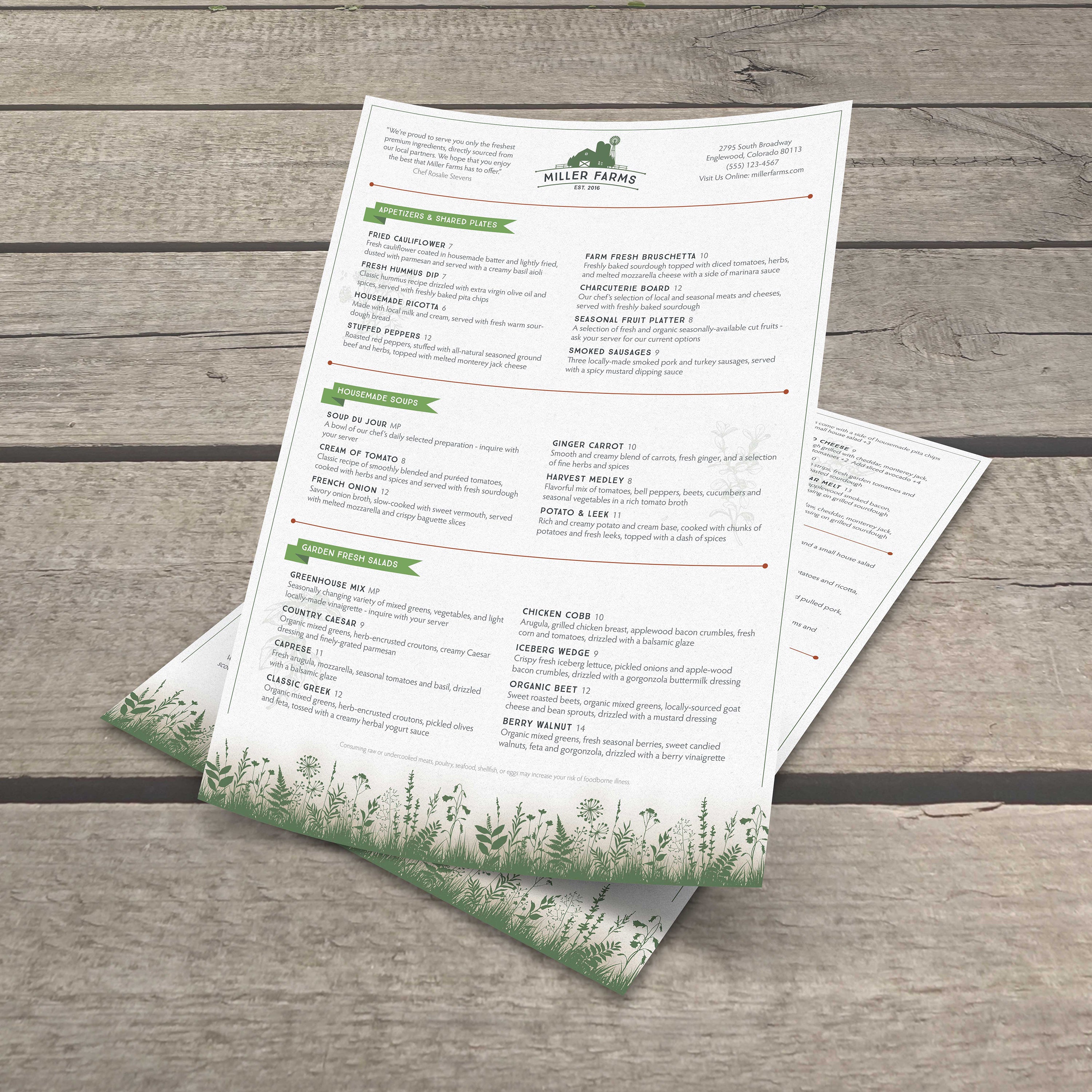
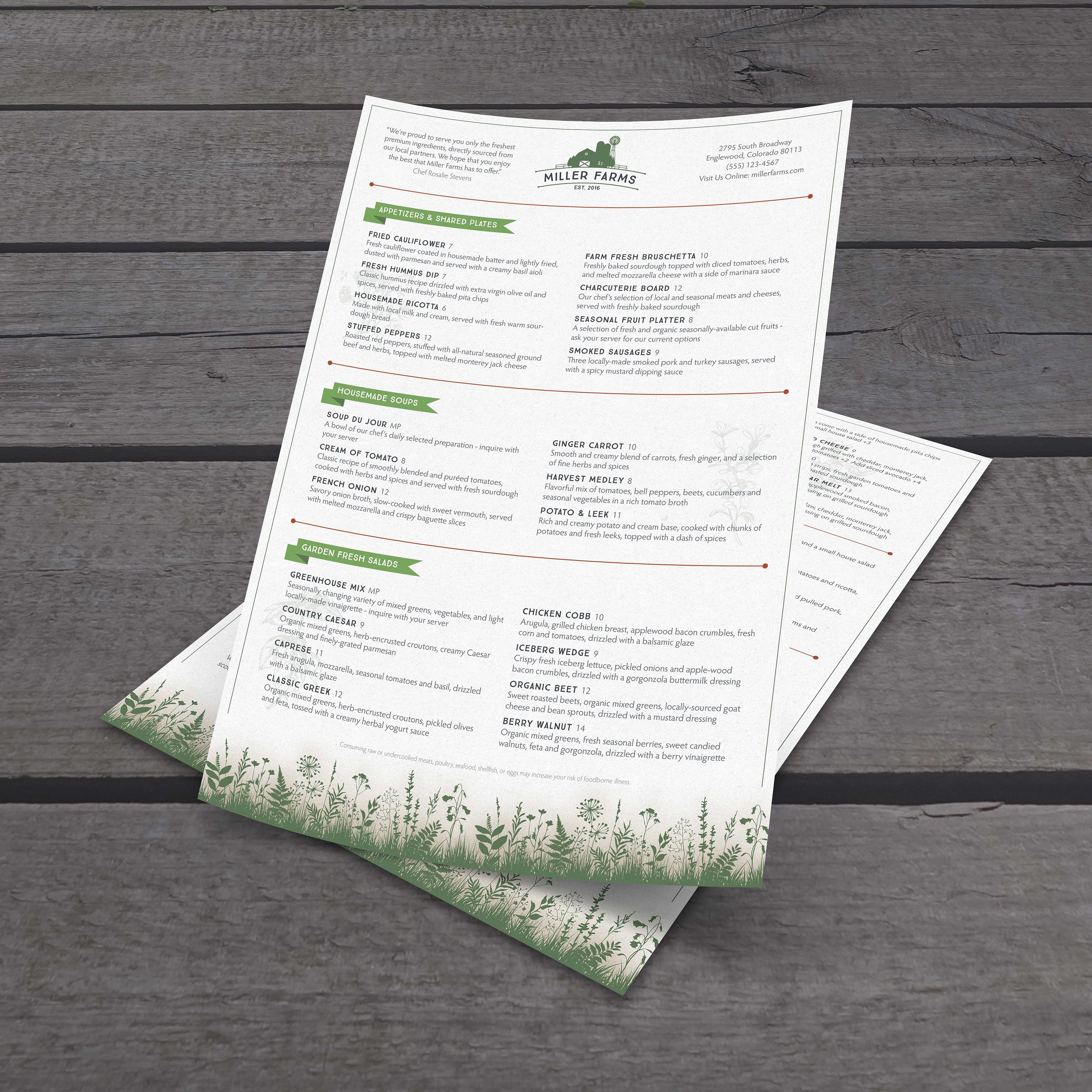
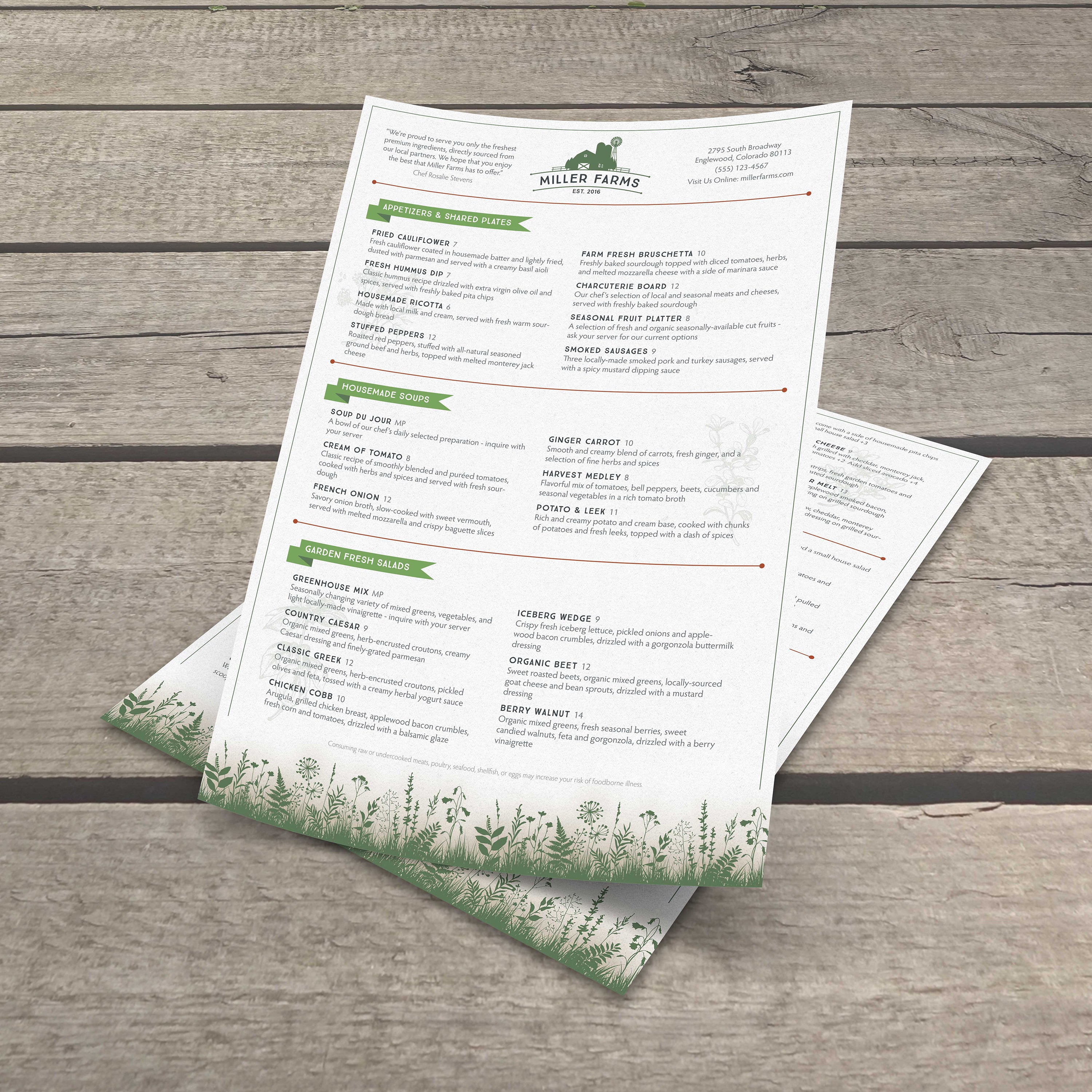
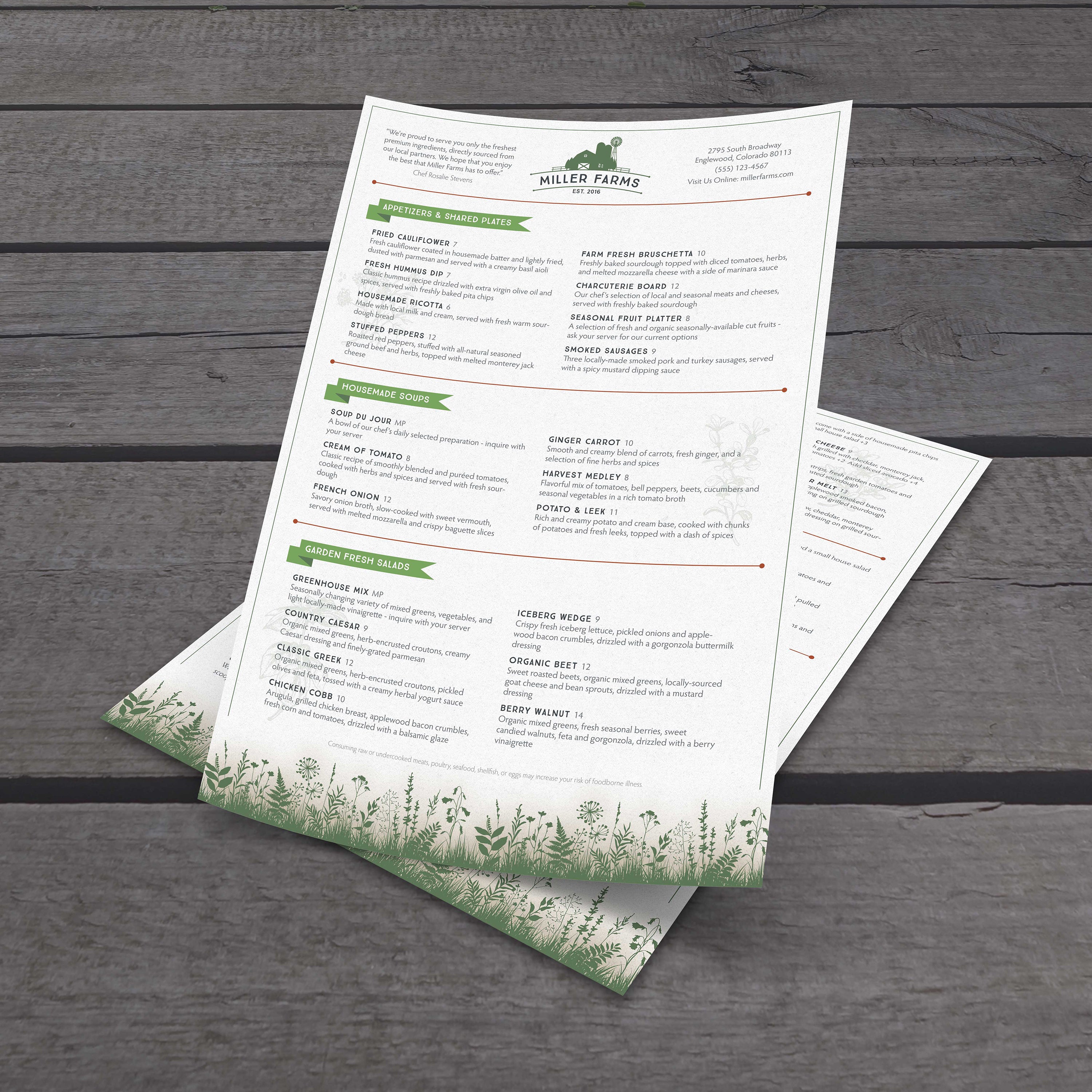
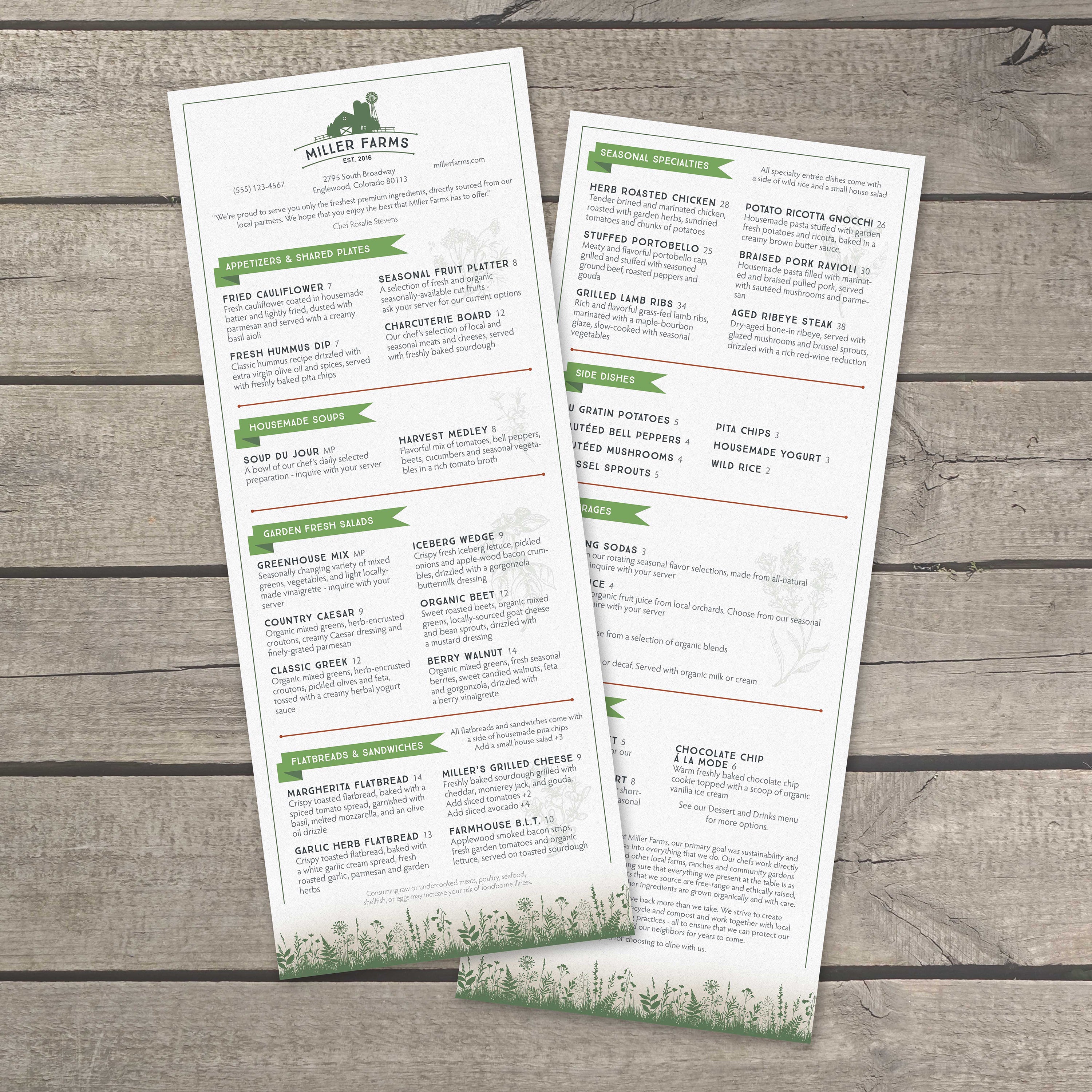
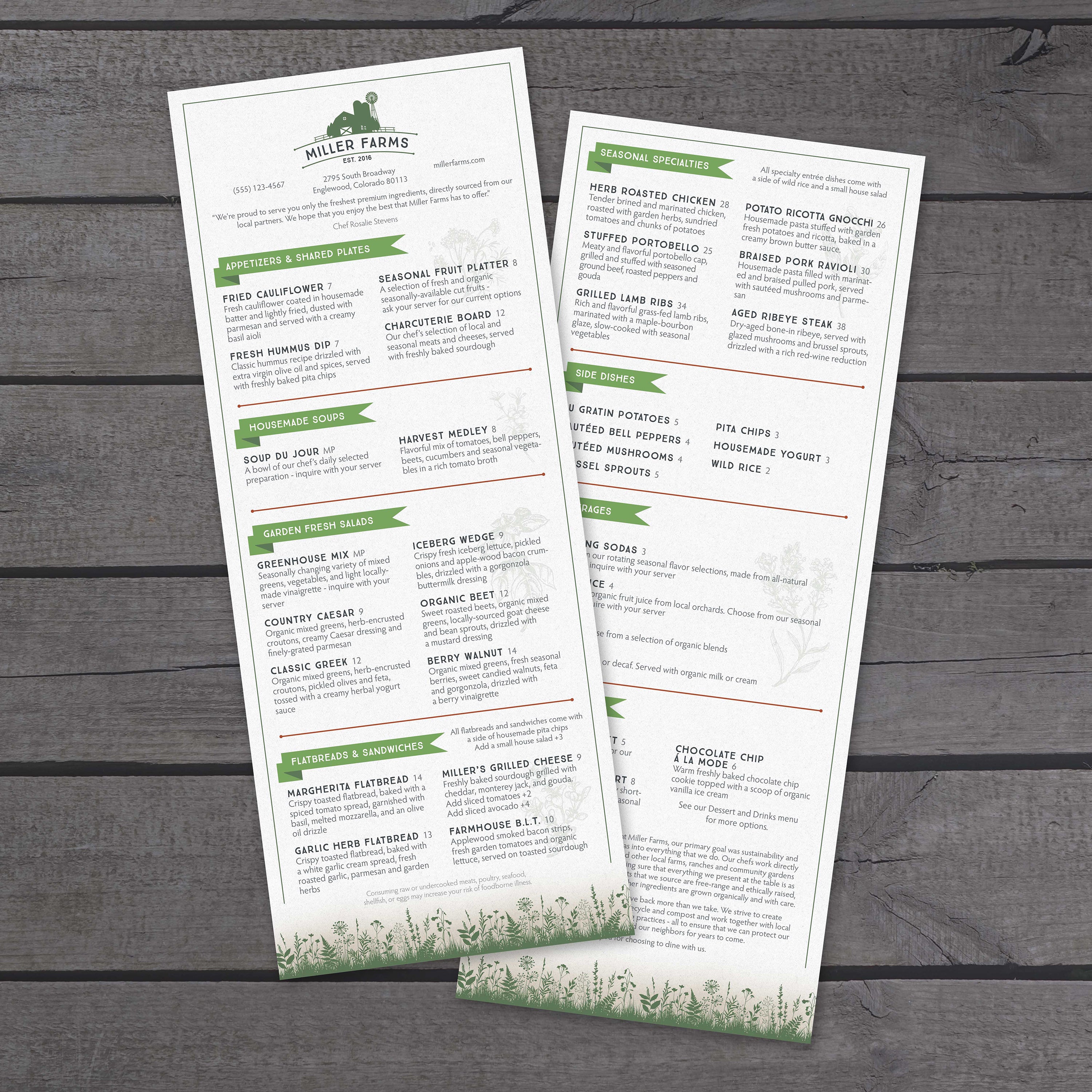
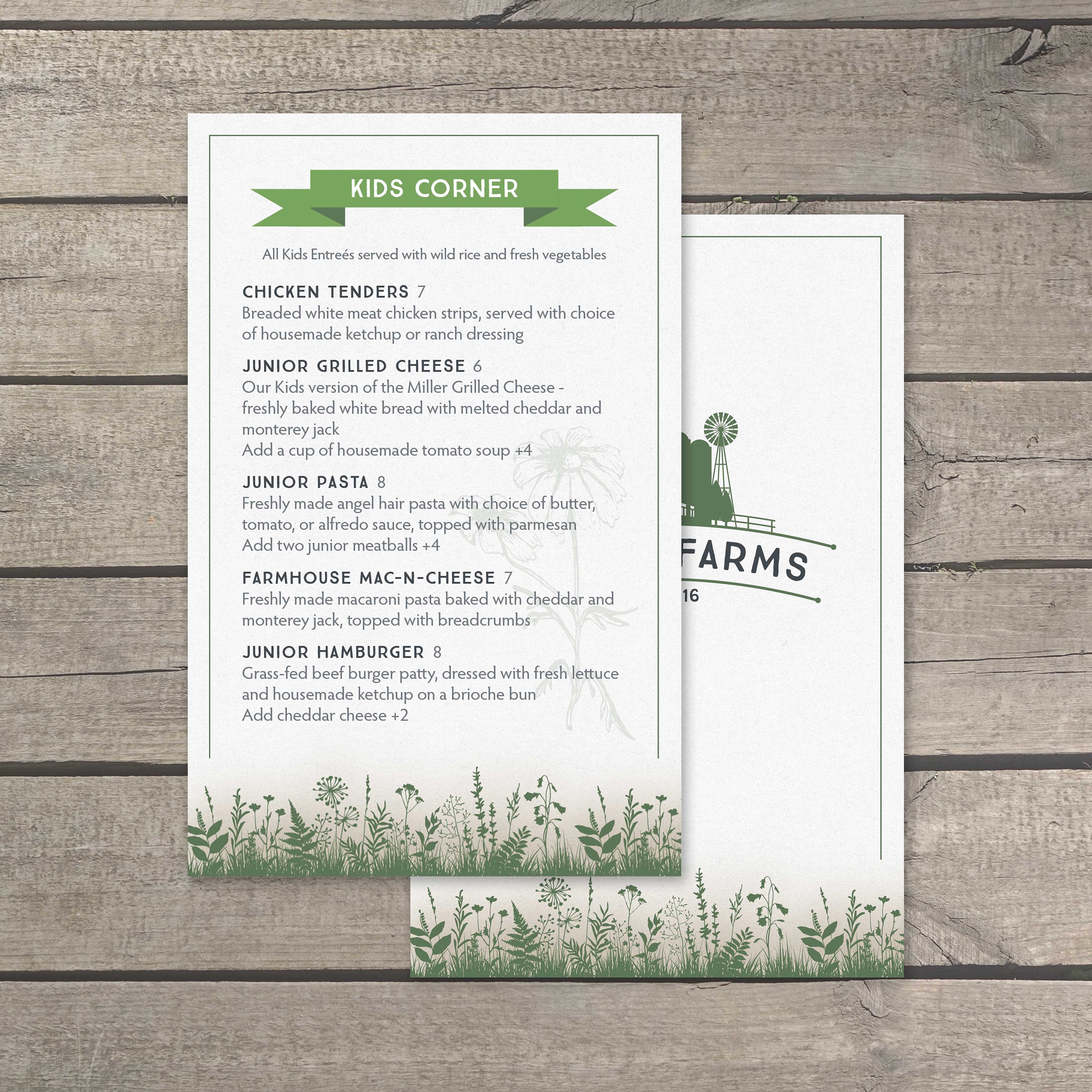
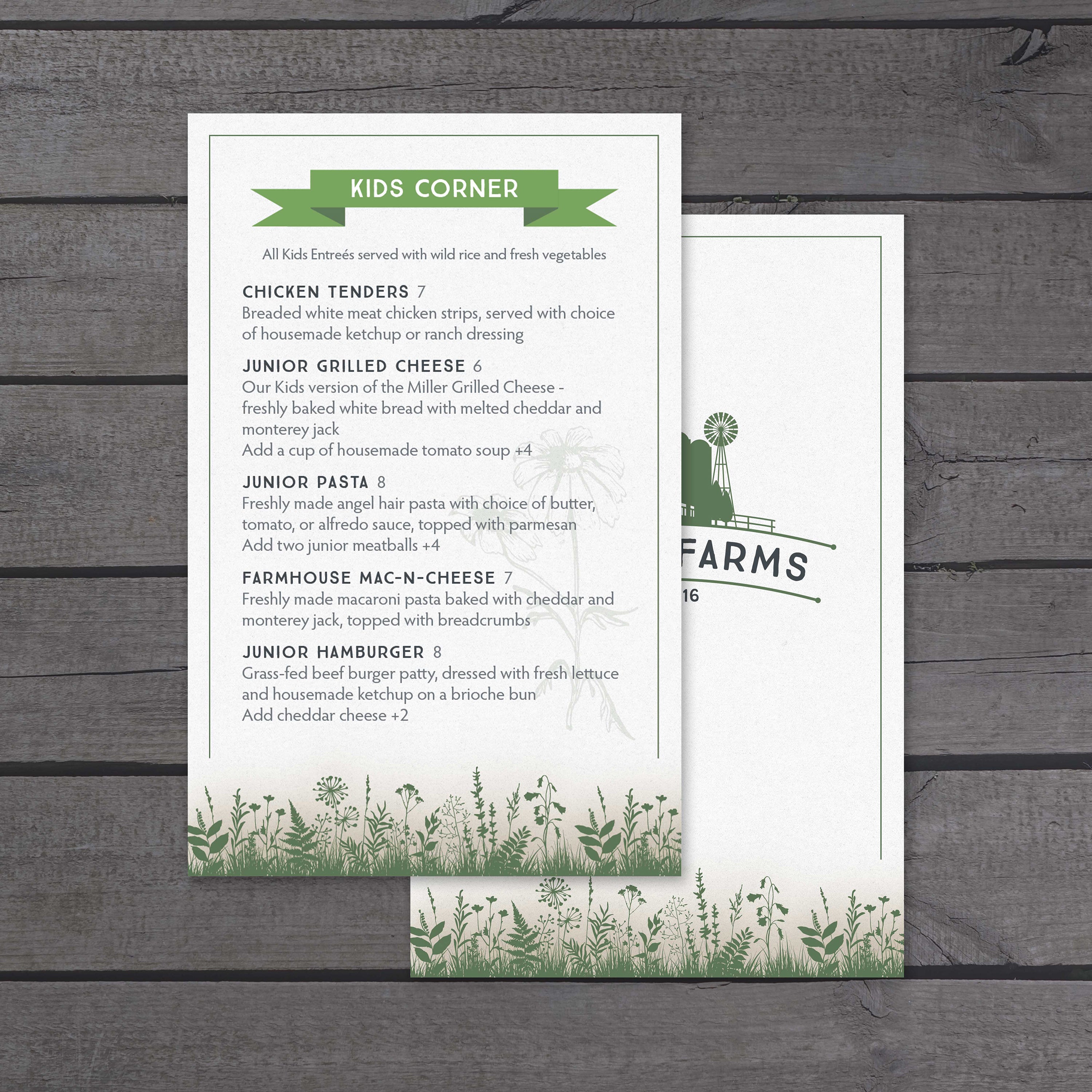
Farm to Table Menu Templates

14 products

Showing 1 - 14 of 14 products

Showing 1 - 14 of 14 products
View

Recently viewed

Farm-to-table restaurants update their menus frequently, operate efficiently during service, and work closely with ingredients that can be sensitive to moisture, oils, and spills. Waterproof menus help you maintain a sharp presentation while reducing the reprints and maintenance issues that standard paper and lamination can create.

Built for Daily Handling and Constant Menu Changes

Farm-to-table menus shift with ingredient availability, chef specials, and seasonal produce. Waterproof synthetic menus withstand frequent printing cycles and heavy guest handling without curling, tearing, or softening like paper. That durability keeps menus looking consistent even when you’re updating them daily or weekly.

Fold-Friendly Formats Without Lamination Failure

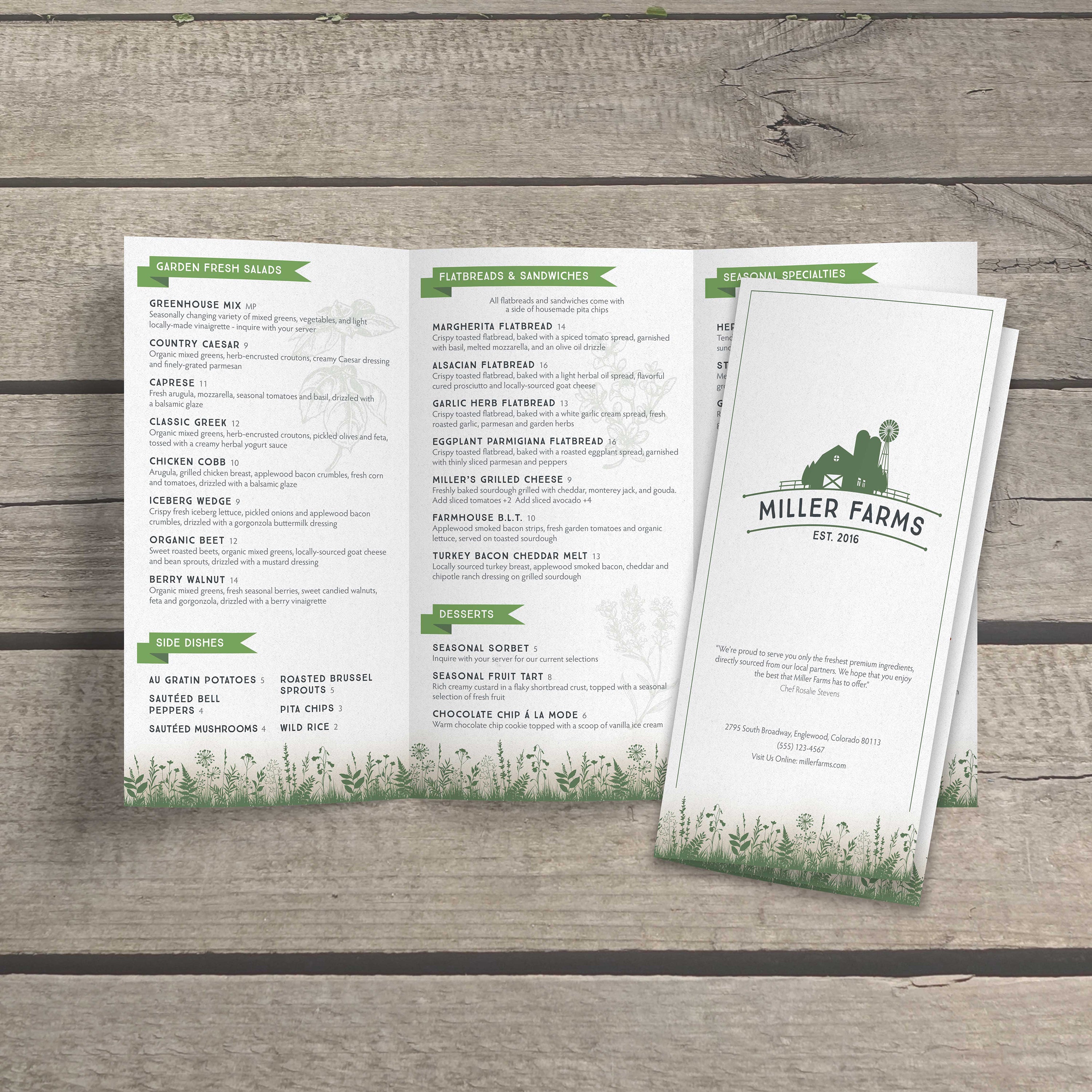
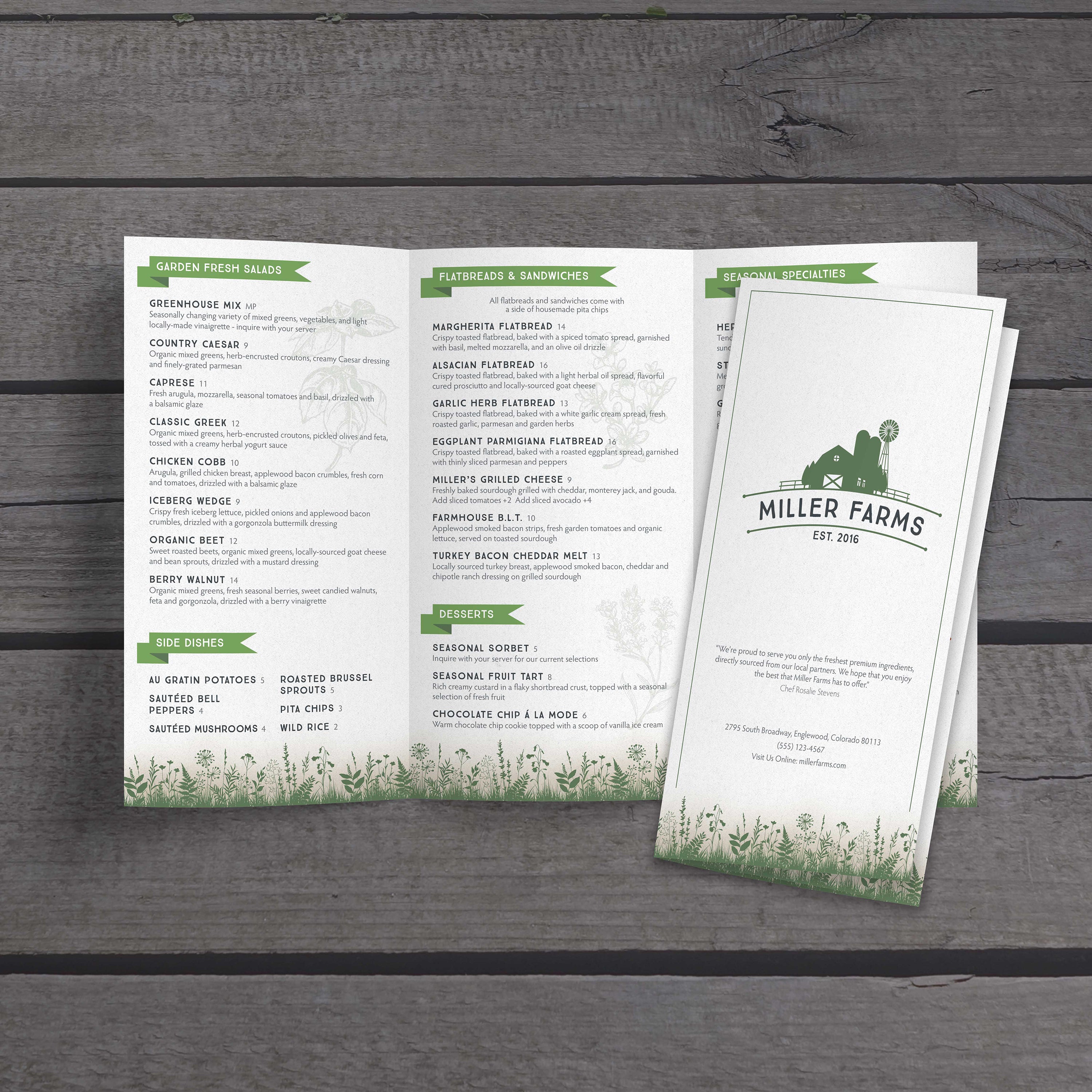
Bi-fold, tri-fold, and gate fold layouts help organize rotating dishes, beverage pairings, and daily features without crowding a single page. Menus that use traditional lamination also cannot be folded reliably and often cloud up or crack at creases. Waterproof synthetic menus support repeated folding while maintaining sharp text and a clean, structured appearance, even during busy service periods.

Faster Hygiene Reset Between Seat-Downs

High-touch menus require prompt and consistent cleaning to maintain hygiene standards. Simple soap and water are recommended for our paper, allowing staff to wipe menus down between guests without damaging print clarity. Unlike laminated menus that can peel at the edges or trap residue over time, synthetic waterproof menus stay clean, readable, and professional through repeated wipe-down cycles.

Better Sustainability and Less Replacement Waste

Farm-to-table concepts often prioritize sustainability, and menus that last longer support that goal. TerraSlate waterproof paper is recyclable through standard curbside bins and resists wear that would otherwise require frequent replacement. By extending menu life and reducing reprint volume, waterproof menus help lower waste while maintaining consistent branding and presentation.

Stronger Guest Experience Through Consistent Presentation

When menus stay crisp, readable, and clean, they reinforce the quality and care behind farm-to-table dining. Waterproof synthetic paper helps maintain a premium look even in real-world conditions, ensuring your daily specials and seasonal dishes are presented with clarity at every table.

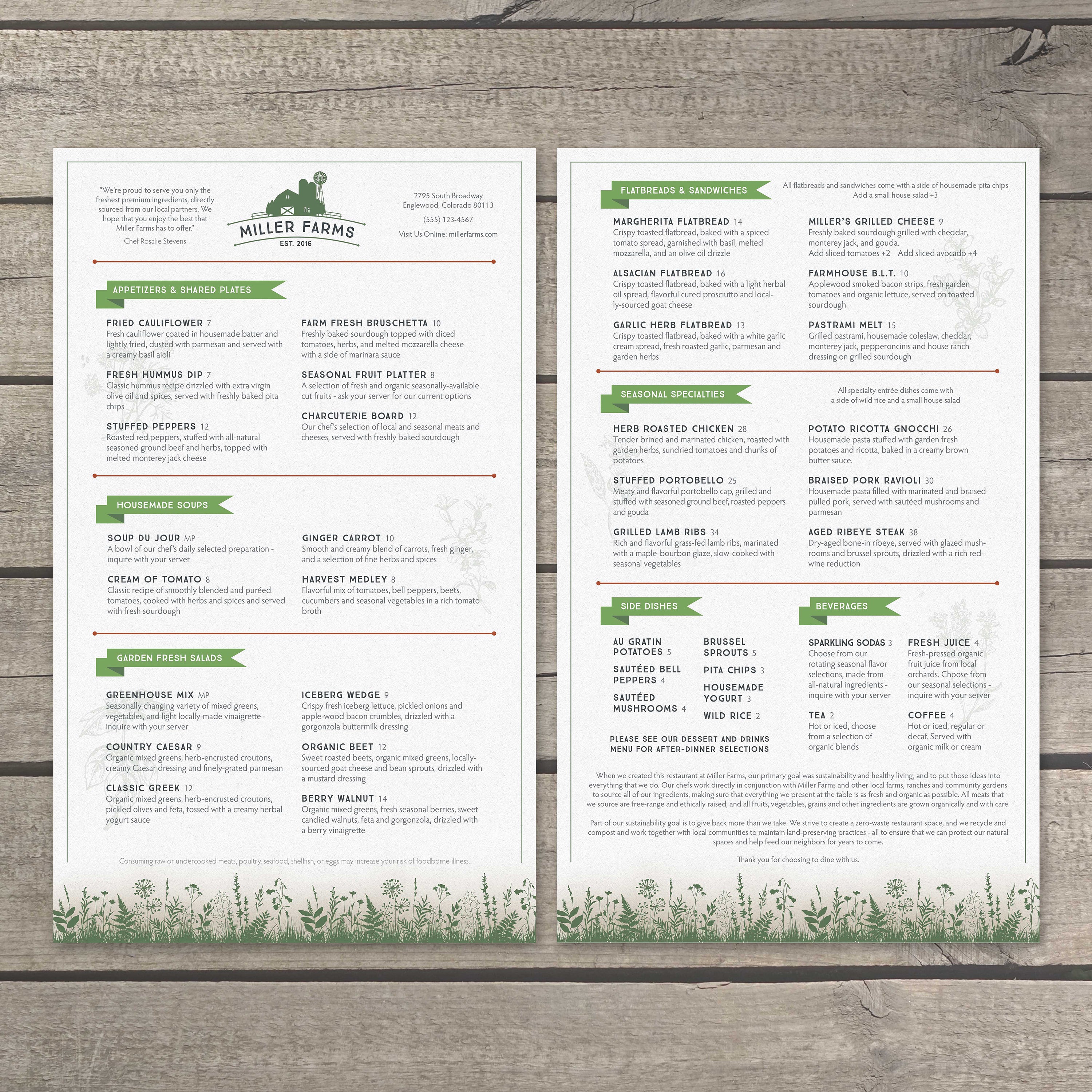
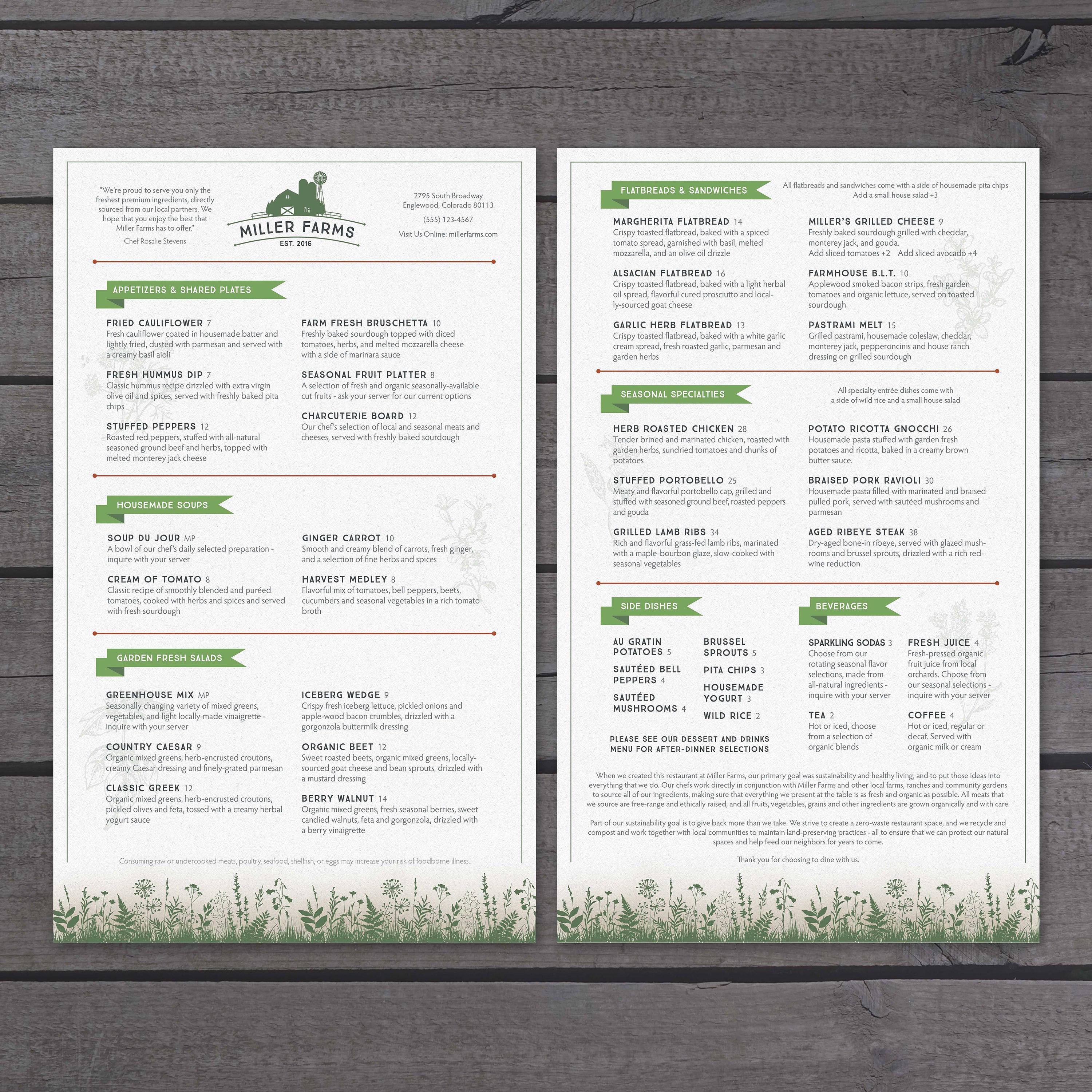
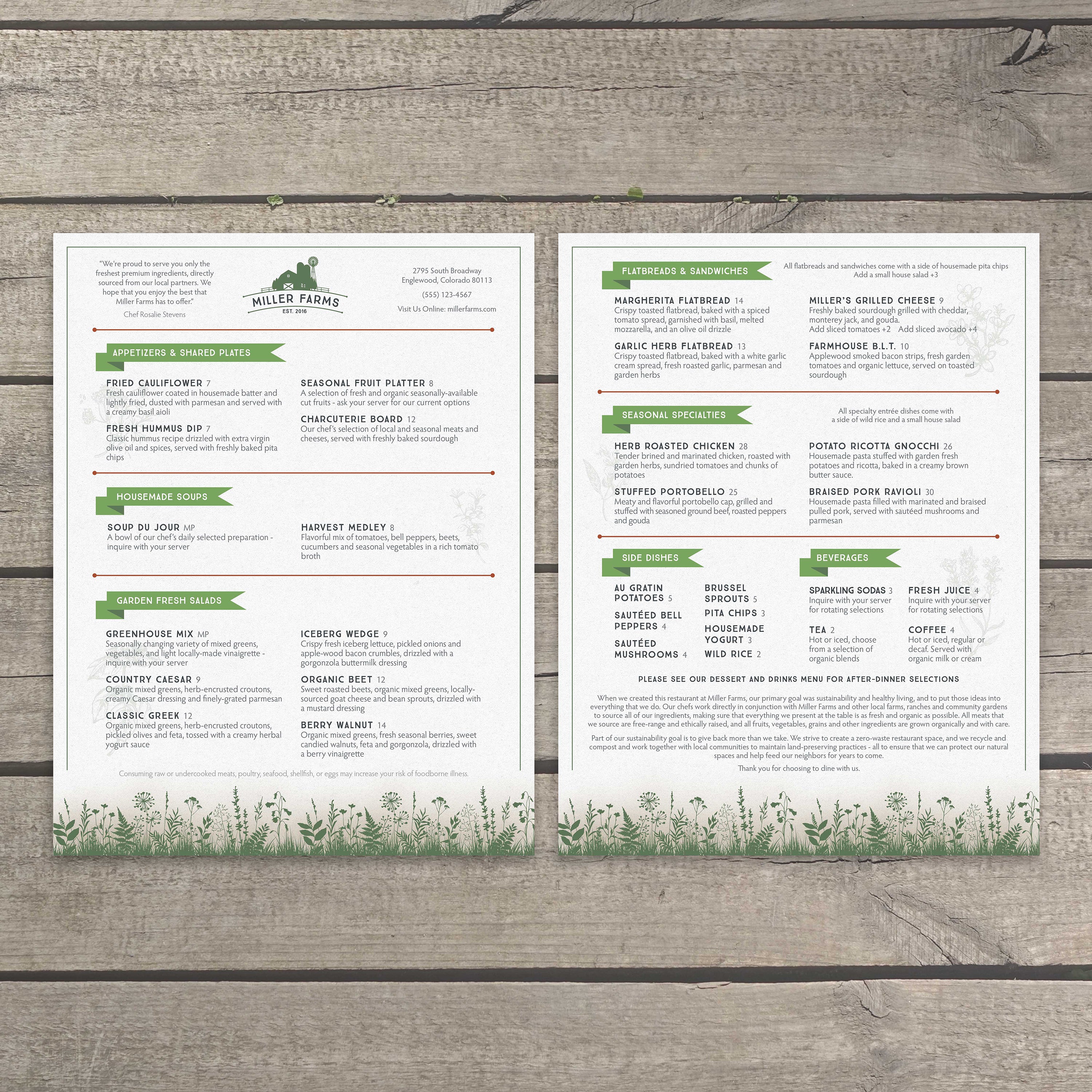
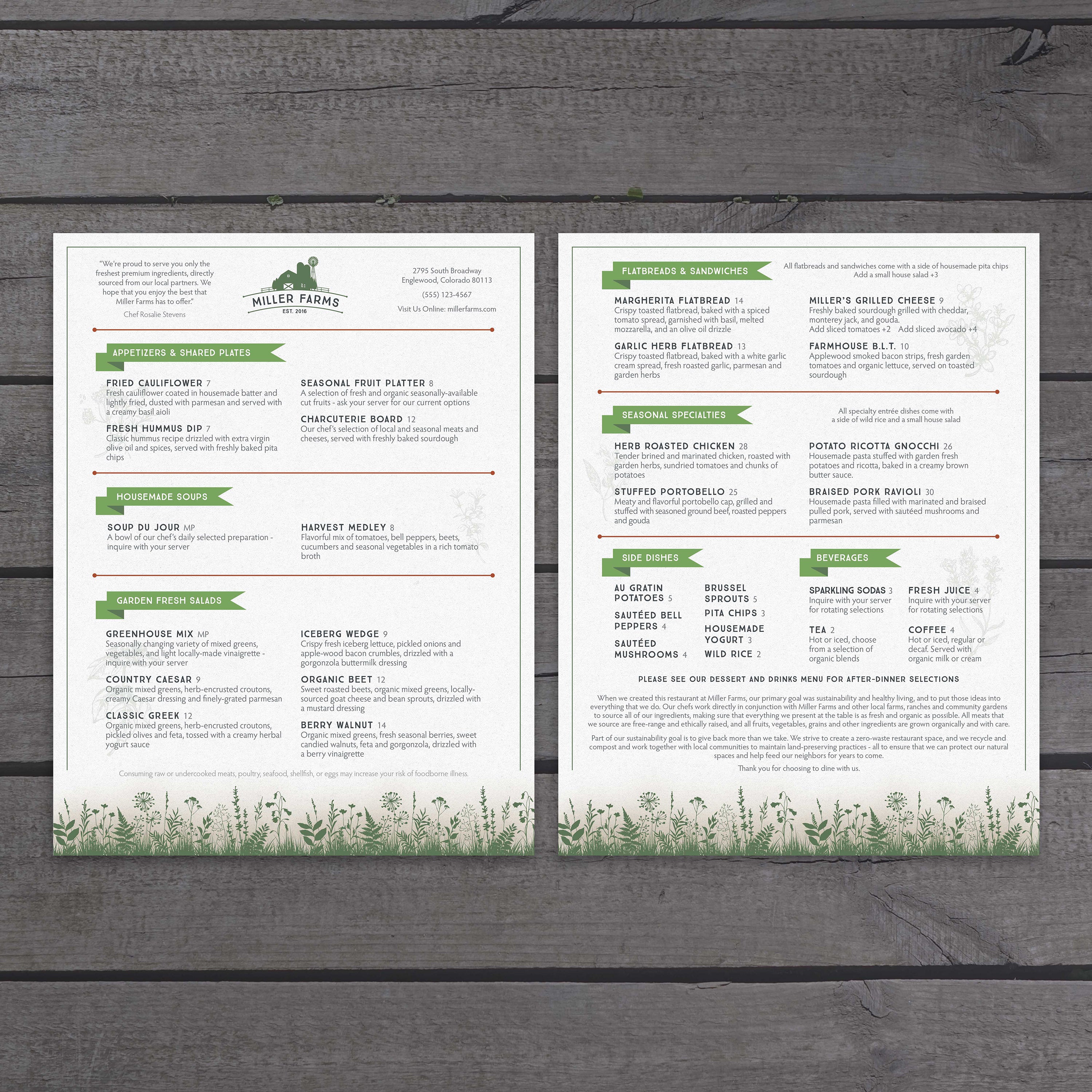
A rustic-chic farm-to-table menu should feel handcrafted and seasonal while staying easy to scan, fold-friendly, and durable enough for daily handling and cleaning.

Use a Natural Palette with Clean Contrast

Earth tones, such as deep greens, warm browns, and muted creams, reinforce the local, seasonal theme, but readability remains the top priority. Maintain a strong contrast between the text and background so guests can scan in varied lighting, especially during brunch service or when seated outdoors. Use color to guide the eye toward seasonal highlights rather than covering the entire menu in heavy texture. If you want a layout that already supports this clean, modern-rustic balance, our free modern cafe menu templates provide a strong starting point for farm-to-table design.

Choose Typography That Feels Handcrafted but Reads Fast

Rustic-chic design pairs best with slab-serif or hand-lettered style headers, complemented by a clean, highly legible body font. Keep spacing generous so dish names, ingredients, and pricing don’t crowd each other. This is especially important for produce-forward menus where details like preparation style, sourcing notes, or seasonal substitutions change regularly.

Add Small Visual Touches Without Overloading the Layout

Minimal line drawings of vegetables, herbs, farm tools, or field motifs can support the farm-to-table narrative without distracting from the ordering process. Use icons strategically to highlight vegetarian options, daily harvest specials, or chef picks. Keep these elements consistent across sections so the menu feels curated rather than decorative.

Build Folding Formats Around Service Flow

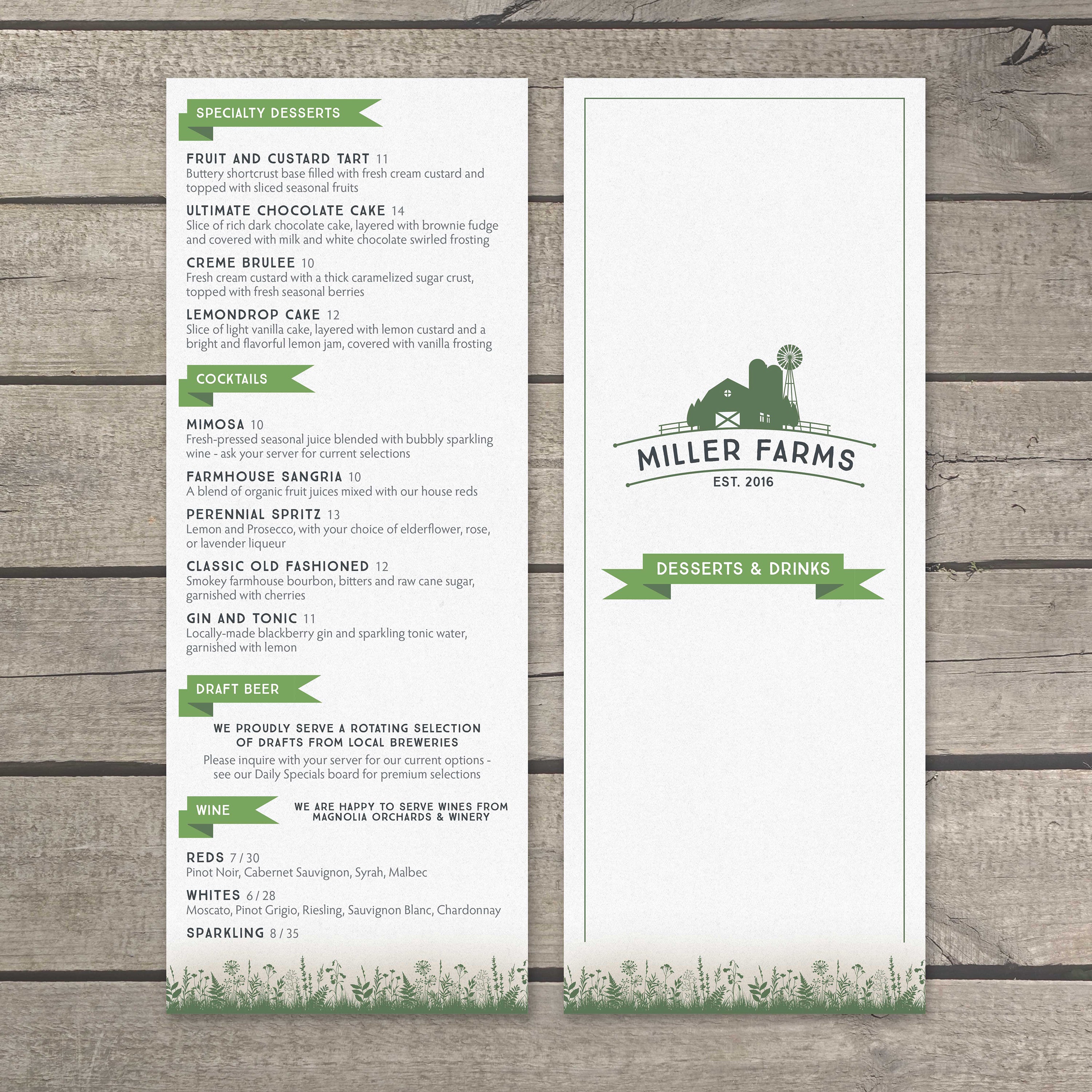
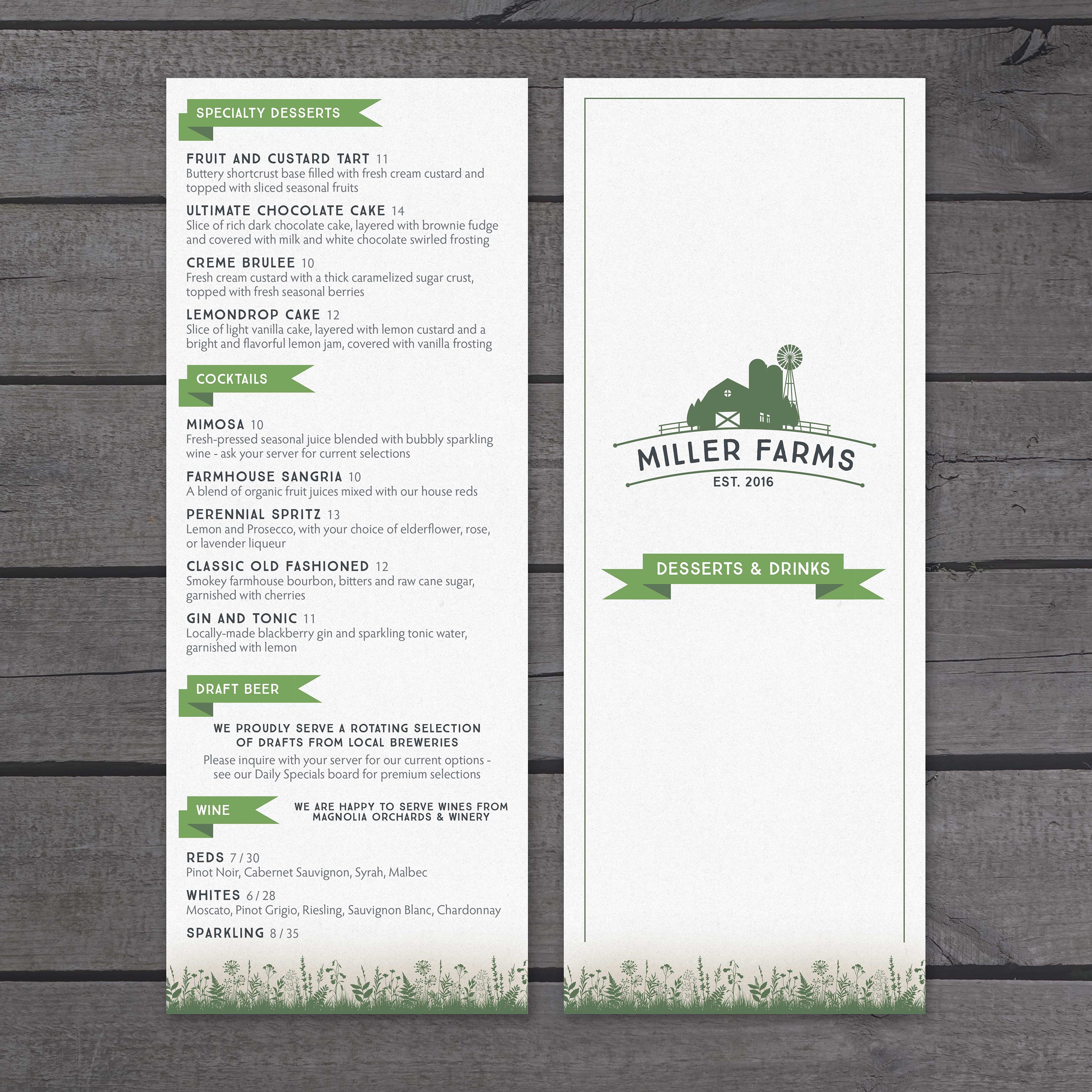
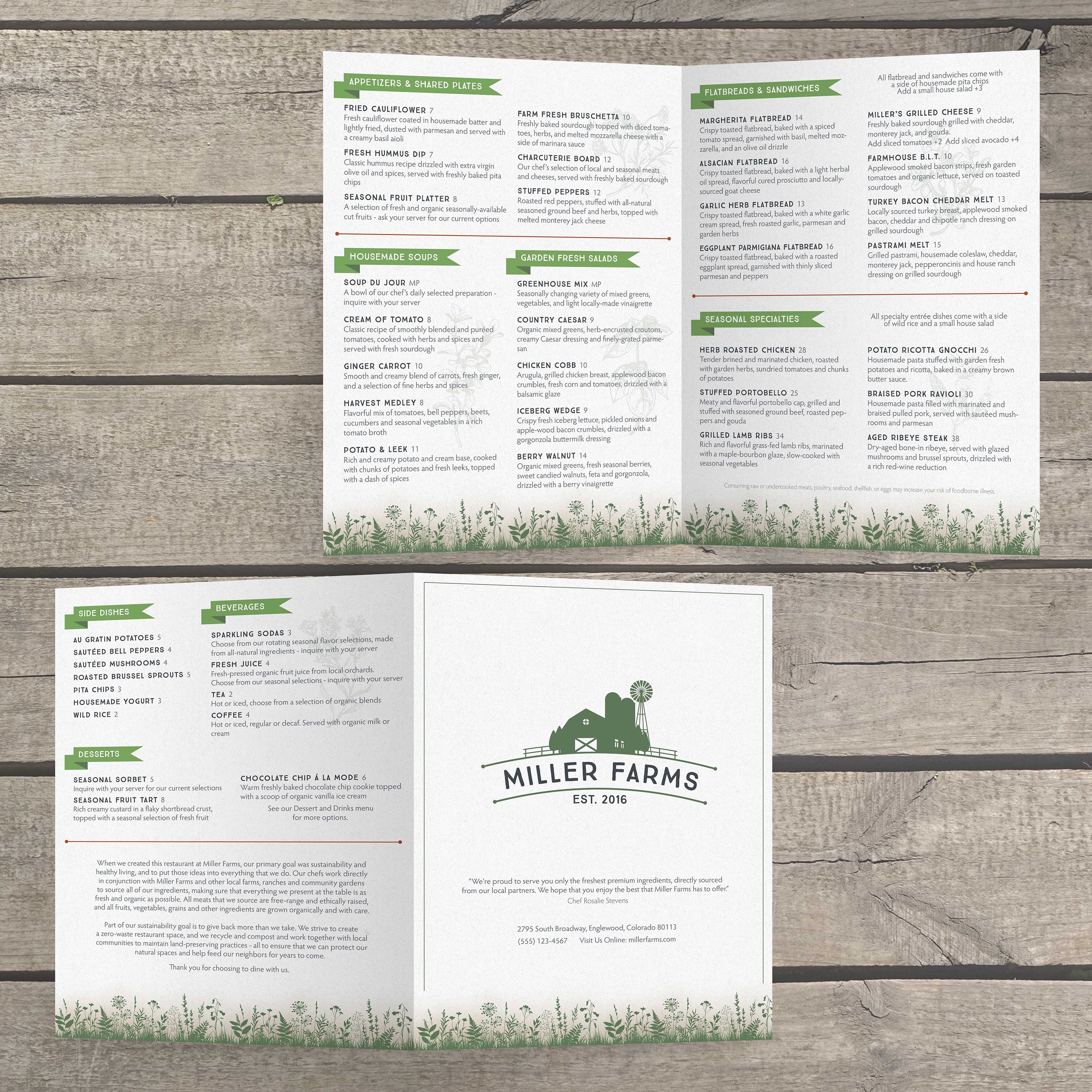
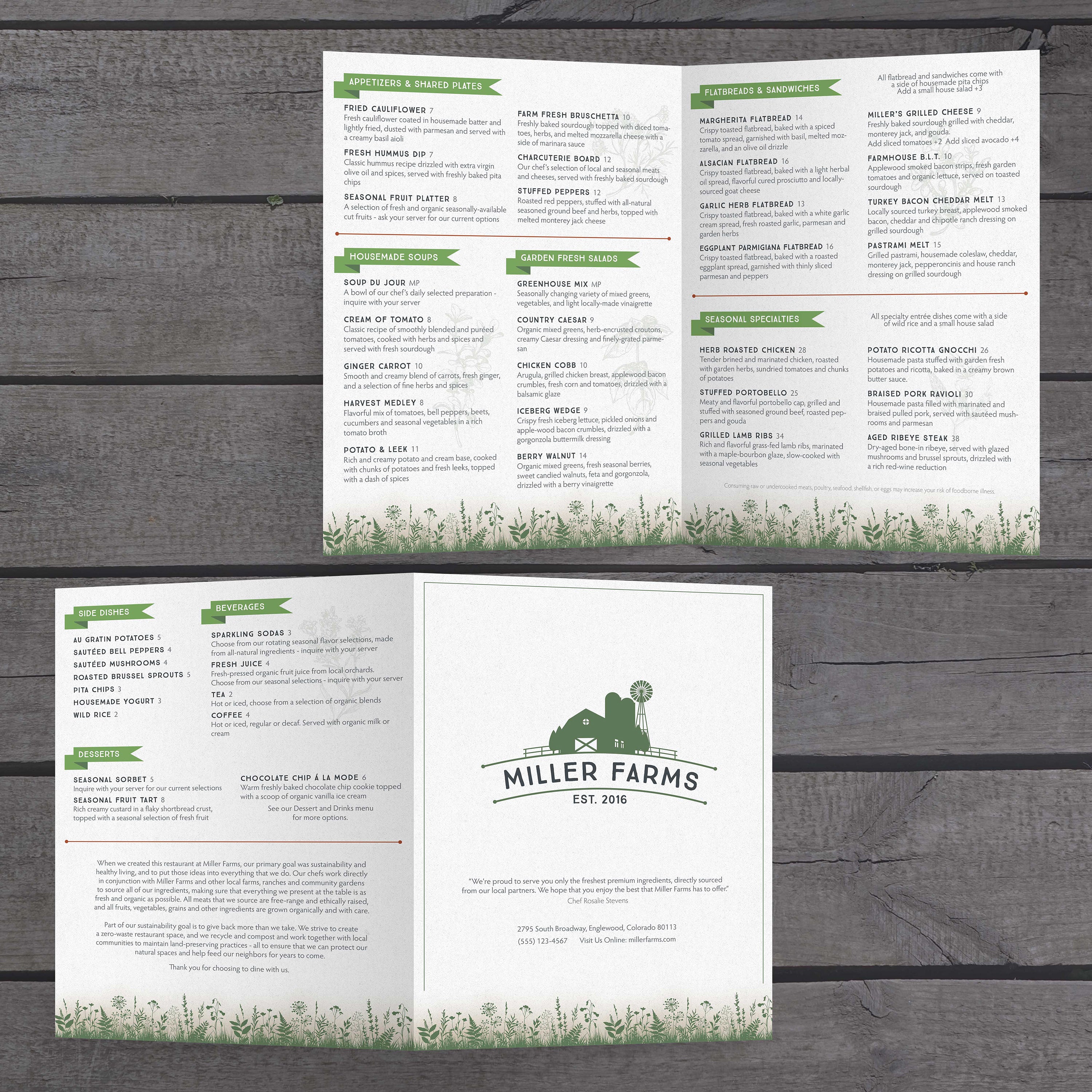
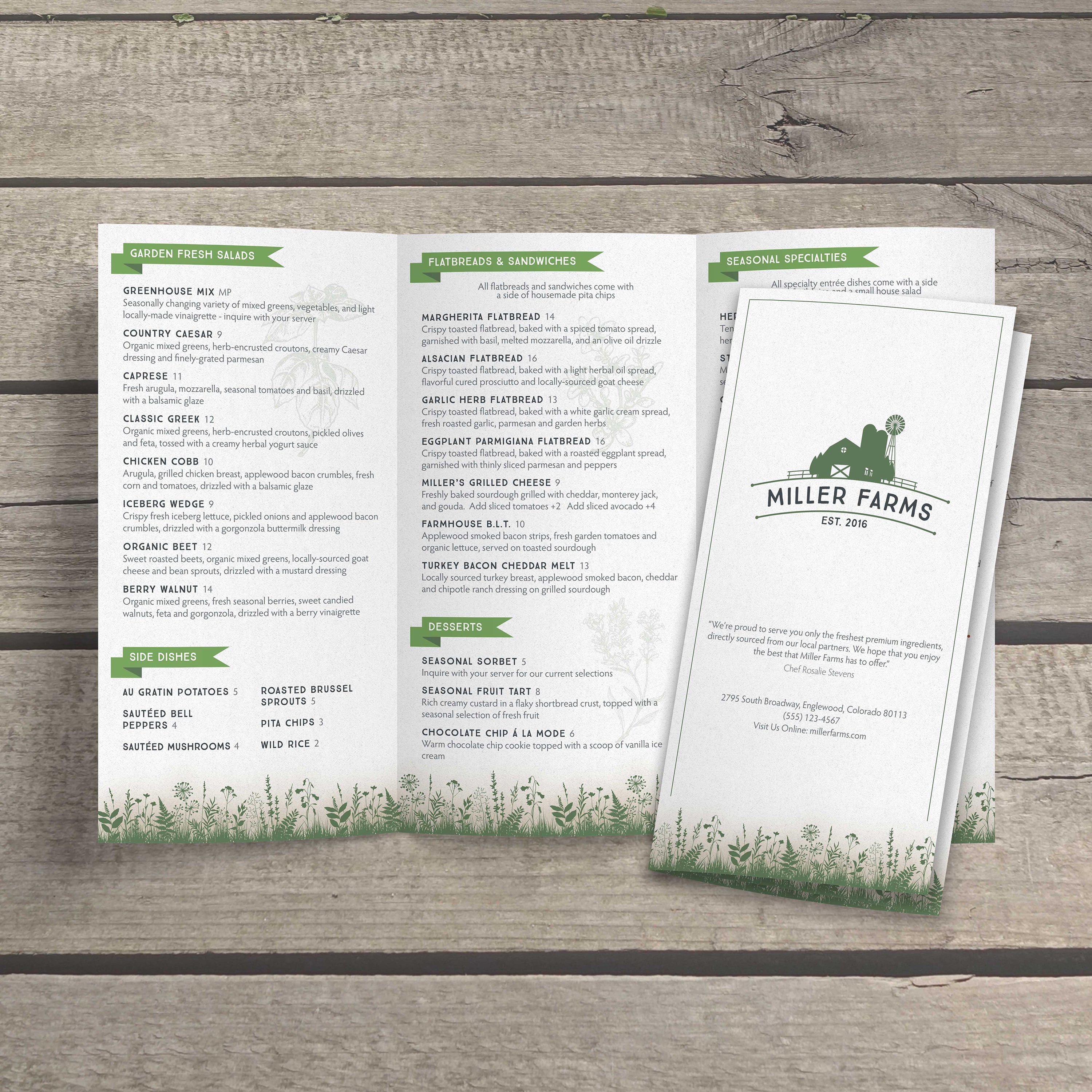
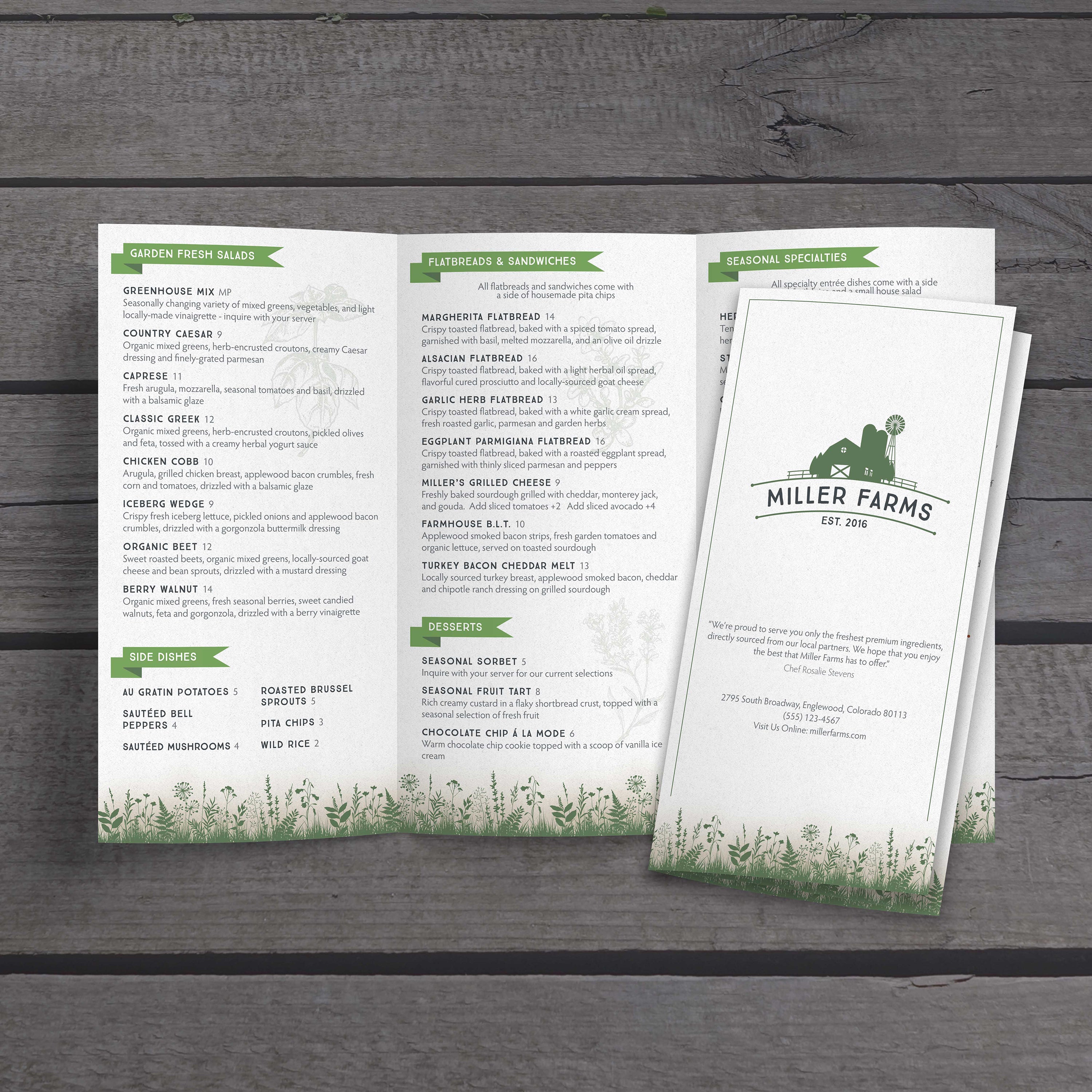
Farm-to-table menus often feature rotating specials, tasting boards, seasonal cocktails, and dessert options that benefit from being presented individually. Bi-fold and tri-fold formats create clean category breaks and reduce table clutter, while gate folds work nicely for chef’s tasting selections or seasonal showcases. Menus that use traditional lamination also cannot be folded reliably and often cloud up or crack at creases, while synthetic waterproof paper supports these folded layouts without degradation. For narrow folded formats that sit neatly on small tables or bar tops, our free 4.25 x 11 menu templates make it easy to organize rotating seasonal sections without crowding.

Match Thickness to Traffic, Reuse, and Printing Needs

Choose the thickness based on how often the menu will be handled and whether it will be reused. Lighter options, such as 5 Mil, are flexible and easy to print in-house, while thicker options add a premium feel and long-lasting durability. TerraSlate is available in multiple thicknesses, including 14 Mil for maximum durability, which may require a commercial press and is compatible with high-quality printers. If you need a standard full-page layout for dine-in service, inserts, or seasonal menu swaps, our free 8.5 x 11 menu templates help keep formatting consistent while still leaving plenty of room for farm-fresh detail.

Protect the Look with Durable, Easy-Clean Materials

Rustic-chic menus often include detailed typography and subtle design textures that can look worn quickly on paper. TerraSlate waterproof paper is fade-resistant, archival-quality, and rip-proof, helping design details stay crisp even under heavy service conditions. Simple soap and water are recommended for our paper. TerraSlate can print menus for you with our proprietary TerraShield™ anti-microbial coating, offering an industry-leading turnaround time that supports hygiene standards without compromising presentation.

Keep the Menu Modular for Seasonal Updates

Design the layout to allow for the easy swapping of seasonal items without requiring reformatting of the entire menu. Use dedicated “Harvest Features” or “Today’s Farm Picks” areas to keep updates consistent across services. This maintains the rustic-chic look while allowing for quick, clean, and operationally efficient daily menu adjustments.

Choosing free TerraSlate farm-to-table menu templates is most effective when you focus on fold-friendly layouts, fast customization, and print durability that supports daily service without requiring lamination.

  • Start with Templates Built for Waterproof Synthetic Paper: Choose templates designed for TerraSlate so the layout, margins, and panel spacing work correctly on rip-proof, waterproof sheets, avoiding the clouding and edge wear that laminated menus develop over time.
  • Select the Right Fold Format for Your Menu Size: Use bi-folds for concise seasonal menus, tri-folds for larger category separation, and gate folds for tasting menus or chef showcases. Menus that use traditional lamination also cannot be folded reliably, while TerraSlate supports folded formats without cracking at creases.
  • Customize Quickly with Standard Design Software: Open the template in tools that support PDF, AI, or PSD formats, then swap in fresh ingredient lists, rotate seasonal items, adjust pricing, and update specials without rebuilding the layout from scratch.
  • Choose Sizes That Fit Your Service and Presentation Needs: Templates can be set for A-size formats, ranging from 210 mm × 297 mm to 297 mm × 420 mm, or scaled for large-format menus that stand out at patios, pop-ups, and offsite markets.
  • Match Thickness to Handling and Printing Equipment: For frequent reprints and lighter handling, thinner stocks are easier to run in-house. For high-traffic dining rooms and outdoor service, 14 Mil offers maximum durability, although it may require a commercial press and is compatible with high-quality printers.
  • Print Directly Without Lamination Delays: TerraSlate menus can be printed directly using standard laser printers or commercial presses, removing lamination steps and allowing faster updates when ingredient availability changes daily.
  • Clean and Maintain Menus Between Seatings: Simple soap and water are recommended for our paper menus. Alternatively, TerraSlate can print menus for you with our proprietary TerraShield™ anti-microbial coating, which offers an industry-leading turnaround time and supports hygiene standards in high-touch service environments.

  • Support Sustainability with Curbside Recyclability: TerraSlate waterproof paper is recyclable through standard curbside bins, helping farm-to-table restaurants reduce waste while utilizing a long-life menu material that aligns with their sustainability-focused branding.

With TerraSlate templates, farm-to-table concepts can update menus fast, maintain a premium look through spills and heavy handling, and keep presentation consistent across every season and service style.

A strong farm-to-table brand is built through consistent storytelling, and the menu is one of the most potent places to deliver it. With the proper layout and durable substrate, your menu becomes a front-of-house extension of the farms you source from, not just a list of dishes.

Make the Menu a Storytelling Asset, Not Just a Price List

Farm branding is most effective when it is visible in subtle yet intentional ways. Use space for producer callouts, seasonal highlights, and farm names that support transparency and trust. A dedicated section for “Today’s Farms” or “Featured Growers” reinforces the sourcing story without cluttering your main categories, helping guests connect the dish to the field behind it.

Protect Visual Branding from Clouding and Wear

Brand elements, such as logos, illustrations, and photography, lose impact when menus become worn down. Laminated menus often cloud up over time and dull the details that make your menu feel premium. Synthetic waterproof paper maintains clarity and color vibrancy through repeated handling and cleaning, ensuring the farm story stays sharp and readable across every service.

Use Folded Formats to Build a Clear Brand Journey

Folded menus create natural panels for storytelling and structure. A bi-fold can pair a clean dish layout with a dedicated farm story panel, while a tri-fold allows for separate space to feature seasonal produce, beverage pairings, and sourcing notes. Menus that use traditional lamination also cannot be folded reliably and often crack or cloud at creases. In contrast, synthetic waterproof paper supports bi-fold, tri-fold, and gate-fold formats without degradation.

Match Thickness to Table Use and Brand Presentation

Your paper thickness affects how premium the menu feels and how long it lasts. Lighter options are well-suited for frequent menu updates, while thicker stocks provide a more substantial presentation and withstand heavier service demands. TerraSlate is available in multiple thicknesses, including 14 Mil for maximum durability, which may require a commercial press and works well on high-quality printers, making it ideal for high-traffic dining rooms and outdoor tabletops.

Keep Branding Consistent Through Easy Cleaning

Menus should stay clean without losing their visual impact. Simple soap and water are recommended for our paper, supporting quick wipe-downs between seatings while maintaining crisp logos, typography, and artwork. TerraSlate can print menus for you with our proprietary TerraShield™ antimicrobial coating, offering an industry-leading turnaround time that helps maintain hygiene standards without sacrificing brand clarity.

Scale the Brand Across Tabletop Touchpoints

Once your menu branding is established, the same system can carry over to table tents, dessert cards, wine lists, and event signage. Using the same synthetic waterproof substrate helps keep color, layout, and design consistency across everything guests touch, strengthening the farm-to-table identity at every table.

Chalkboards and paper inserts can appear authentic, but they quickly deteriorate in high-traffic service areas. Military-grade polymer menus replace that daily mess with a clean, durable system that still supports frequent updates and seasonal specials.

  • Eliminates Chalk Dust and Smudging: Synthetic menu inserts keep pricing and specials clean, clear, and readable, eliminating the mess and maintenance associated with chalkboards.
  • 100% Waterproof and Rip-Proof Performance: Made with military grade polymers, these menus resist spills, moisture, and heavy handling without breaking down.
  • No Lamination Clouding or Cracking: Laminated menus tend to cloud over time and crack when bent, whereas synthetic menus remain clear without the need for added plastic layers.
  • Supports Any Fold Format: Use single-sheet, bi-fold, tri-fold, or gate fold layouts without splitting at creases, even with repeated folding.
  • Allergen-Free and Fade-Resistant: Menus remain safe and legible in demanding environments such as healthcare, education, and high-traffic hospitality.
  • Long Life and Less Waste: Reusable synthetic menus reduce replacements and support sustainability goals across frequent menu change cycles.

By swapping chalk and paper for durable synthetic inserts, you achieve a cleaner presentation, faster maintenance, and menus that remain sharp and usable through constant updates and heavy daily service.

Moving from laminated menus to TerraSlate waterproof paper improves durability, fold flexibility, and long-term clarity without adding complexity to your workflow.

Step 1: Assess Menu Usage, Environment, and Format Needs

Start by reviewing where and how menus are used, such as indoor dining rooms, patios, high-traffic events, or fast-service environments. Decide whether you need flat menus or folded formats, such as bi-folds, tri-folds, or gate folds. Menus that use traditional lamination also cannot be folded reliably, so this step helps define layout options that TerraSlate can support.

Step 2: Choose the Right Thickness for Your Application

Select a thickness based on handling intensity and desired rigidity. TerraSlate is available in multiple thicknesses, including 5 Mil, 8 Mil, 10 Mil, and 14 Mil for maximum durability. Heavier stock is ideal for reuse and harsh environments, although 14 Mil may require a commercial press and works best on a high-quality printer for optimal results.

Step 3: Prepare Print-Ready Menu Files for Direct Printing

Update your menu artwork for direct printing by confirming the correct size, bleed, safe margins, and fold guides where needed. TerraSlate can be printed directly using standard laser printers or digital presses, eliminating lamination steps and speeding up production while keeping menus waterproof and rip-resistant.

Step 4: Add Anti-Microbial Protection When Hygiene Is a Priority

For settings with strict cleanliness expectations, include protective coating options during printing. TerraSlate can print menus for you with our proprietary TerraShield™ antimicrobial coating, offering an industry-leading turnaround time and adding an extra layer of hygiene support for high-touch foodservice environments.

Step 5: Switch to Simple Cleaning and Long-Life Menu Maintenance

With TerraSlate, menu care becomes easier and more consistent. Simple soap and water are recommended for our paper, and menus retain clarity without lamination clouding, peeling, or edge failure. TerraSlate waterproof paper is recyclable through standard curbside bins, supporting sustainability goals while reducing the need for replacements over time.