

Pizza Menu Templates
28 products
Showing 25 - 28 of 28 products
Recently viewed
Pizza menus can get complicated fast. Most shops offer a variety of sizes, crust styles, sauces, cheeses, toppings, and specialty combinations, as well as sides, desserts, and daily deals. If the menu structure is unclear, customers hesitate, ordering slows down, and staff spend more time explaining options. That’s why free pizza menu templates are such a strong starting point. A clean template organizes everything in a way that feels simple to scan, supports faster decisions, and helps restaurants increase ticket size through better upsell placement.
How Templates Reduce Customization Confusion
Customization is one of pizza’s most significant selling points, but it can also create confusion if options are scattered across the menu. A strong template groups sizes, crust options, and topping rules in one clear flow, so customers understand how to build their order without guessing. When build-your-own rules are structured cleanly, customers place orders faster and staff deal with fewer corrections.
Structuring the Menu for Dine-In, Takeout, and Delivery
Pizza shops often serve customers in multiple formats, and each format has different ordering behavior. Dine-in guests may browse longer, while delivery customers want quick clarity on combos and toppings. A good template helps keep the menu easy to navigate for both, using consistent sections that work whether the menu is printed, handed out with takeout orders, or uploaded online.
Why Clear Pricing Increases Add-Ons and Upsells
Upsells are most effective when prices are easy to compare. When customers can quickly see the cost differences between sizes, crust upgrades, and topping tiers, they are more likely to add premium options instead of choosing the cheapest baseline. Templates support clean pricing alignment, which improves confidence and encourages customers to upgrade to specialty crusts, extra toppings, or combo deals.
Making Signature Pizzas Easy to Scan
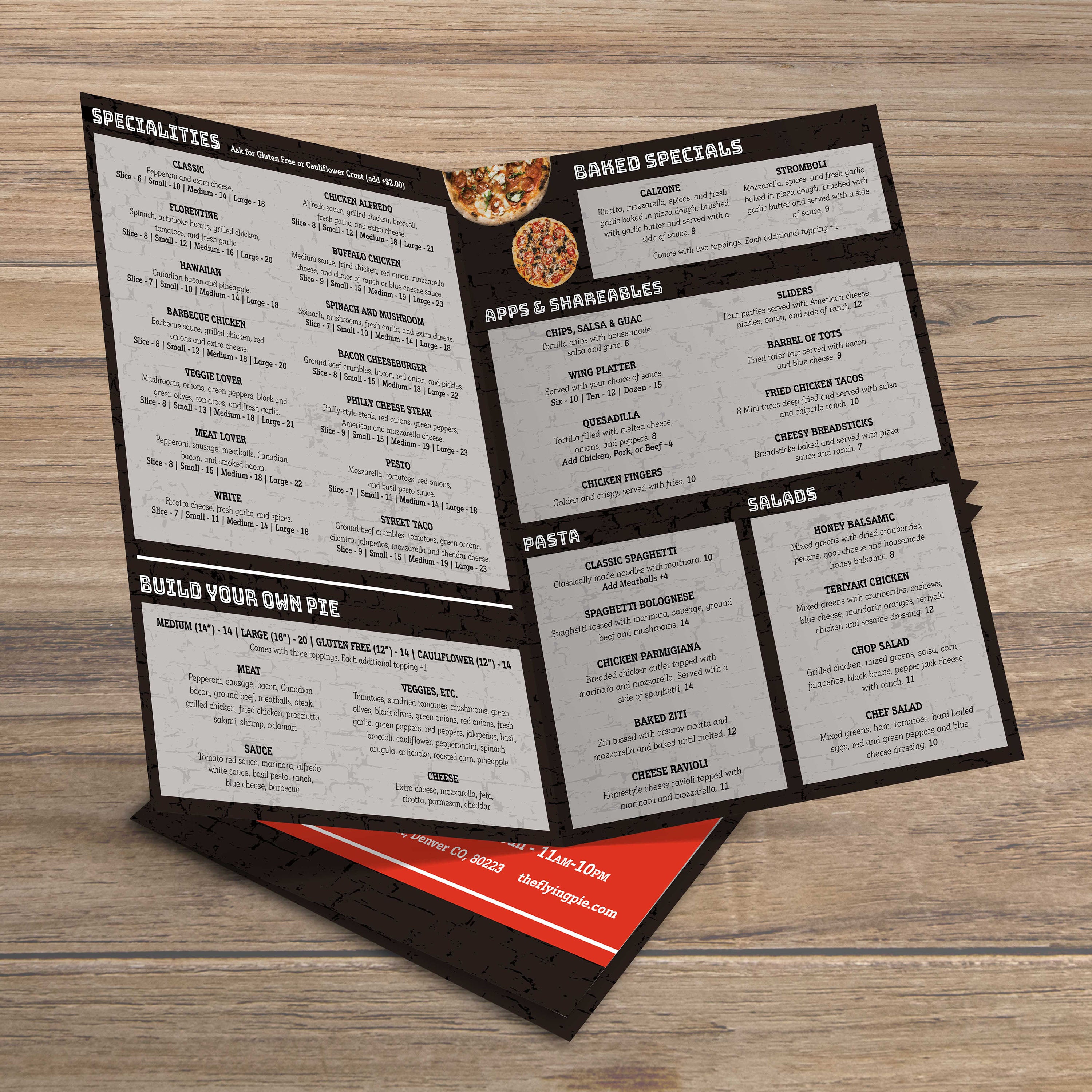
Signature pizzas should be the easiest items to choose from on the menu. A well-built template provides a clean section for signature pizzas, featuring short descriptions and consistent formatting. This makes them feel curated and premium, which supports higher-value ordering. It also helps first-time customers choose quickly because they don’t have to build a pizza from scratch to feel confident about their order.
Mistakes That Make Pizza Menus Feel Crowded
The most common pizza menu mistakes include overcrowding, using too many fonts, inconsistent pricing placement, and listing every topping as a lengthy block of text. Another issue is mixing build-your-own and specialty pizzas in the same area, which confuses customers. A strong template prevents these problems by enforcing spacing and hierarchy, ensuring that even an extensive pizza menu remains clean and readable. For pizza concepts that also use branded table items for promotions and loyalty offers, we offer Free 4 x 4 Coaster Template layouts that help keep small-format branding consistent with the main menu without adding clutter.
A pizza menu should guide customers through ordering in a precise, logical sequence. When the menu structure matches how people actually order, customers choose faster, and the restaurant sells more add-ons without needing extra explanation. The goal is to make it easy for someone to start with an appetizer, pick a pizza, customize if needed, and finish with drinks or desserts, all without confusion.
Appetizers and Shareables That Drive Early Add-Ons
Appetizers should appear early because they influence the rest of the order. Items like garlic knots, wings, mozzarella sticks, and salads often get added while customers browse pizzas. A template keeps appetizers in a clean section, allowing guests to spot them quickly, which increases add-on sales without slowing down ordering.
Signature Pizzas vs. Build-Your-Own Layout
Signature pizzas and build-your-own options need clear separation. Signature pizzas are the fastest decision for most customers, while build-your-own options are best for guests who want more control. A strong template gives both sections their own space, using consistent formatting so customers understand what’s included, how toppings work, and how pricing changes based on size or add-ons.
Crust Options, Sizes, and Specialty Bases
Crust and size choices should be presented in a way that feels simple, not like a list of rules. A good template keeps crust options and size pricing in one predictable place so customers don’t have to search. If specialty crusts or bases are offered, the menu should clearly display them, with any pricing differences listed consistently and accurately.
Sides, Salads, Desserts, and Drinks Placement
Sides, salads, desserts, and drinks should follow pizzas on the menu, allowing for a natural ordering flow. These sections support a higher ticket size when they are cleanly formatted and easy to scan. A template ensures these categories stay separate and readable, allowing customers to add items quickly without feeling overwhelmed by a lengthy menu.
Combo Deals and Family Bundles Formatting
Combo deals are often where pizza shops win on ticket size, but they need clarity on their offerings. A good menu template formats combos in a structured way with clear inclusions, pricing, and upgrade rules. When bundles are easy to understand, customers are more likely to choose them instead of building an order item by item.
Pizza shops often require more space than other restaurants because their menus include various sizes, crust types, topping options, signature pizzas, sides, and combo deals. The right menu size helps you keep everything readable without having to shrink fonts or overcrowd sections. Here are the formats that work best for pizza concepts with numerous options.
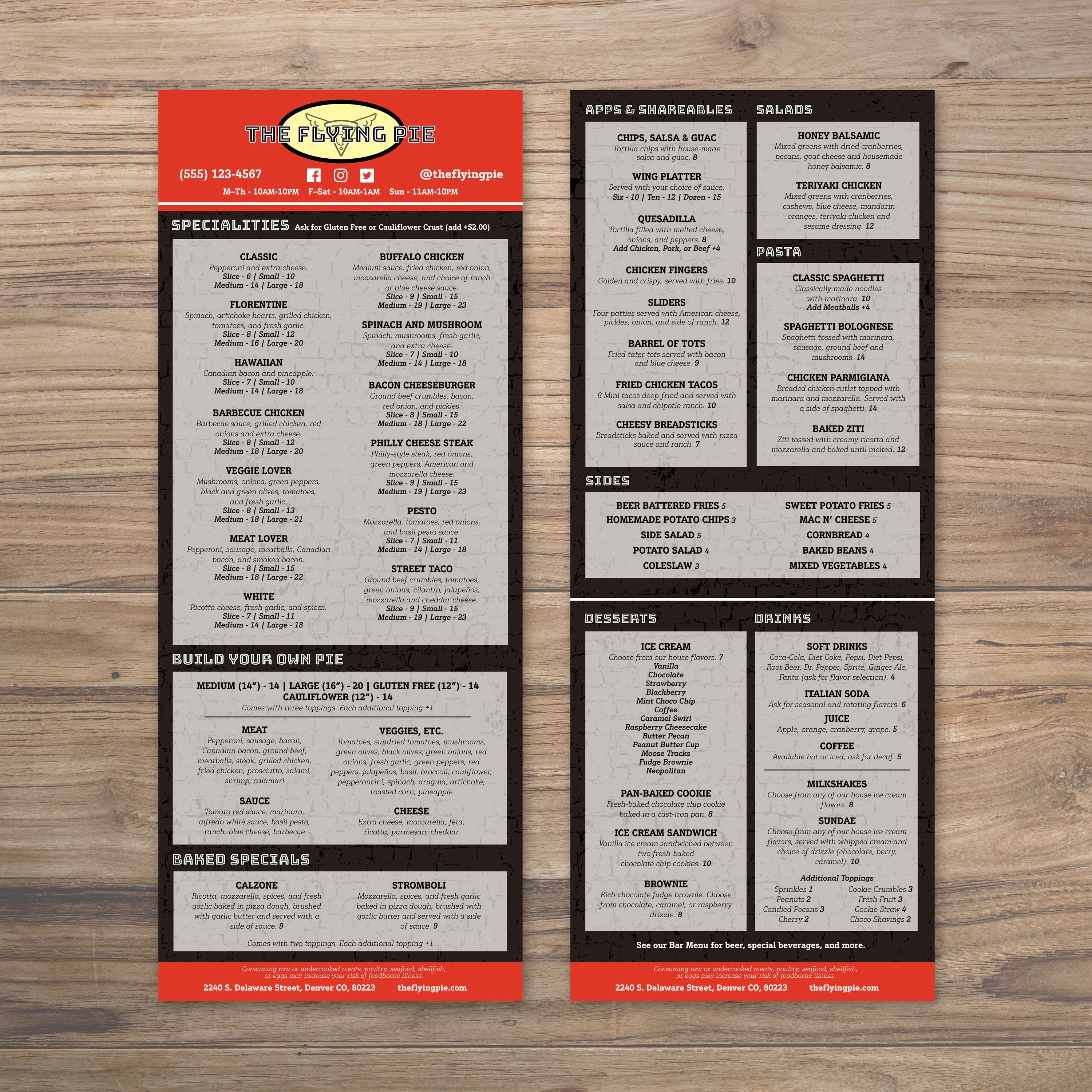
- When 8.5" x 14" Is Better Than 8.5" x 11": Pizza menus get crowded quickly, so an 8.5" x 14" format gives you more vertical space for signature pizzas, topping lists, and combo deals without compressing text. We offer Free 8.5 x 14 Menu Templates that help keep large pizza menus clean, premium, and easy to scan.
- Trifold Layouts for Larger Pizza Menus: Trifold templates are ideal when you need a comprehensive menu that remains organized. The fold structure naturally separates categories like signature pizzas, build-your-own options, sides, and drinks. We offer Free 11 x 17 Trifold Templates that support clean category flow without making the menu feel overwhelming.
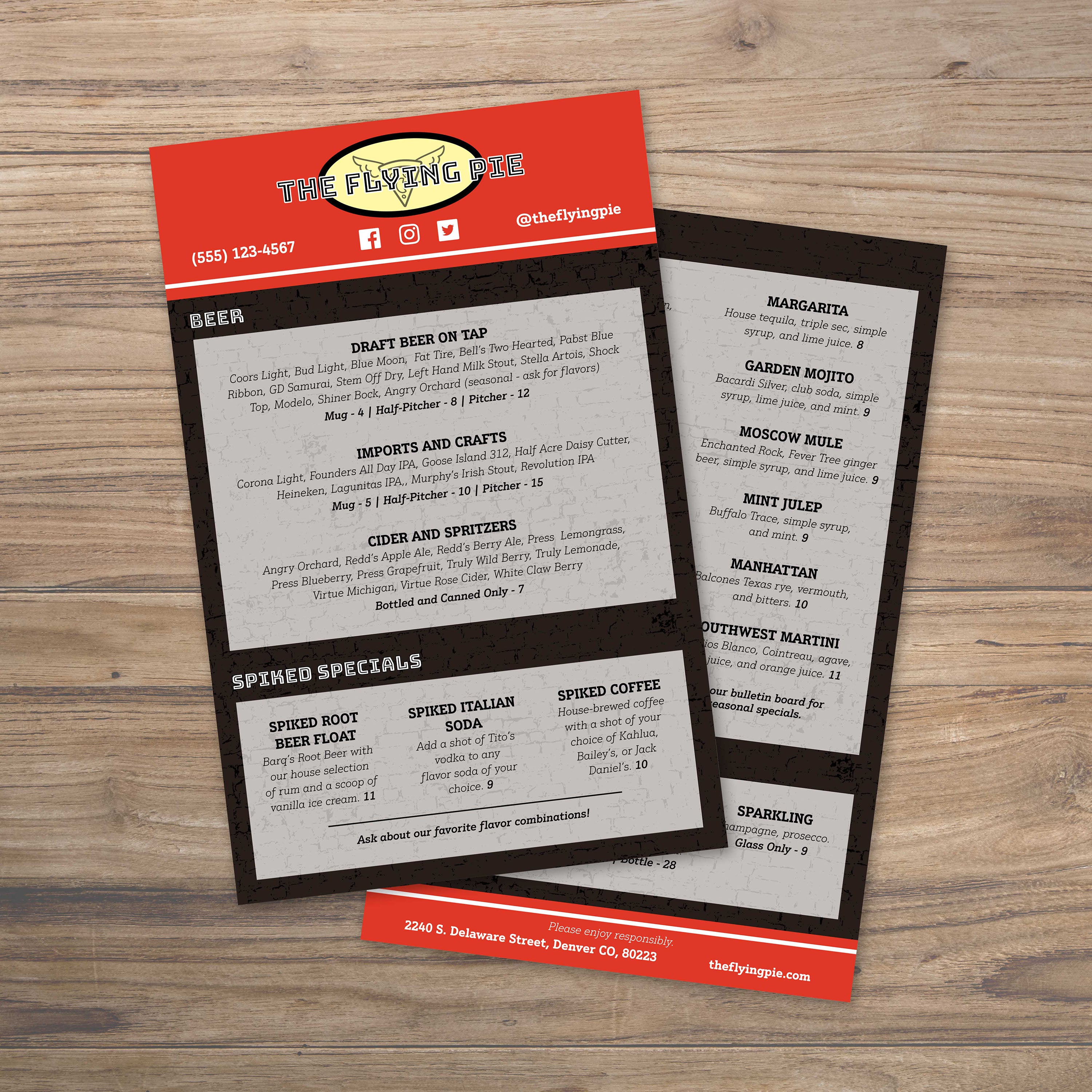
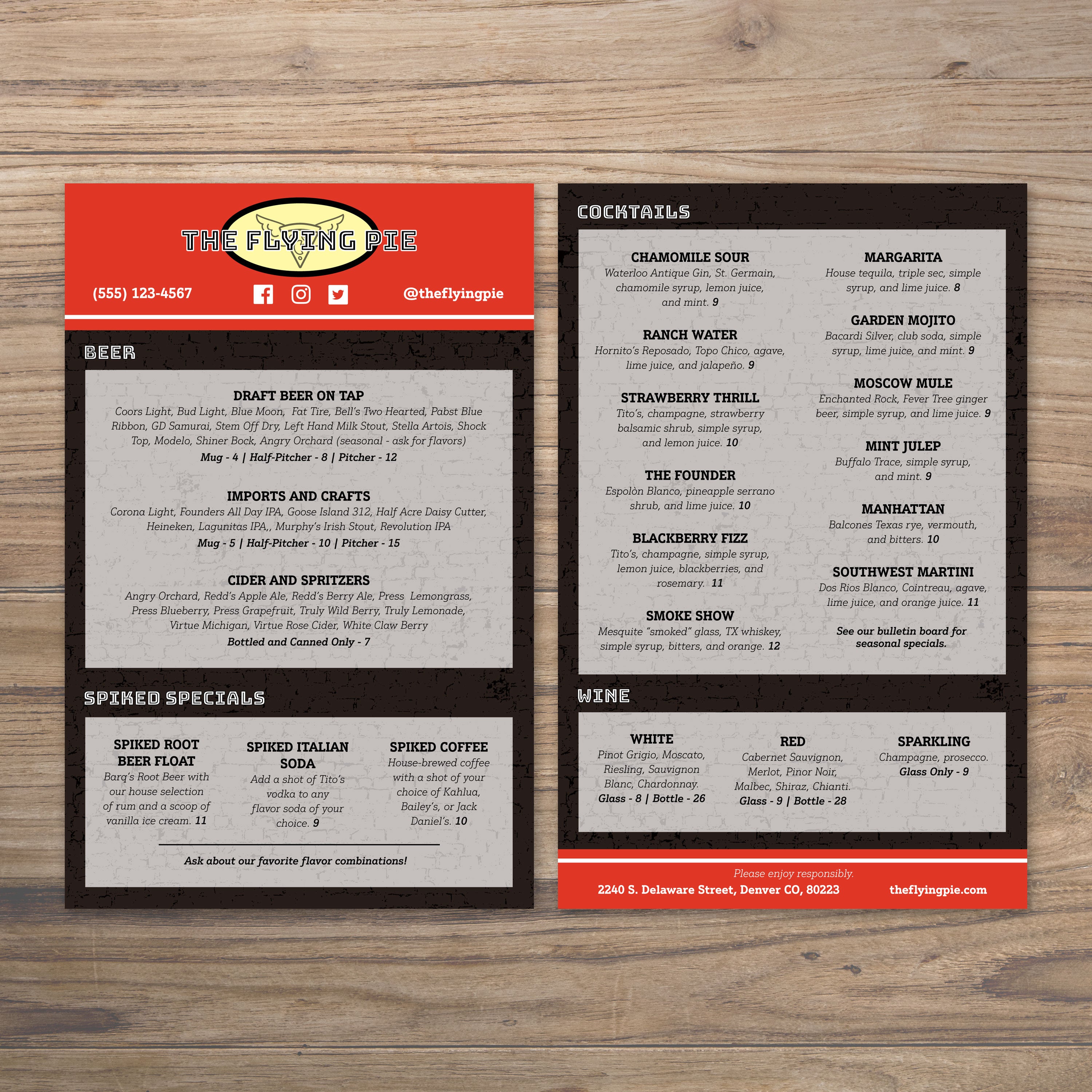
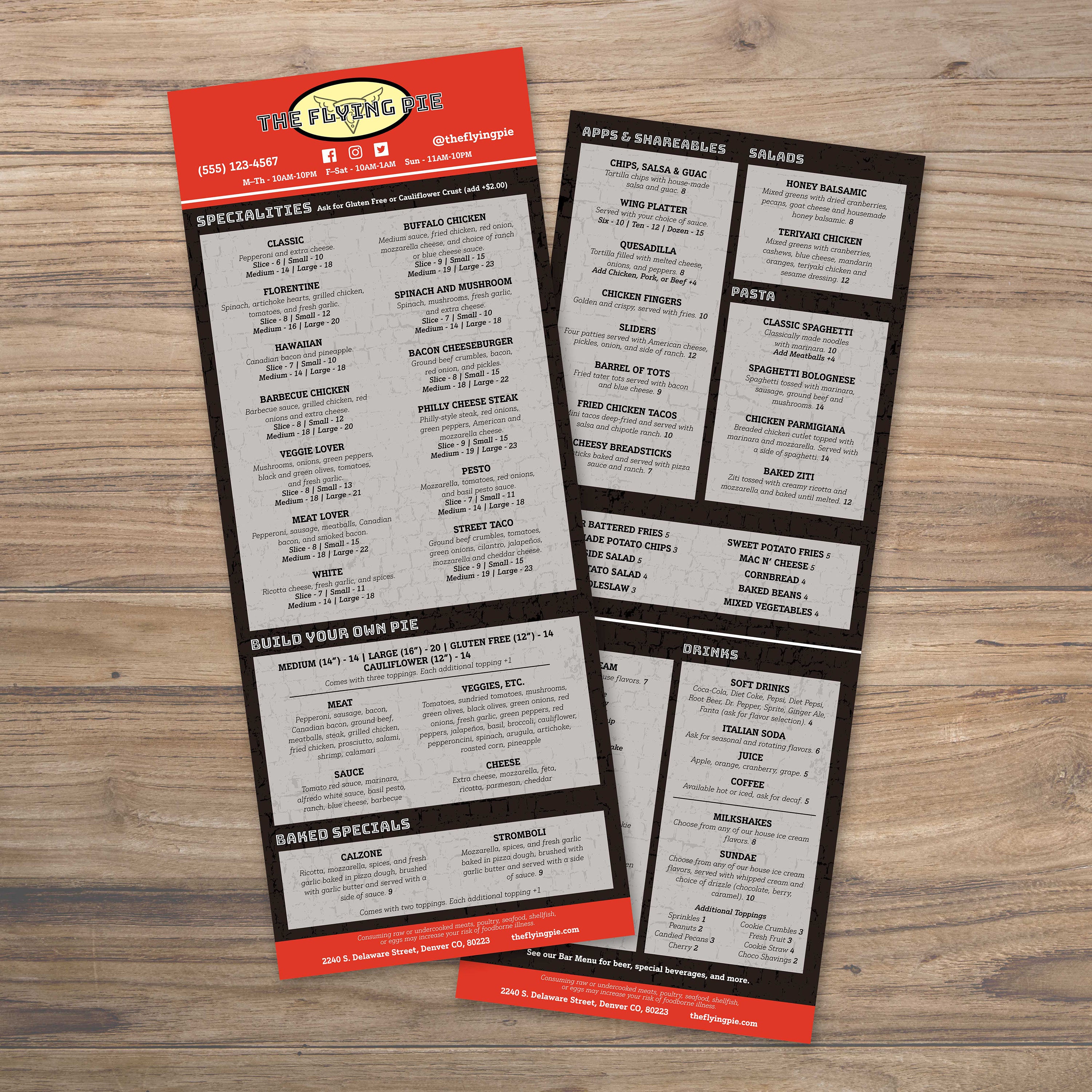
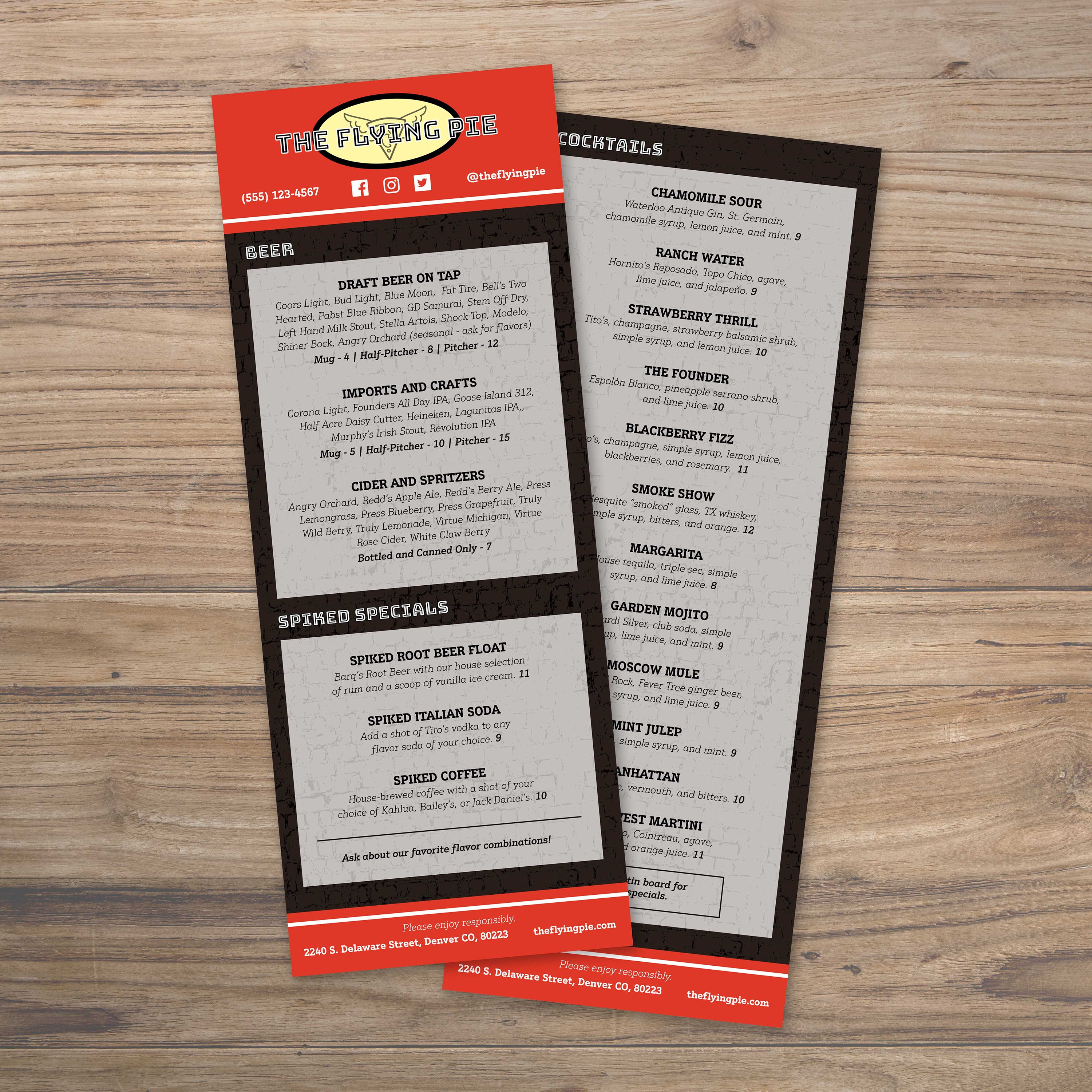
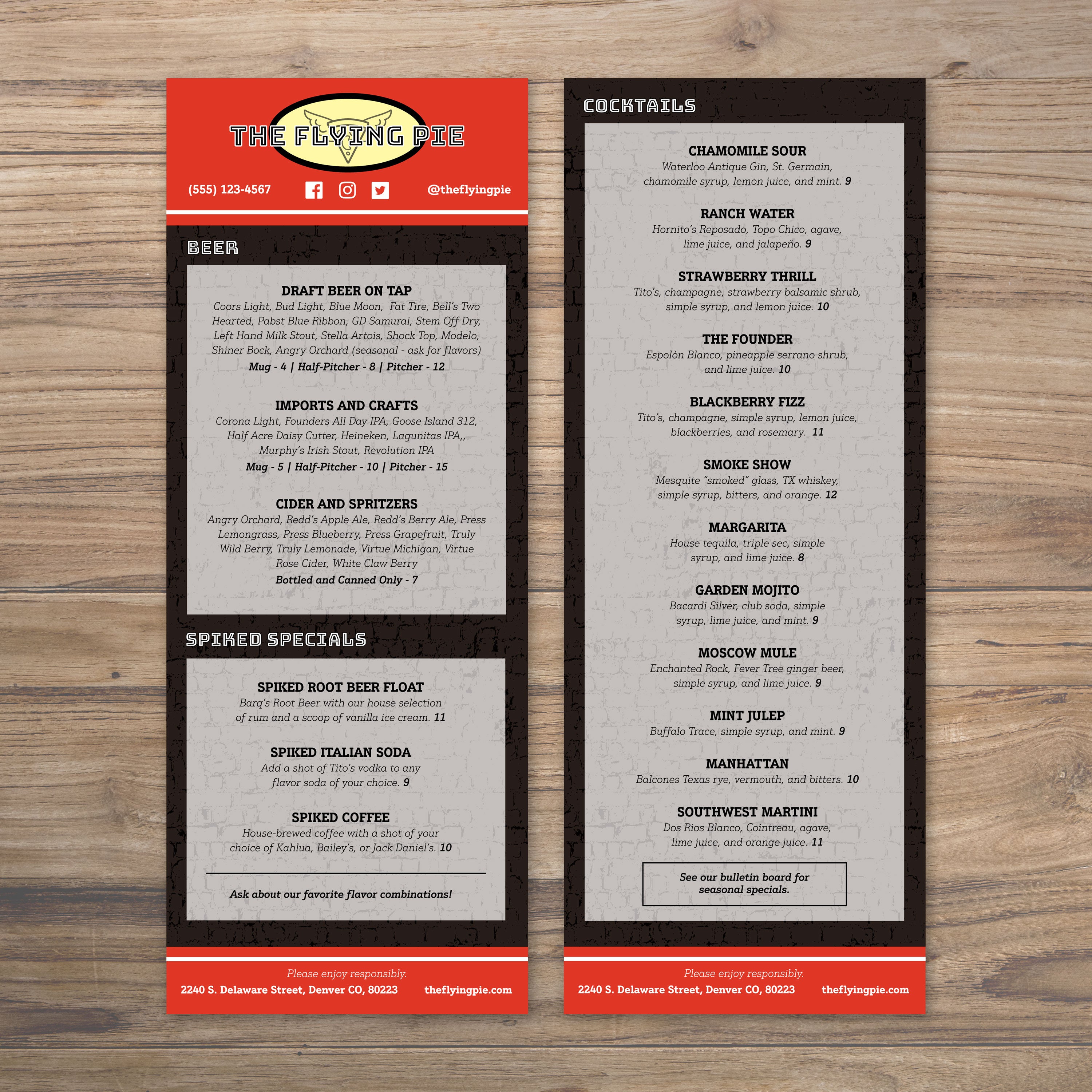
- Slim Formats for Drink Menus and Desserts: Slim menus are ideal for beverage lists, dessert sections, or special promotions. They keep the menu focused and easy to handle at the table or counter, while still matching the brand style of the main pizza menu.
- Counter Menus vs. Table Menus vs. Wall Menus: Many pizza shops use multiple menu touchpoints. A table menu supports browsing, a counter menu supports fast ordering, and a wall menu supports easy readability from a distance. Choosing the right size for each location helps expedite ordering and ensures a consistent experience across dine-in and takeout environments.
- Takeout Inserts and Box-Toppers That Match the Menu: Inserts and box-topper menus help reinforce your offerings after the order is placed, especially for repeat business. A template-based system makes it easier to keep these pieces consistent with your main menu, support seasonal deals, and promote loyalty programs without redesigning every time.
Pizza menus need to be both craveable and readable. Because the menu offers extensive customization and a wide range of items, descriptions should be concise, clear, and designed to help customers make informed decisions quickly. The best pizza descriptions use ingredient-driven language and a predictable format, allowing customers to scan without feeling overwhelmed.
Ingredient-Forward Descriptions with Minimal Words
Pizza descriptions should focus on the ingredients that create flavor and value, such as house sauces, premium cheeses, fresh toppings, or finishing oils. Instead of writing lengthy descriptions, focus on a few key ingredients that clearly convey to the customer what makes the pizza special. Short descriptions also make the menu feel cleaner and more modern.
Highlighting Premium Toppings and House Sauces
Premium toppings should be presented in a way that makes them feel worth the upgrade. Instead of listing every topping equally, highlight the toppings that signal quality, such as specialty meats, fresh vegetables, or unique cheese blends. When premium toppings are described clearly, customers are more likely to choose higher-value specialty pizzas or upgrade their build-your-own order.
Labeling Heat Levels and Dietary Options
Clear labels help customers place orders more quickly and reduce questions at the counter. Use simple markers for spicy pizzas, vegetarian options, or gluten-sensitive offerings if applicable. Labels should be consistent across the menu and easy to spot without disrupting the layout. This helps customers self-select quickly and avoids confusion during busy service periods.
Describing Specialty Crusts Without Jargon
Crust options should be described with clarity, not restaurant jargon. Customers need to understand what they are choosing, whether it’s thin crust, deep dish, stuffed crust, or a specialty base. Keep descriptions short and focus on texture and experience. This builds confidence and encourages customers to try upgrades without hesitation.
Featuring Limited-Time Pizzas and Seasonal Specials
Seasonal pizzas and limited-time specials perform best when they feel curated and exclusive. A short label, clean placement, and consistent formatting make specials easy to spot without crowding the menu. Keeping seasonal descriptions concise also makes it easier to rotate items frequently while maintaining a clean menu structure.
Pizza menus face real-world wear and tear fast. Grease, sauce spills, drink condensation, and constant handling can make laminated menus look cloudy or damaged over time. Traditional lamination may appear clean at first, but it often bubbles, peels, or delaminates with frequent wiping, making menus harder to read and less professional. Our waterproof menu printing is designed to keep pizza menus clear, durable, and easy to maintain without relying on lamination.
- Why Lamination Clouds Up and Delaminates Over Time: Laminated menus rely on an added film layer that breaks down due to repeated cleaning and exposure to moisture. Over time, this layer can develop haze, bubbles, or peeling at the edges, making menus appear worn and reducing readability during ordering.
- Soap and Water Cleaning for Grease and Sauce Spills: Pizza menus often get exposed to grease, sauce, and sticky residue. We recommend simple soap and water for our paper, and because the material itself is waterproof, menus stay clear through repeated wipe-downs without the clouding that happens with lamination.
- Folded Menus That Don’t Crack Like Lamination: Many pizza restaurants use folded menus to separate signature pizzas, build-your-own options, sides, and drinks. Traditional lamination typically cannot be folded without cracking or peeling at fold lines. Our waterproof menus support bi-folds and tri-folds, remaining durable even through daily handling.
- Thickness Options: 5 Mil, 8 Mil, 10 Mil, and 14 Mil. We offer a range of thicknesses, including 5 Mil, 8 Mil, 10 Mil, and 14 Mil. Thinner options are suitable for inserts and takeout menus, while thicker options offer a sturdier feel for dine-in menus. For 14 Mil, printing may require a commercial press or a high-quality printer.
- Faster Reprints for Seasonal Deals and Pricing Updates: Pizza shops often rotate specials, limited-time pizzas, and bundle pricing. We provide industry-leading turnaround and quick shipping, helping you refresh menus quickly without relying on outdated laminated menus that cloud up over time.
Pizza shops move fast, and menus often change with seasonal specials, rotating deals, and pricing adjustments. At the same time, menus must remain clean and readable despite heavy handling, grease exposure, and frequent wipe-downs. Our menu materials and printing services support long-term durability while making it easier to update menus, inserts, and promotional items without delays.
TerraSlate Waterproof, Rip-Proof Paper for Menus
We print menus on TerraSlate waterproof, rip-proof paper designed for heavy handling and repeated cleaning. Because the material itself is waterproof, menus stay clear and readable without relying on lamination that can cloud up or delaminate over time. This helps pizza shops maintain a clean, professional menu presentation in dine-in and takeout environments.
Menu Printing Services with Industry-Leading Turnaround
Deals change often, and limited-time offers need to be printed quickly. We can print menus for you with industry-leading turnaround and fast shipping, helping you update specials, bundles, and pricing without disrupting service. Fast reprints enable pizza shops to maintain accurate and consistent menus, rather than relying on temporary edits or outdated versions.
Value-Oriented PolySlate for Inserts and Short Runs
Not every update requires a full menu reprint. Our value-oriented PolySlate line offers an economical option for inserts, limited-time promotions, table specials, and short-run printing that still needs a durable, professional look. This is useful for seasonal menus, coupon inserts, and rotating combo promotions.
Hydronote for Inkjet Menu Printing Needs
For pizza shops that prefer in-house printing or use inkjet setups, Hydronote supports inkjet users who want a water-resistant paper option without switching to a laser-based system. This makes it easier to print smaller runs quickly, refresh promotions fast, and keep menus durable while managing updates internally.