Recently viewed
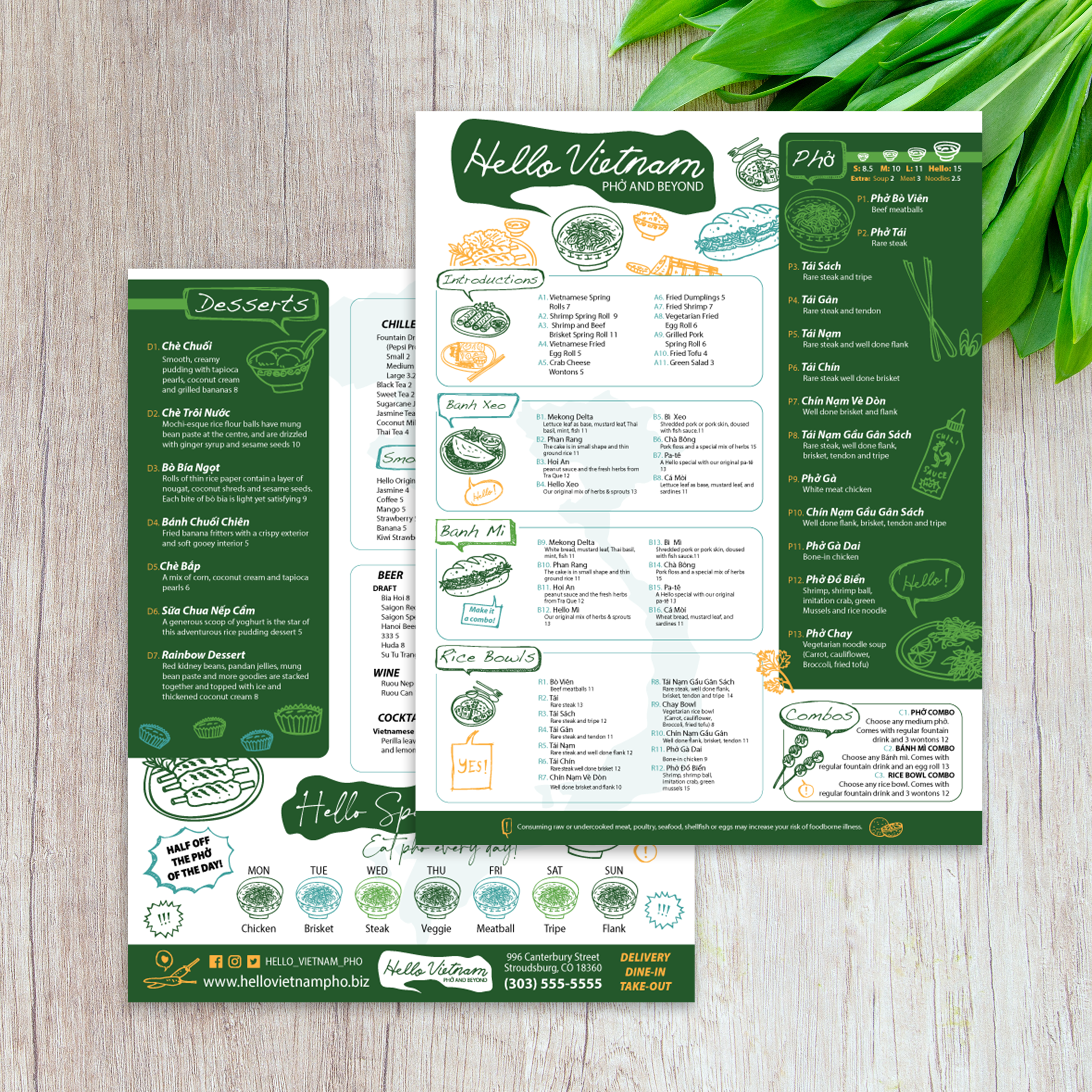
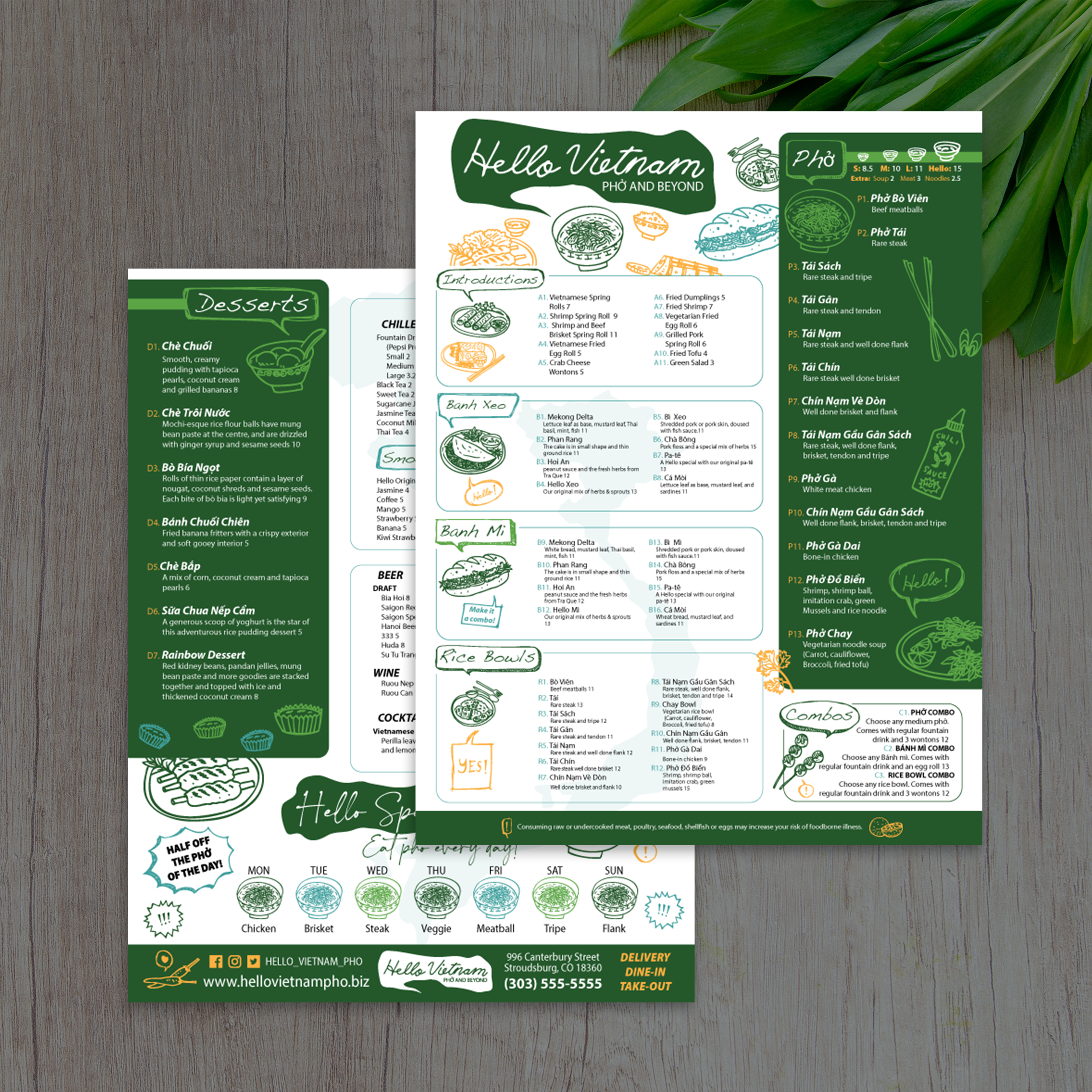
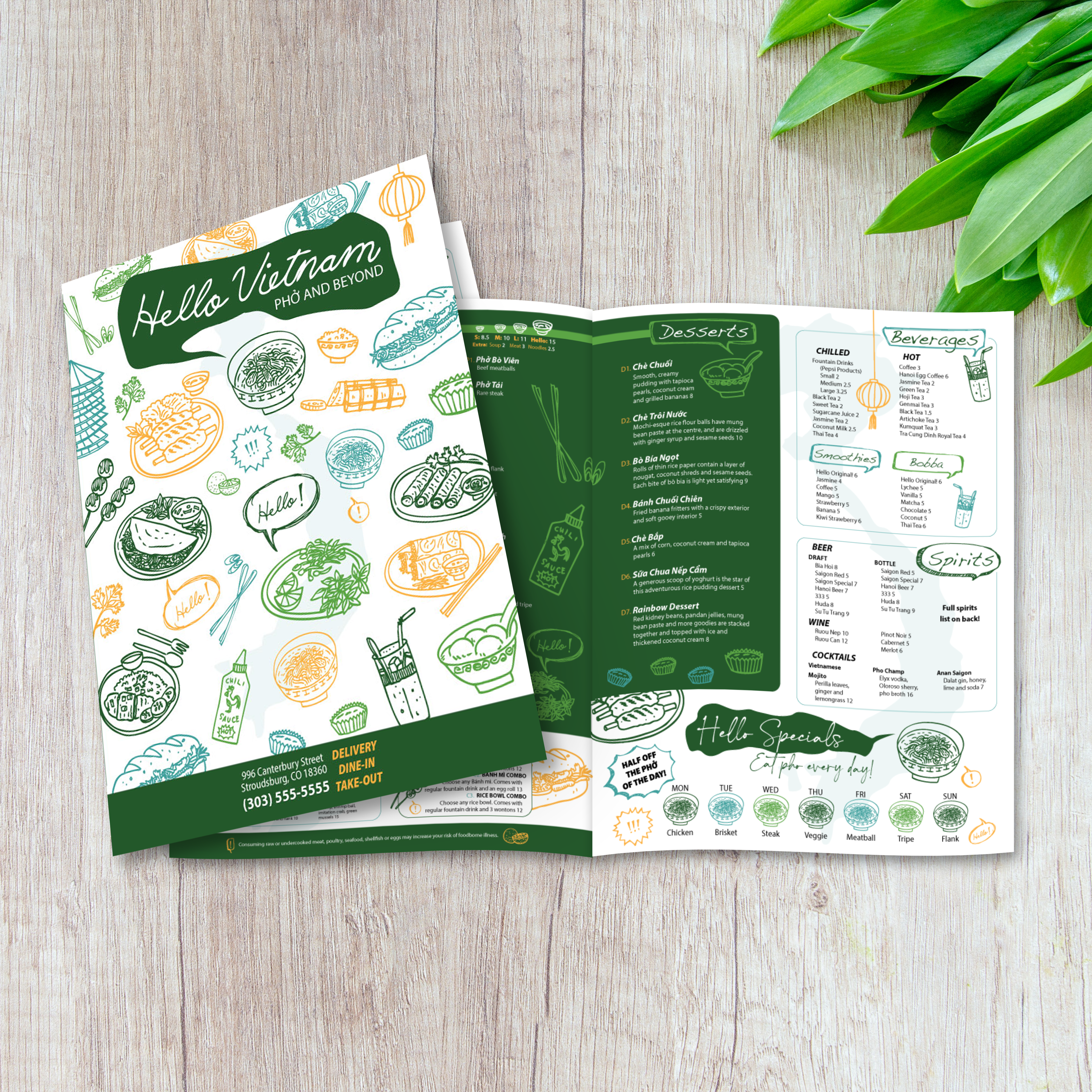
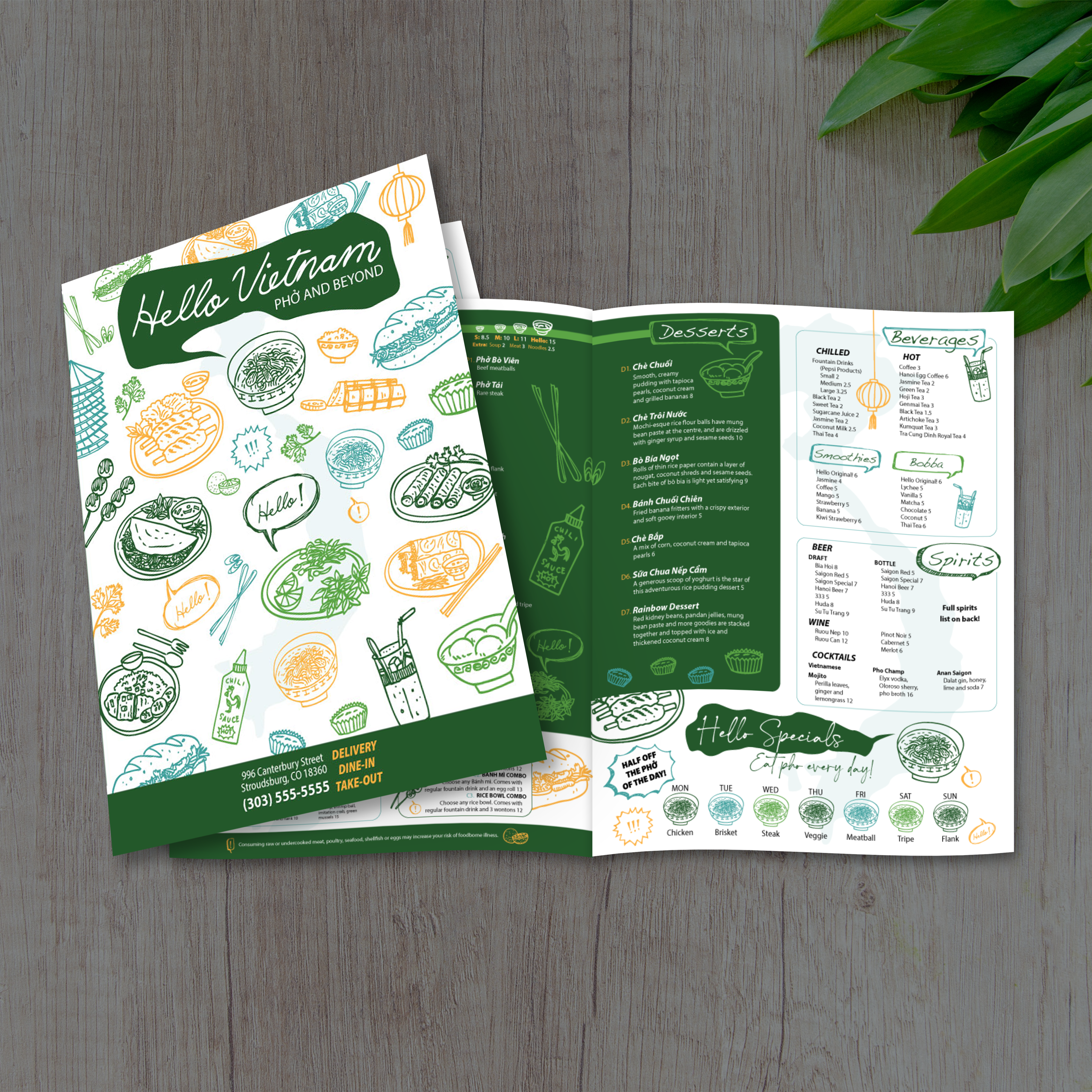
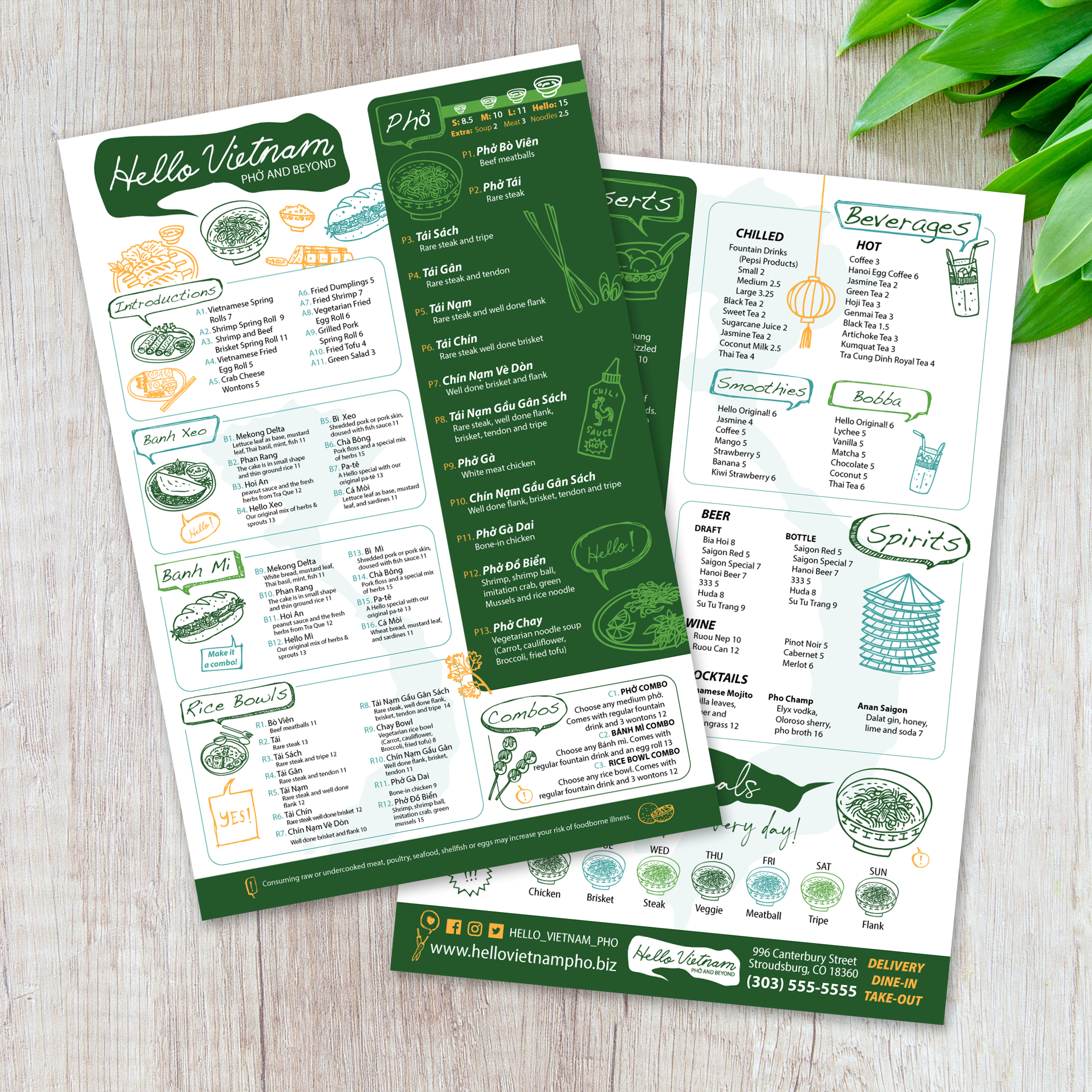
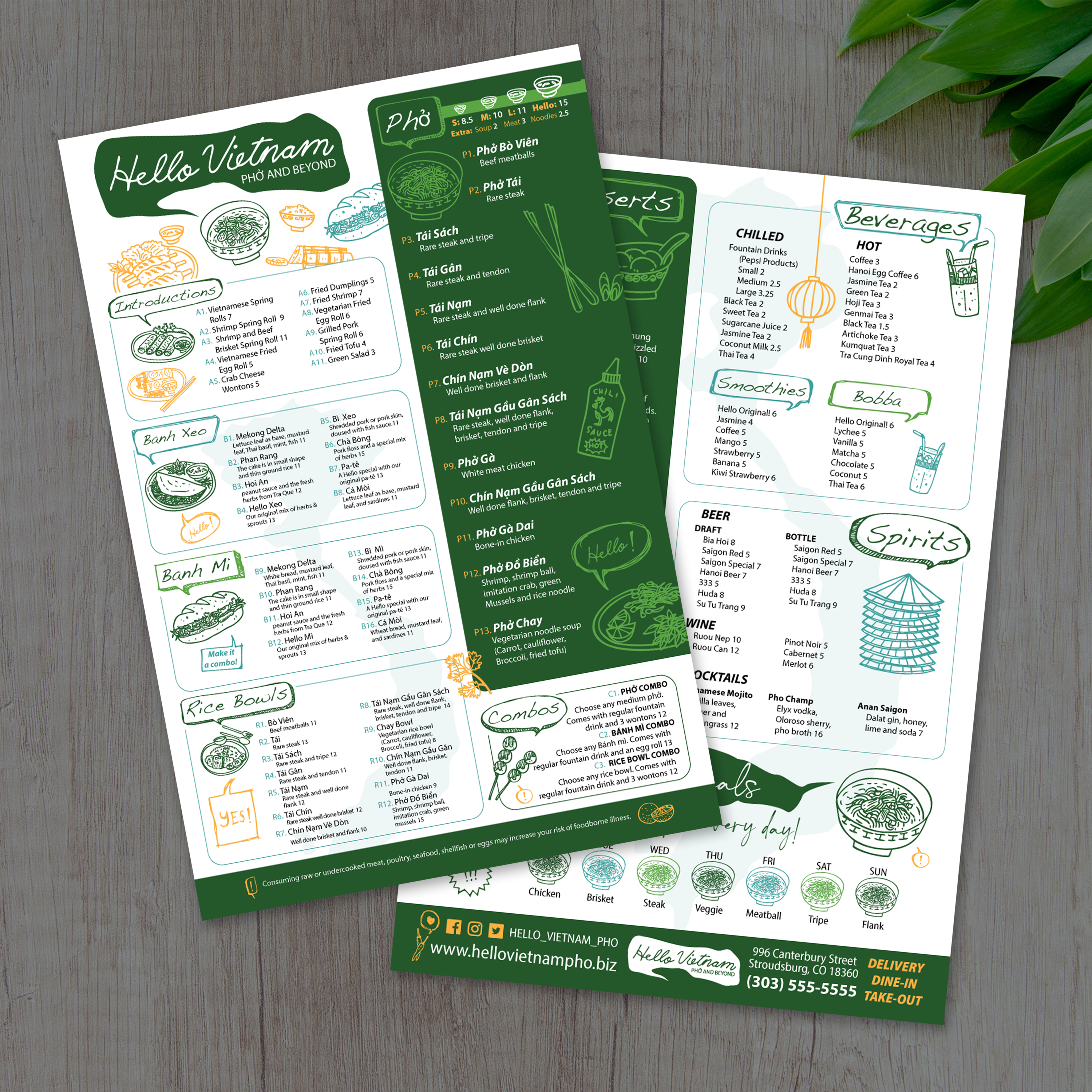
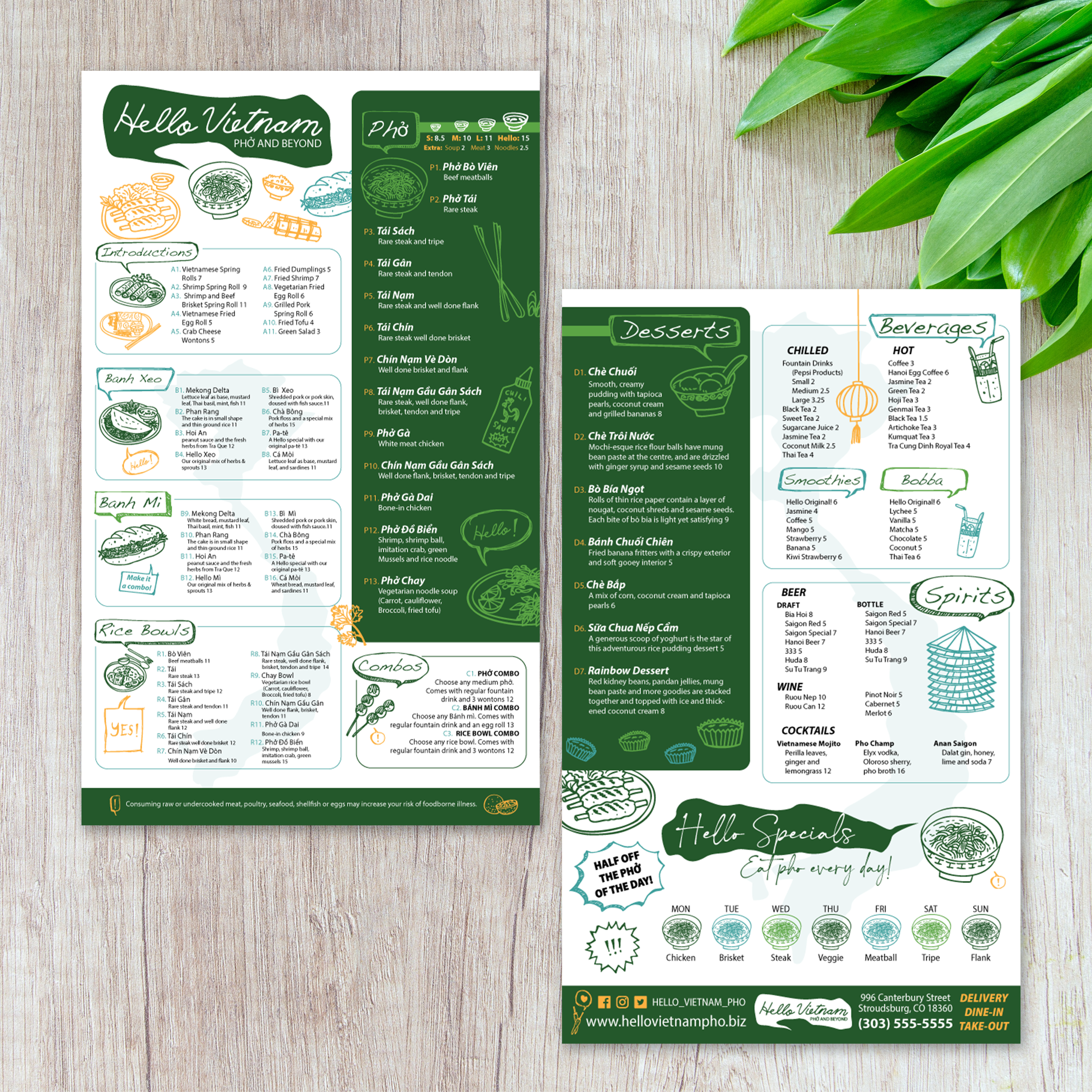
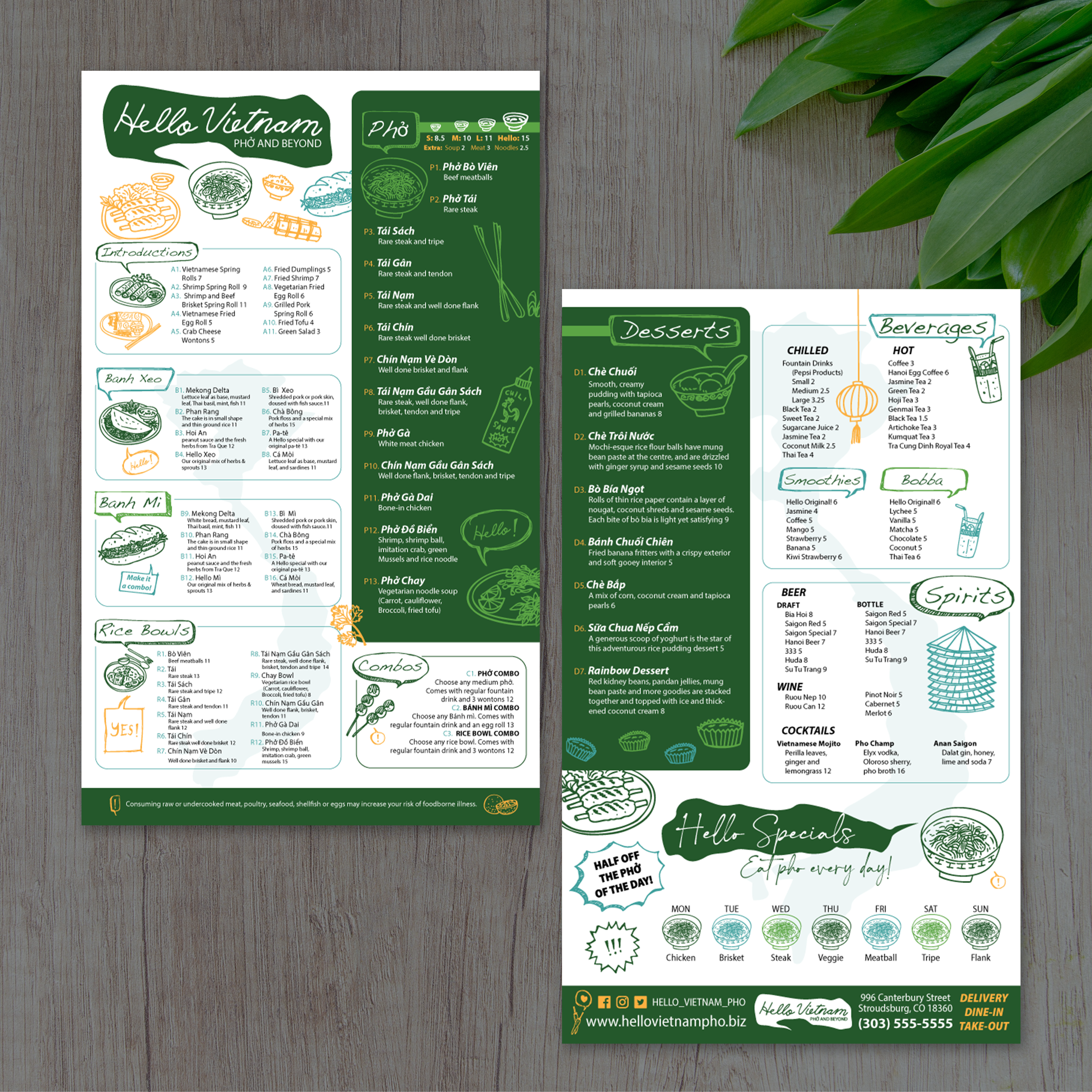
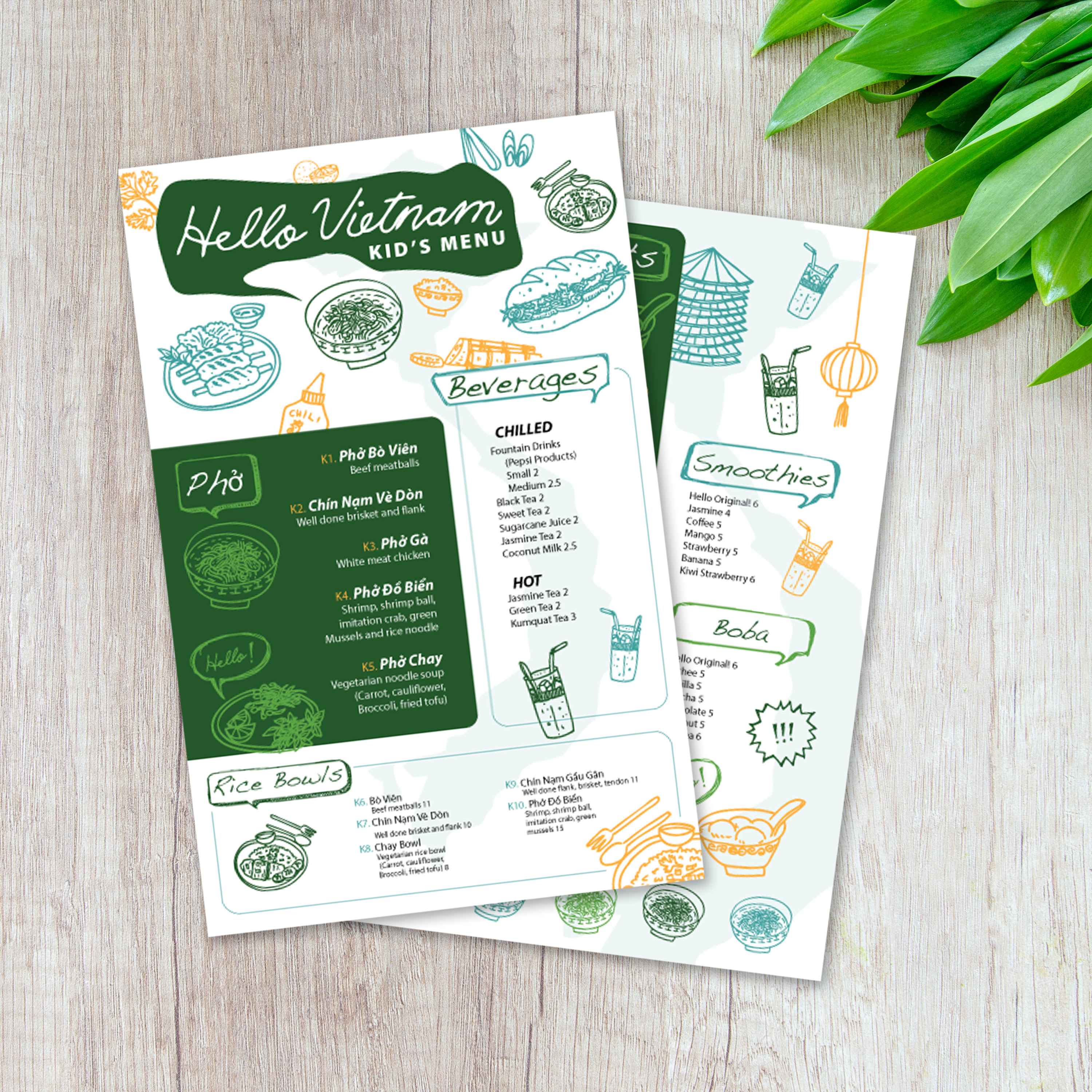
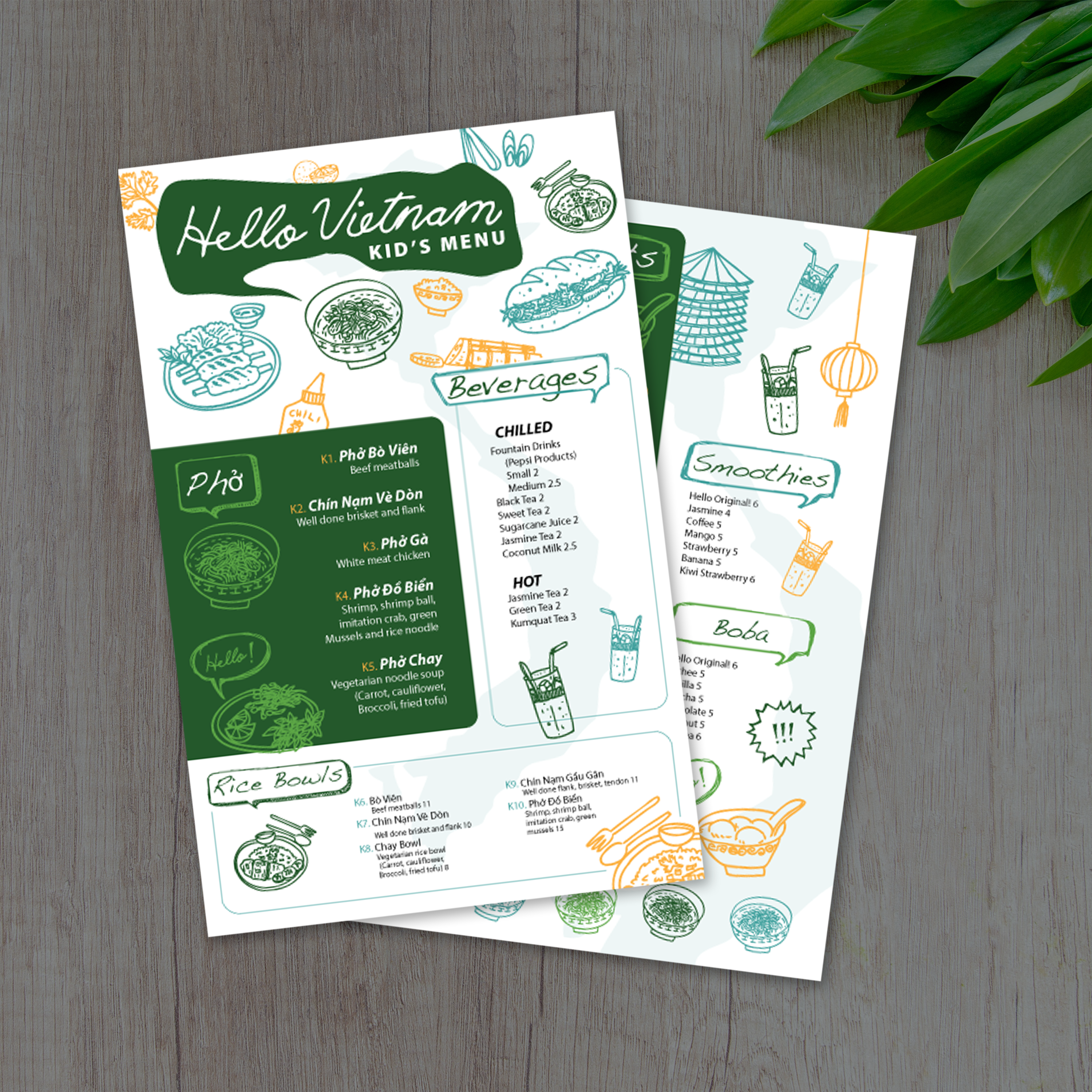
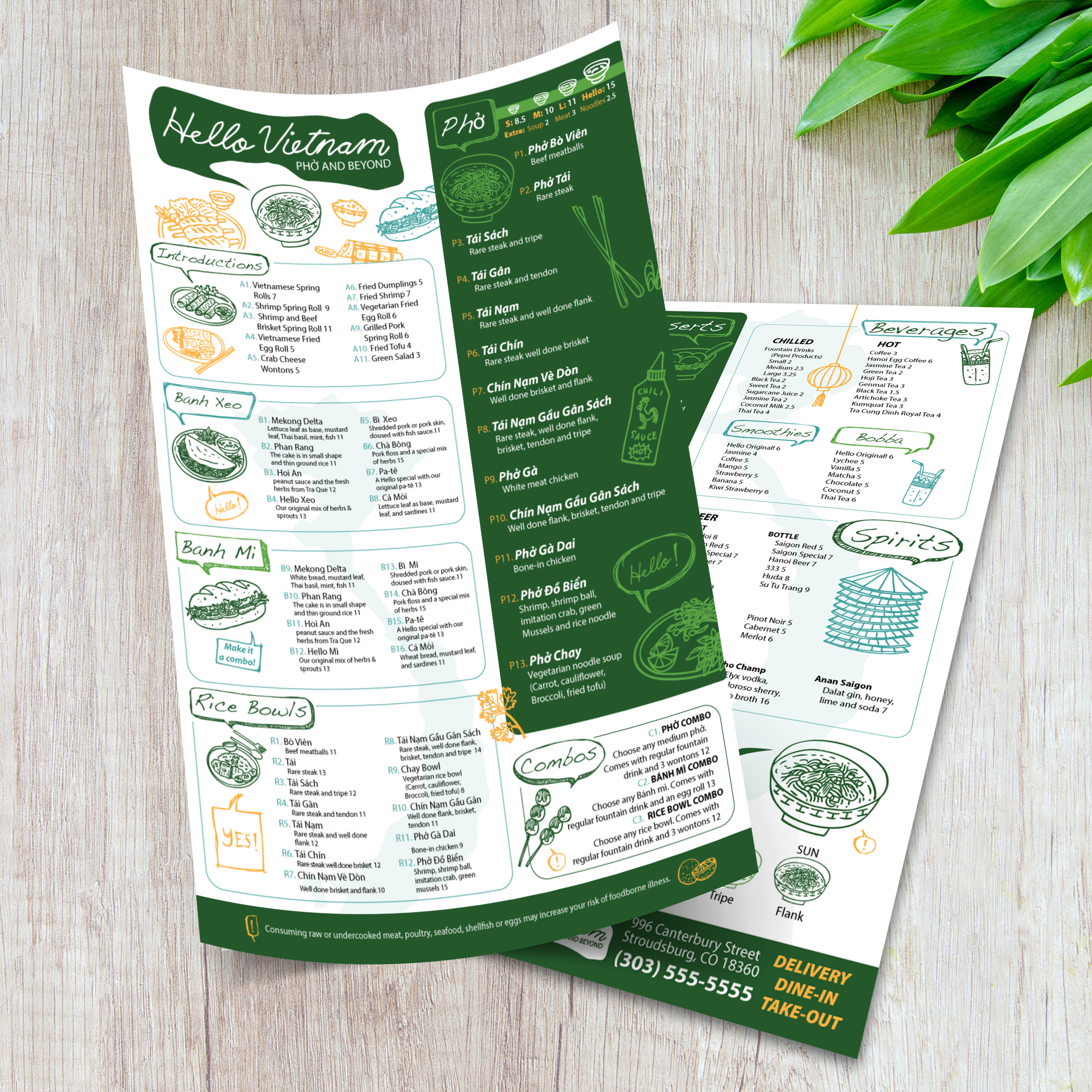
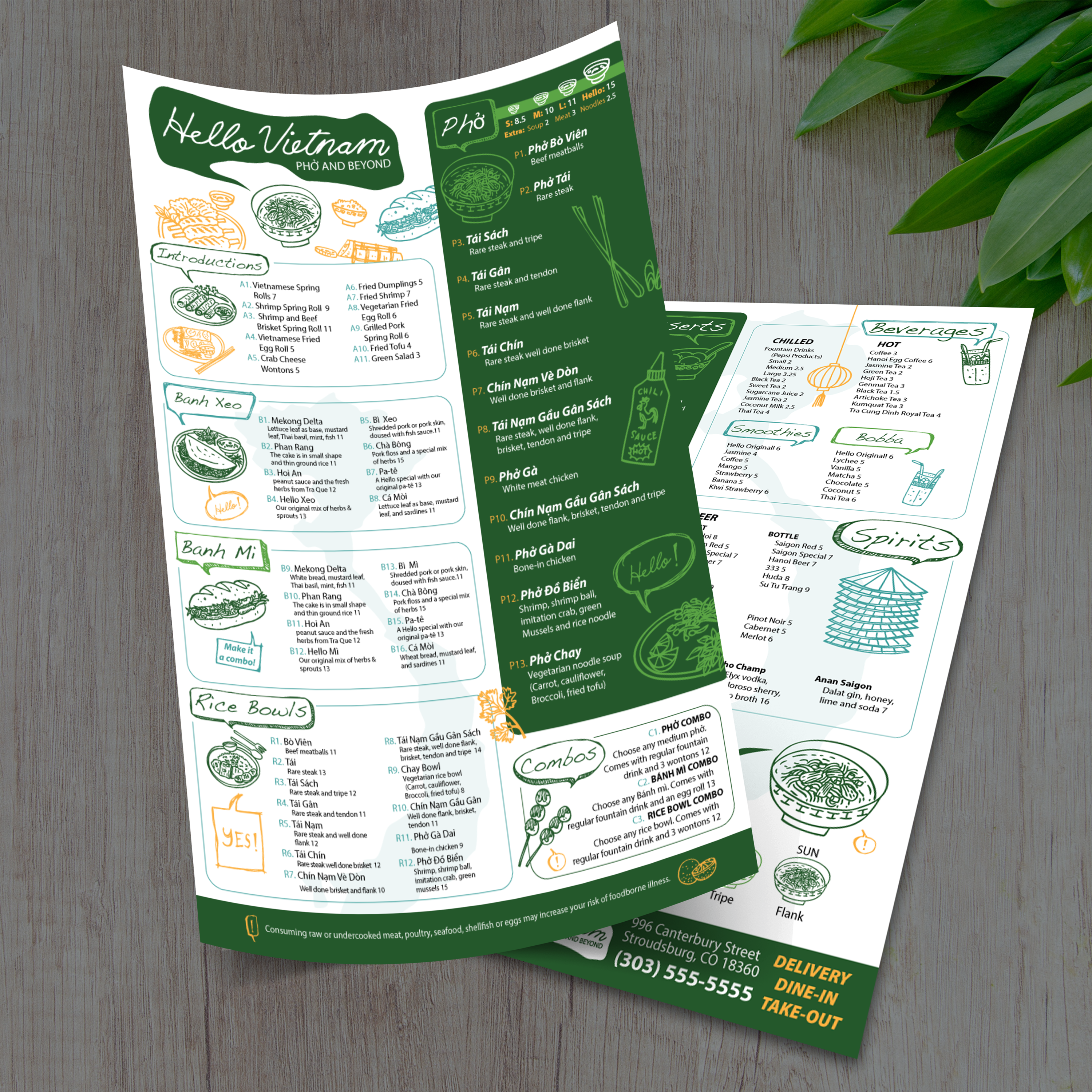
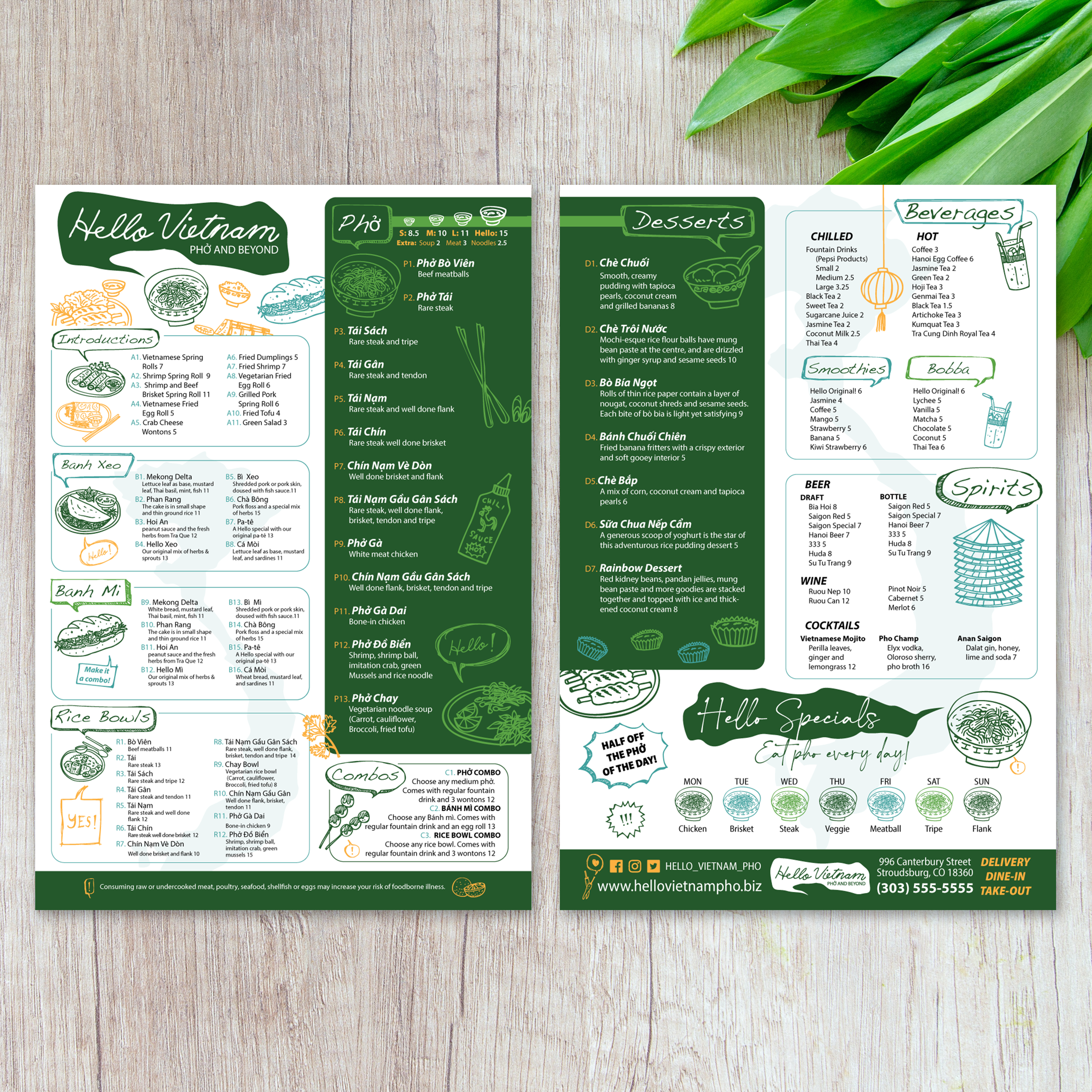
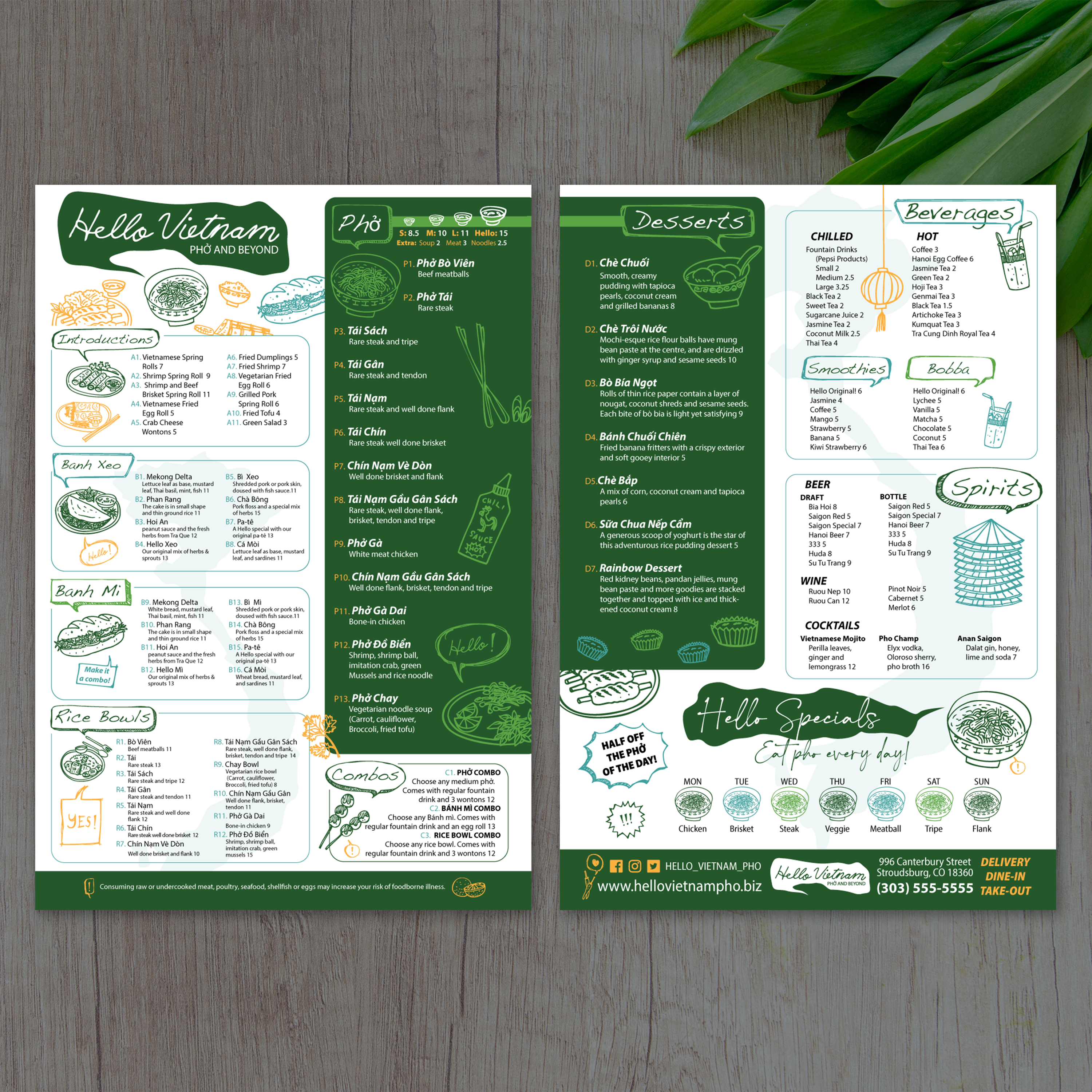
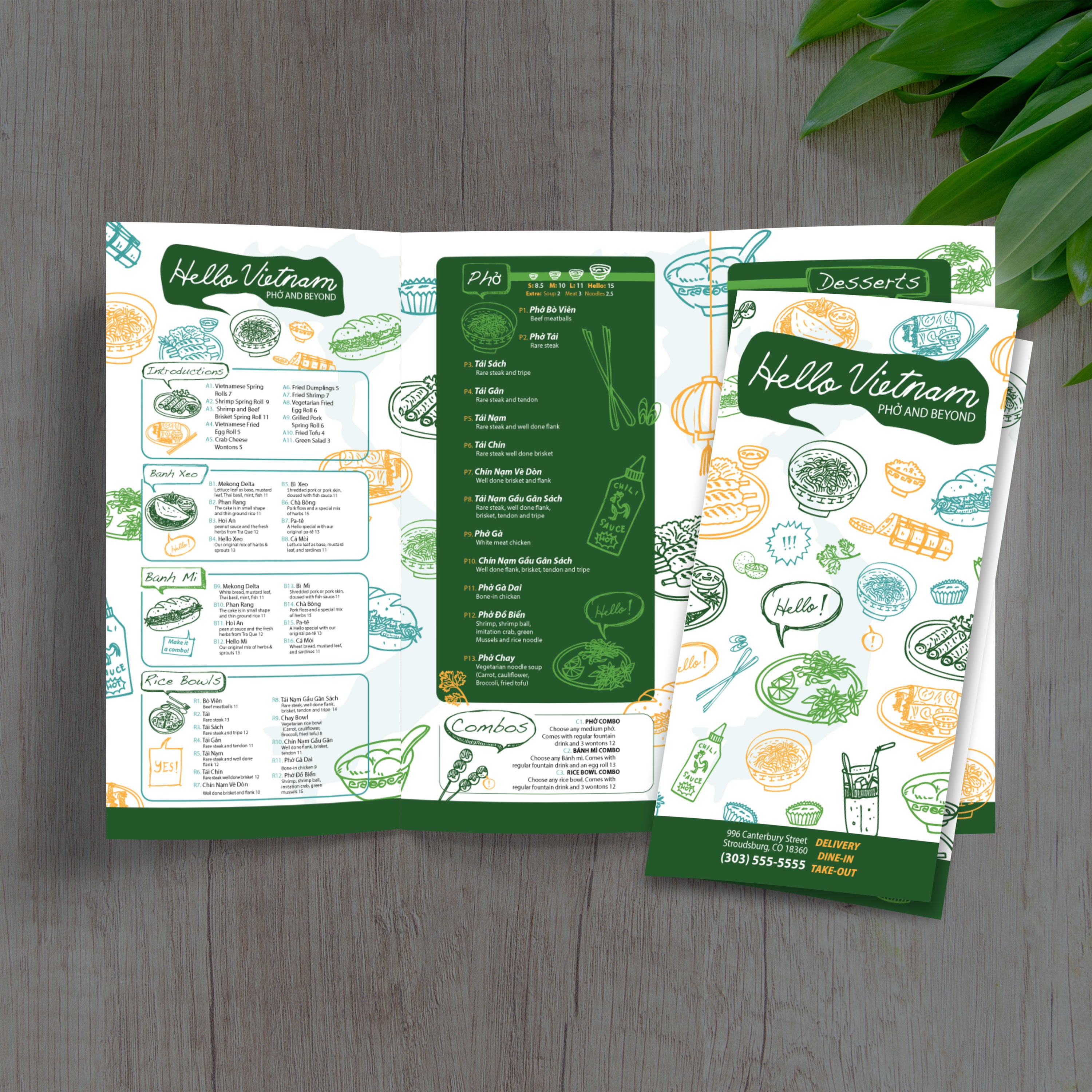
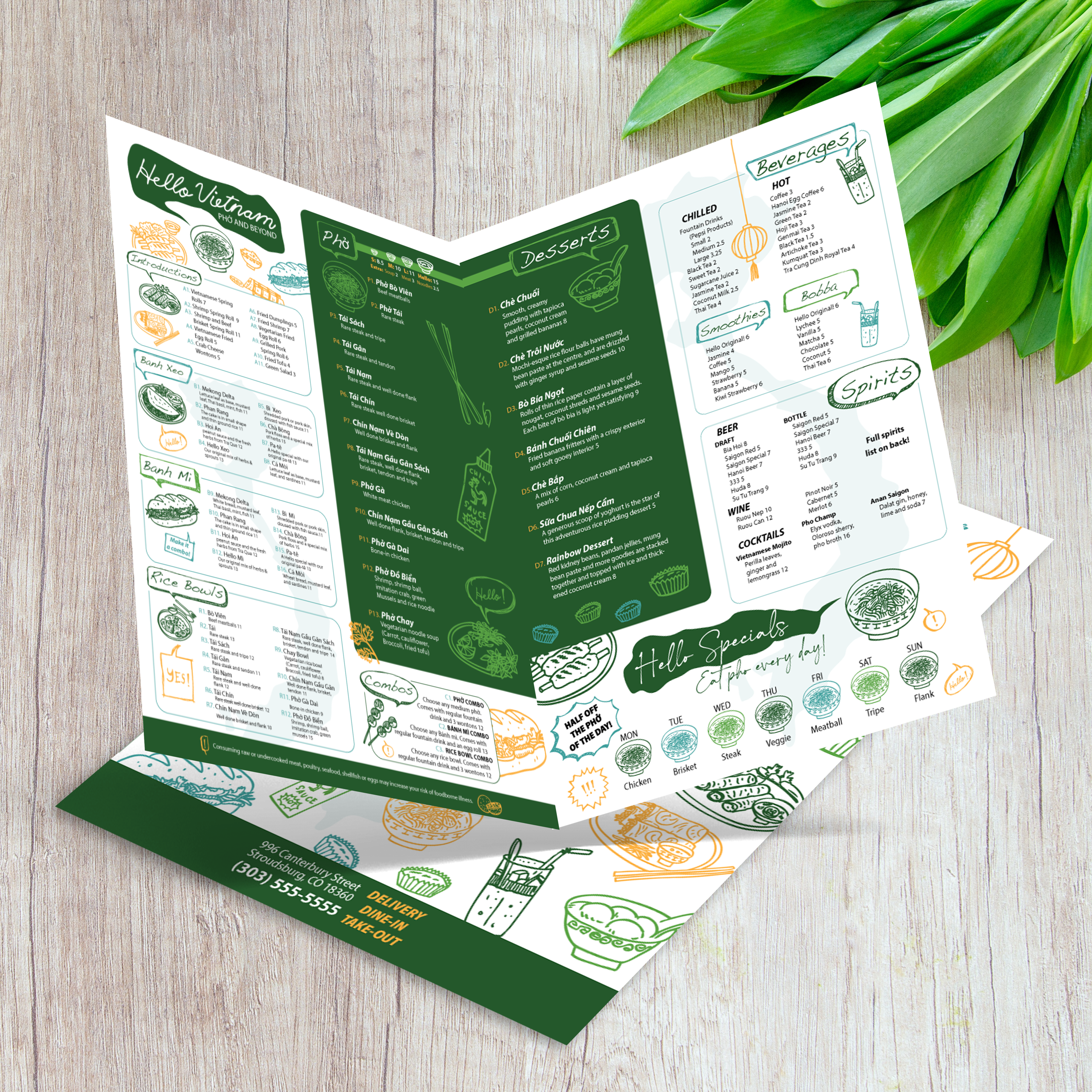
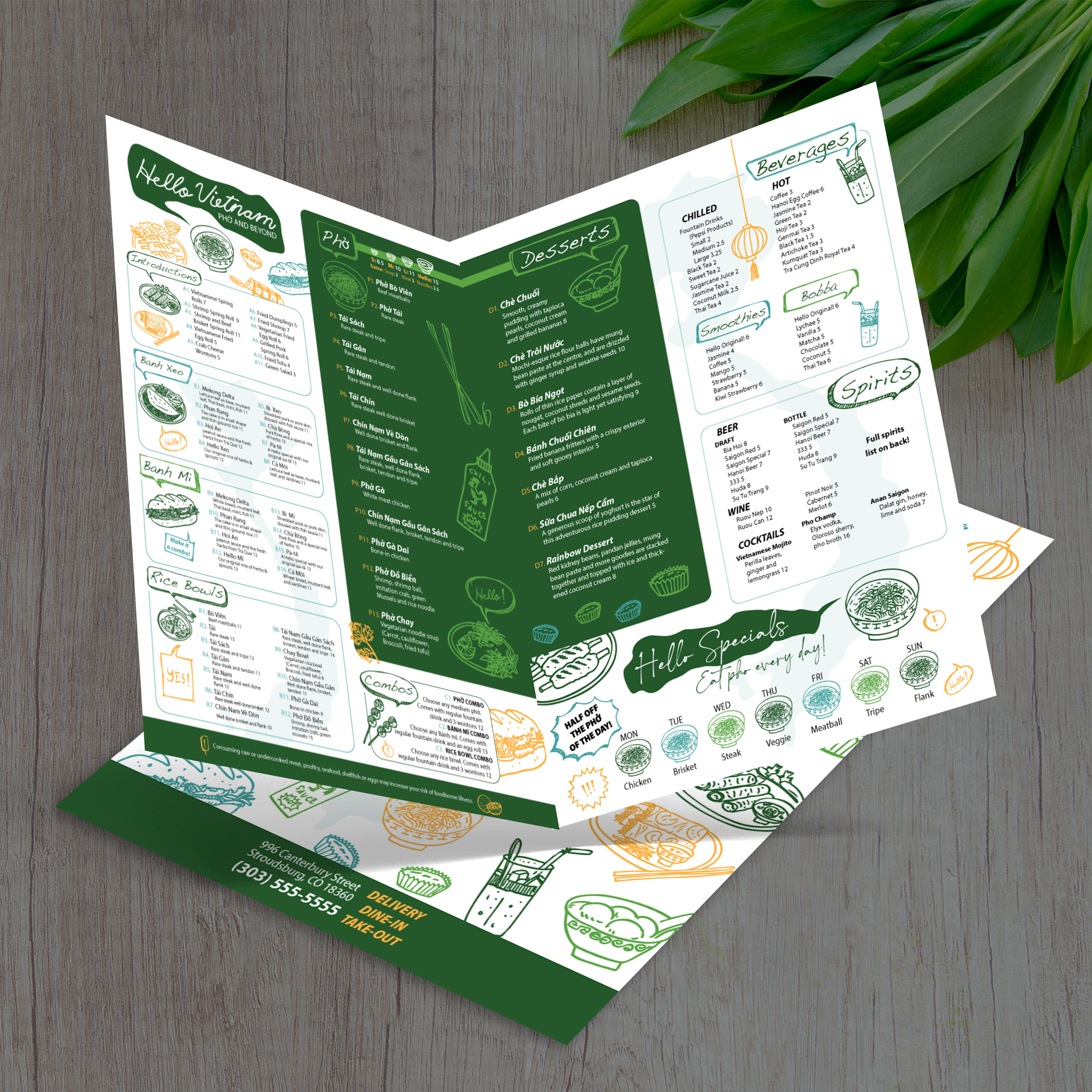
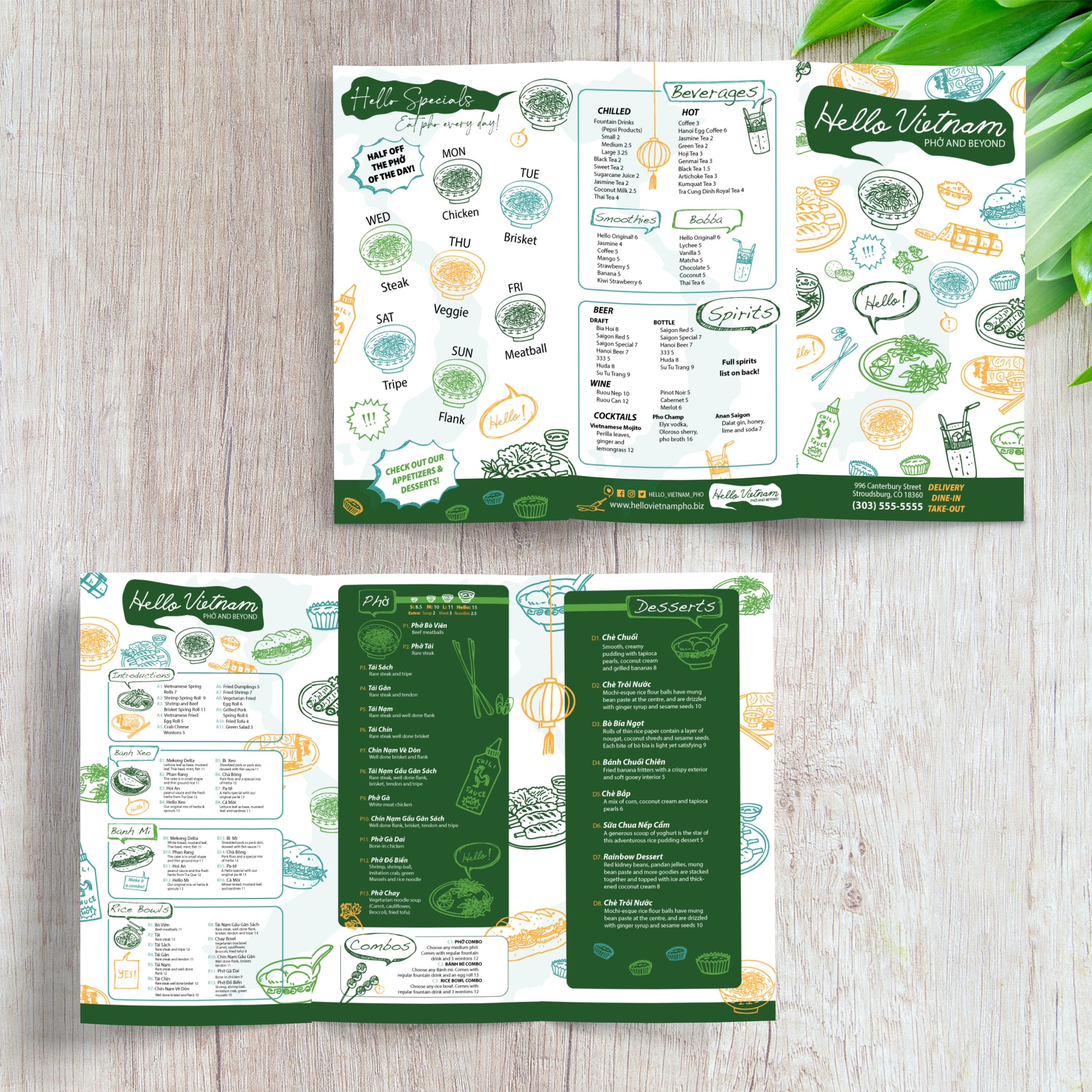
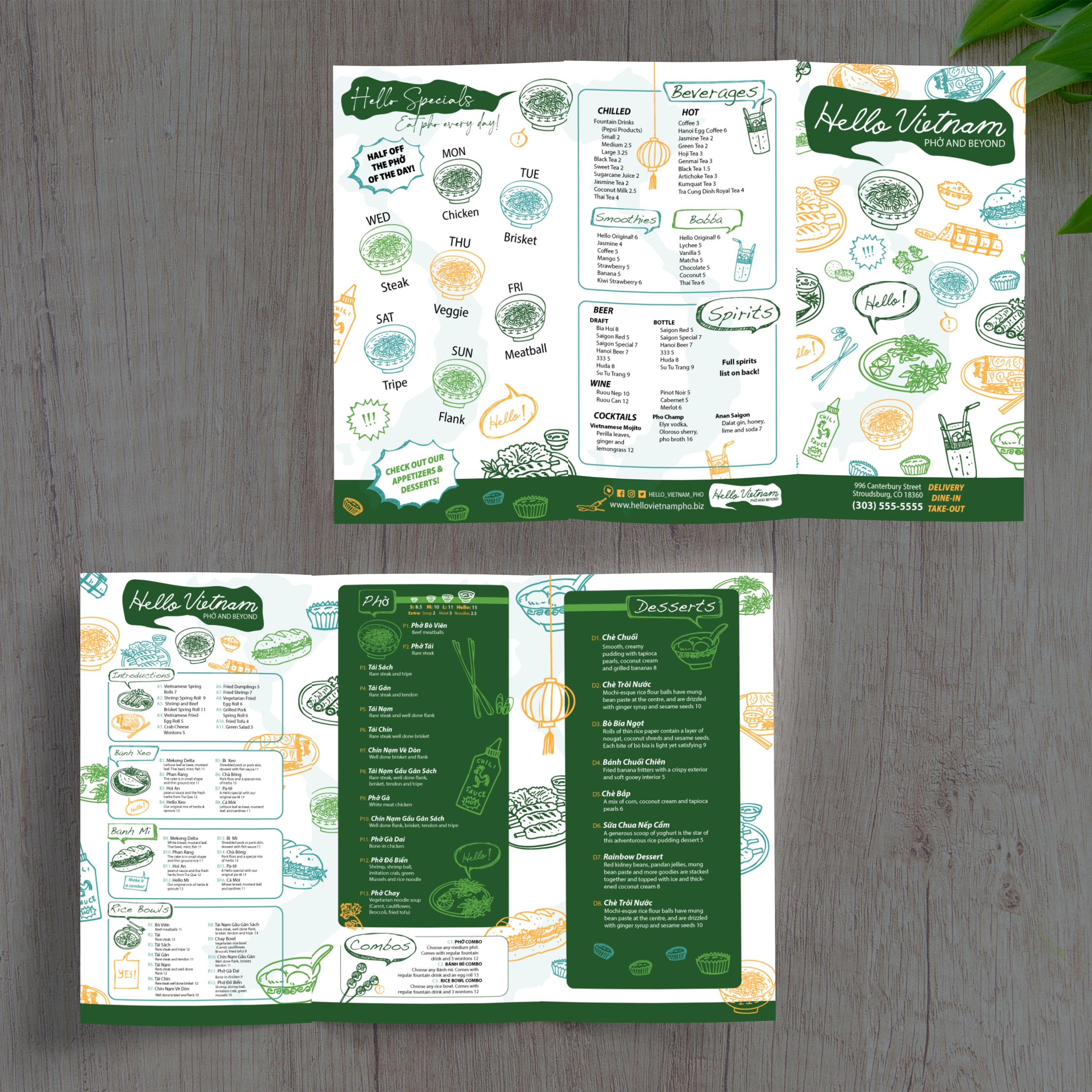
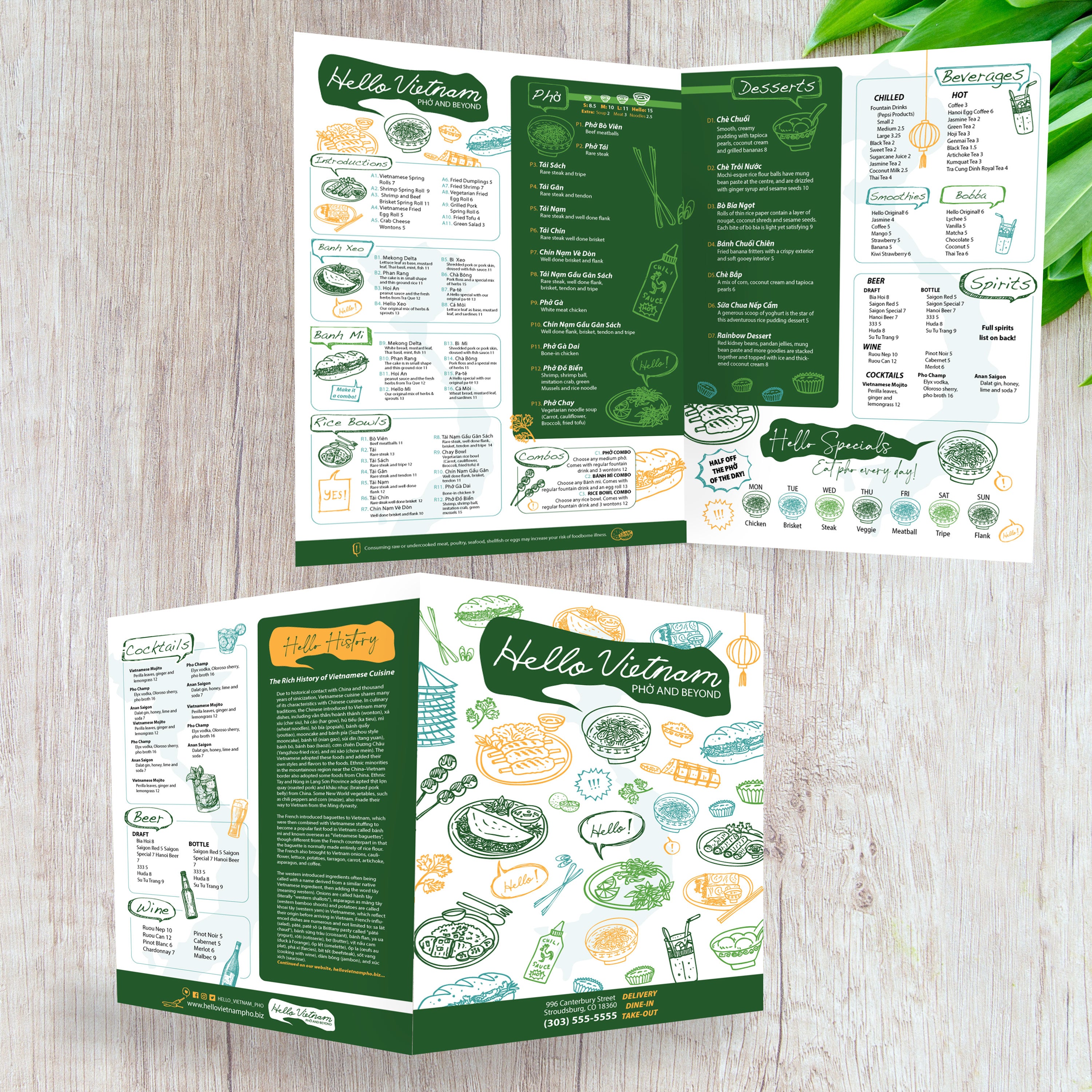
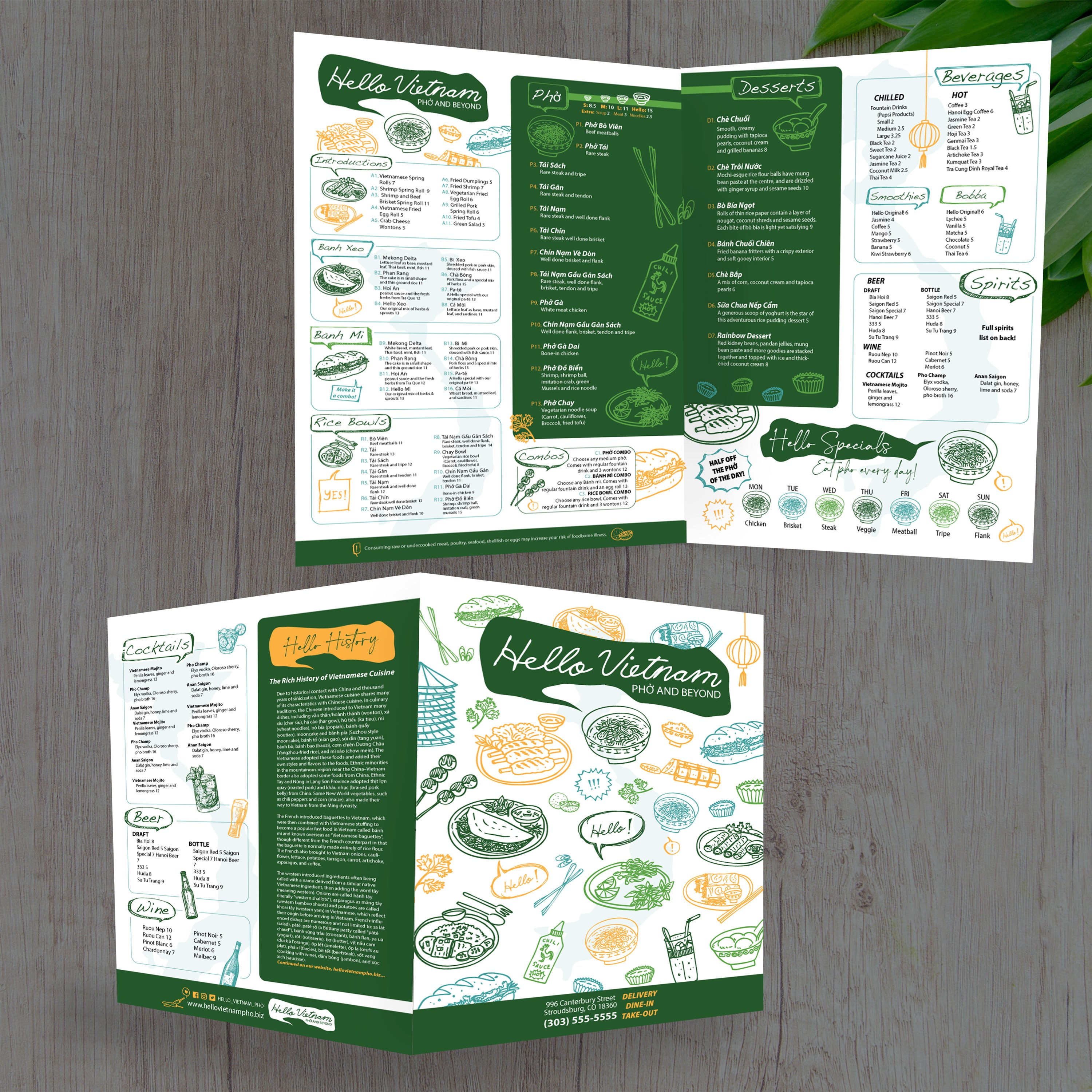
Vietnamese menus typically offer a diverse range of items, including pho, vermicelli bowls, banh mi, rice plates, appetizers, and various drinks. That variety is a strength, but it can also make menus feel crowded if the layout is not structured correctly. A strong template helps keep the menu readable and organized, allowing guests to scan and order with confidence. That’s why free Vietnamese food menu templates are a practical starting point for restaurants that want a modern, easy-to-use menu without compromising service.
Menu Hierarchy That Makes Pho and Noodle Bowls Easy to Find
Pho is typically the centerpiece of a Vietnamese menu, and it should be easily accessible. A good template creates a strong hierarchy by placing pho and noodle bowls in clear, prominent sections with consistent formatting. When the menu structure reflects what guests are most likely to order first, it reduces searching, speeds up decision-making, and keeps the ordering process smooth, especially during busy lunch hours.
Clear Separation for Appetizers, Mains, and Sides
Vietnamese menus often include small plates, such as spring rolls, fried rolls, wings, and shareables, that pair naturally with soups and bowls. A well-structured template separates appetizers, mains, and sides, allowing guests to scan the menu in the correct order. This separation also encourages add-ons, as guests see starters early and sides in a dedicated area, rather than being buried in descriptions.
Formatting for Protein Variations and Broth Options
Vietnamese dishes often feature multiple protein options, including chicken, beef, shrimp, tofu, or a combination of these choices. Pho menus may also require notes on broth or size options. Templates support these variations with consistent formatting so guests understand what they can customize without confusion. Clear protein formatting also reduces ordering errors, since staff and guests see the same structure across all sections.
Ingredient Notes Without Overloading the Menu
Vietnamese food includes herbs, sauces, and ingredient combinations that may be unfamiliar to some guests. The challenge is explaining enough to build confidence without turning the menu into long paragraphs. A good template keeps descriptions concise and functional, highlighting key elements such as herbs, broths, and sauce profiles. This makes the menu approachable while keeping it clean and easy to scan.
Layout Choices That Reduce Order Confusion at the Counter
Many Vietnamese restaurants operate in fast-paced counter-service settings. If the menu is crowded, guests hesitate, and lines slow down. A strong template improves ordering speed by using clean fonts, predictable price placement, and structured sections that guide the eye naturally. Templates also support consistent menu formatting across printed menus and wall boards. If your restaurant also offers a bar-forward vibe or a cocktail pairing section, layout inspiration from our Free Bar Lounge Menu Templates can help keep drink categories clean and visually separate without clutter.

A well-structured Vietnamese menu helps guests move naturally from starters to soups, bowls, sandwiches, and drinks without feeling overwhelmed. When categories follow a logical order and formatting stays consistent, guests spend less time searching and more time ordering confidently. A strong template creates this flow automatically, which is especially important for menus that combine dine-in, takeout, and counter service.
Opening with Appetizers and Shareables
Appetizers set expectations and often drive early add-ons. Items such as fresh rolls, fried rolls, wings, or small plates should appear near the top of the menu, accompanied by transparent pricing and concise descriptions. When starters are easy to spot, guests are more likely to add something while waiting for their pho or bowls, which increases ticket size without slowing down the ordering process.
Pho and Soup Sections That Stay Organized
Pho and noodle soups typically anchor the menu and should be grouped in a dedicated section. A good structure separates broth-based soups from other mains and keeps protein options formatted consistently. This makes it easier for guests to compare choices quickly and reduces confusion when multiple sizes or protein combinations are offered.
Rice Plates and Vermicelli Bowls for Quick Comparison
Rice plates and vermicelli bowls often share similar proteins but differ in presentation. Grouping them into clean, clearly labeled sections helps guests understand the difference at a glance. Consistent formatting for protein choices, sauces, and sides also speeds up decision-making and reduces ordering errors.
Banh Mi and Grab-And-Go Options
Banh mi sandwiches and grab-and-go items benefit from simple, compact formatting. These sections are often read quickly by guests ordering takeout or eating on the go. A clean layout with short descriptions keeps this part of the menu fast and efficient, especially during peak hours.
Vietnamese Coffee, Tea, and Dessert Placement
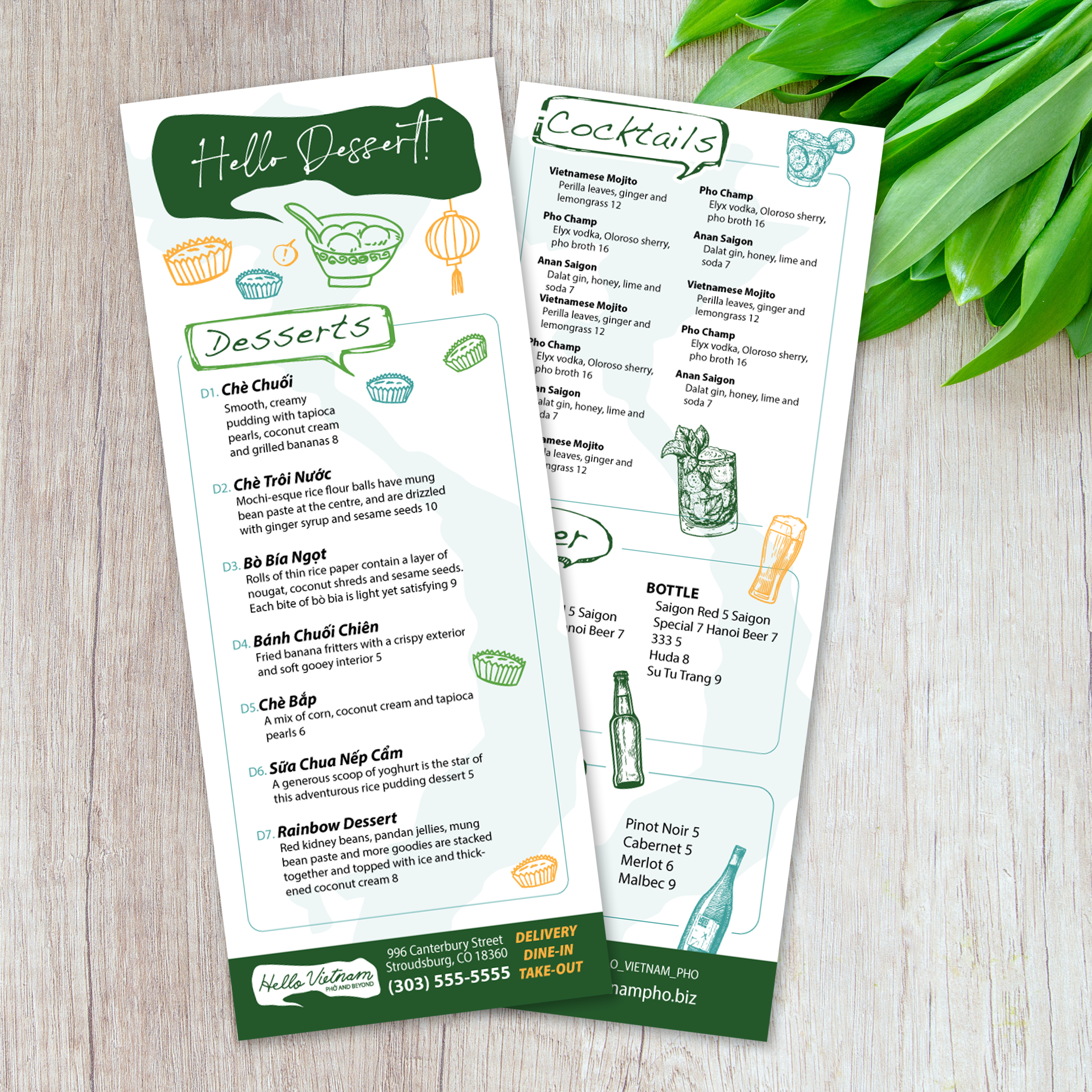
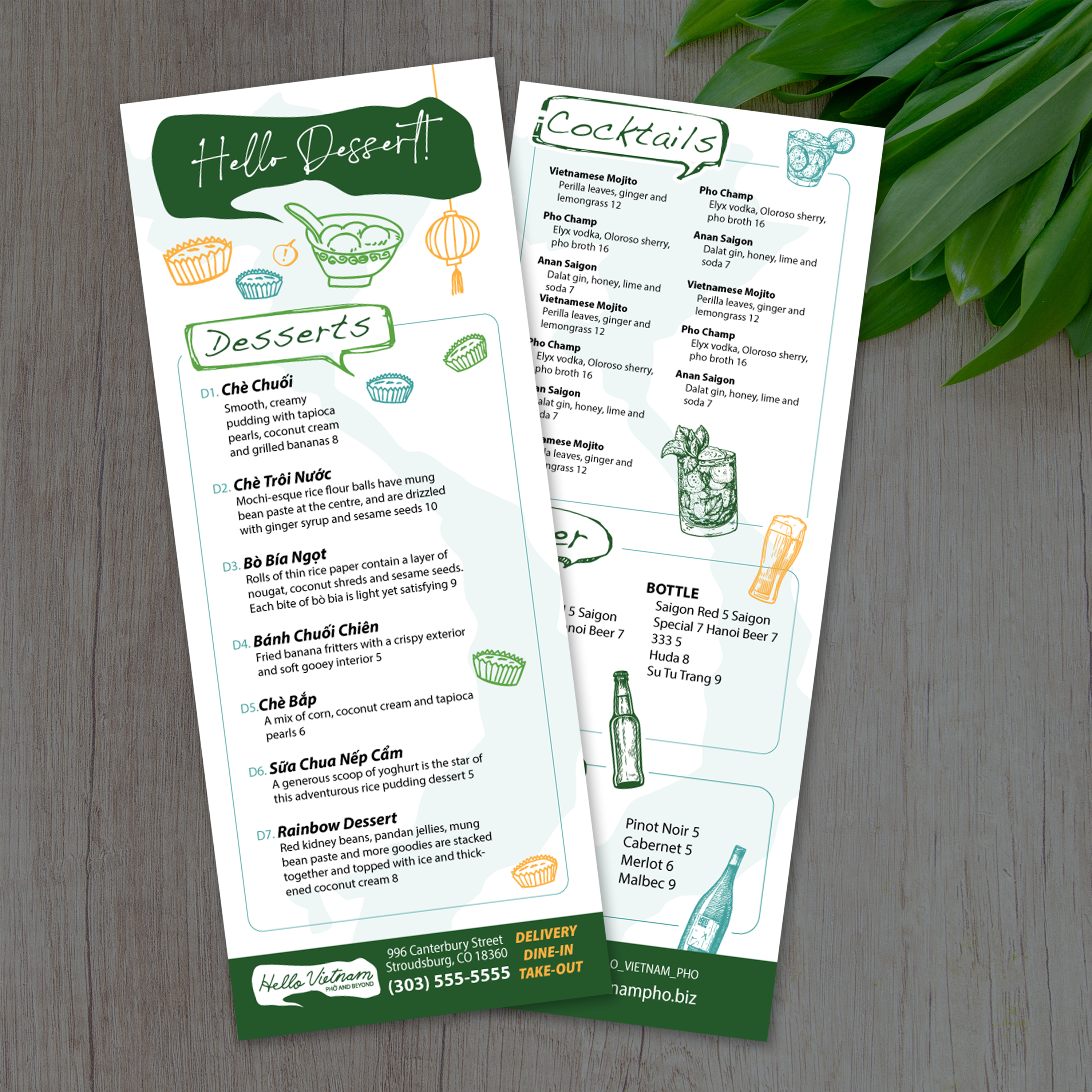
Beverages and desserts should be listed in a calm, clearly separated section on the menu. Vietnamese coffee and tea often attract interest from even first-time guests, so keeping them easily accessible supports add-on sales. Clean, minimal formatting works exceptionally well here, similar to the clarity found in Free Salon Menu Templates, where services and pricing are easily scanned without clutter.
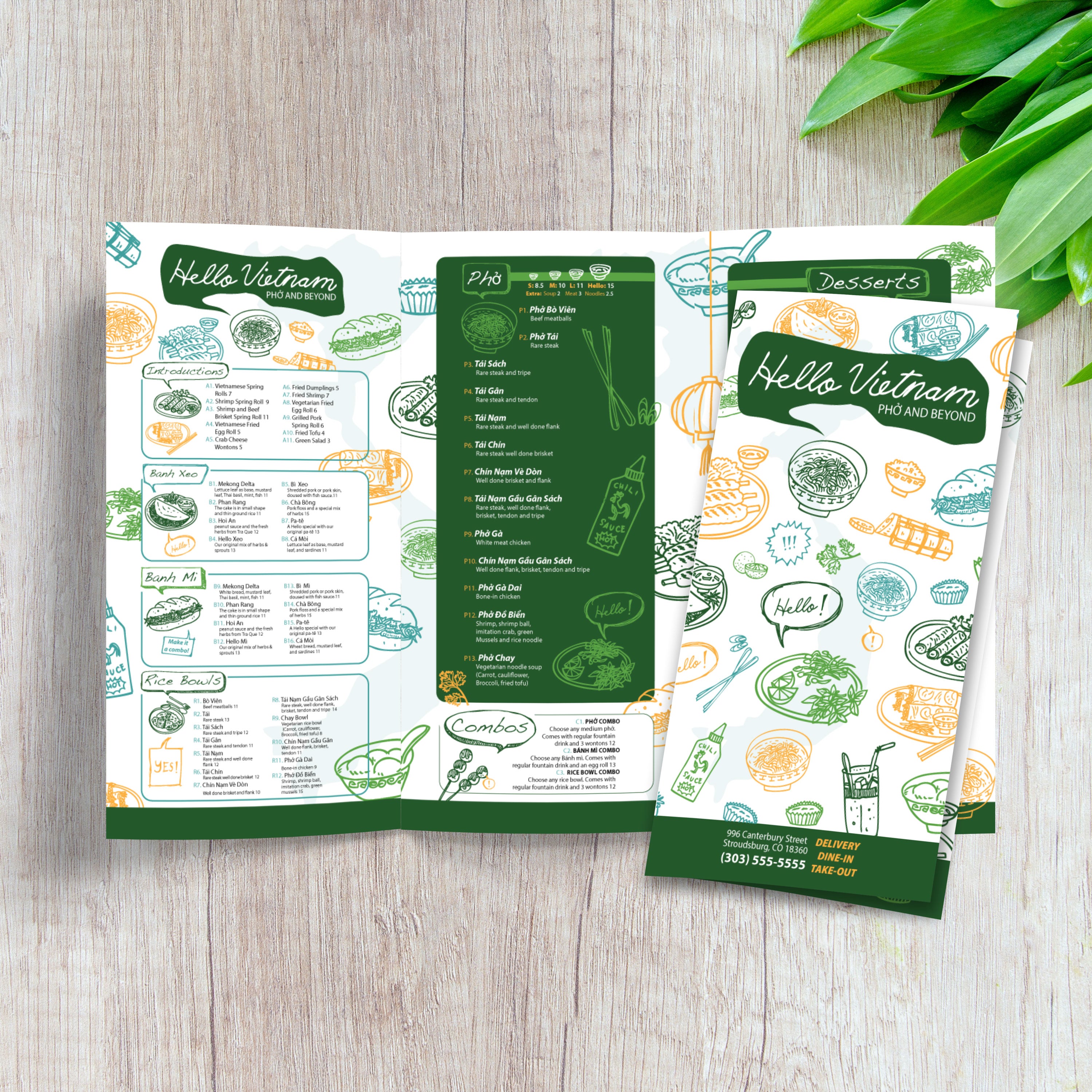
Vietnamese menu descriptions should feel authentic, but they also need to be clear for guests who may not recognize every dish name or ingredient. The best approach is to use confident, concise wording that explains just enough to help someone order without turning the menu into long paragraphs. A clean, structured format also helps descriptions stay consistent across sections, especially when you have many variations and add-ons.
- When to Use Vietnamese Names Versus Simple Translations: Keep well-known dish names like pho, banh mi, and bun intact, and add short clarifiers when a dish is less familiar. This preserves authenticity while helping guests feel confident about what they are ordering:
- Short Ingredient Descriptions That Build Confidence: Use one-line descriptions that highlight key ingredients and preparation style, such as broth type, herb profile, or sauce. This gives guests clarity without overcrowding the menu or slowing scanning:
- Explaining Herbs, Sauces, and Condiments Clearly: Vietnamese cuisine often features fresh herbs and sauces that may be unfamiliar to guests. Short notes about herbs, fish sauce, or chili elements help prevent confusion and reduce follow-up questions at the counter:
- Handling Allergy Notes for Peanuts, Fish Sauce, and Gluten: Allergy clarity should be consistent and subtle. Icons or short markers work best because they keep the menu clean while still supporting informed ordering. This is especially important for ingredients like peanuts, fish sauce, and soy-based components:
- Highlighting House Specials Without Overdesigning: Specials should stand out with a small label or simple callout rather than heavy design. For menus that include rotating specials or limited-time items, structured layout inspiration like our Free Dispensary Menu Templates shows how to organize categories and highlight featured items clearly without cluttering the page.
Vietnamese-style menus are not limited to traditional dine-in restaurants. The same clean structure used for food menus can be adapted for other concepts that require transparent pricing, clear categories, and swift decision-making. A flexible template enables consistent information presentation, even when the format or setting changes.
Beverage-Only Menus for Vietnamese Coffee Shops
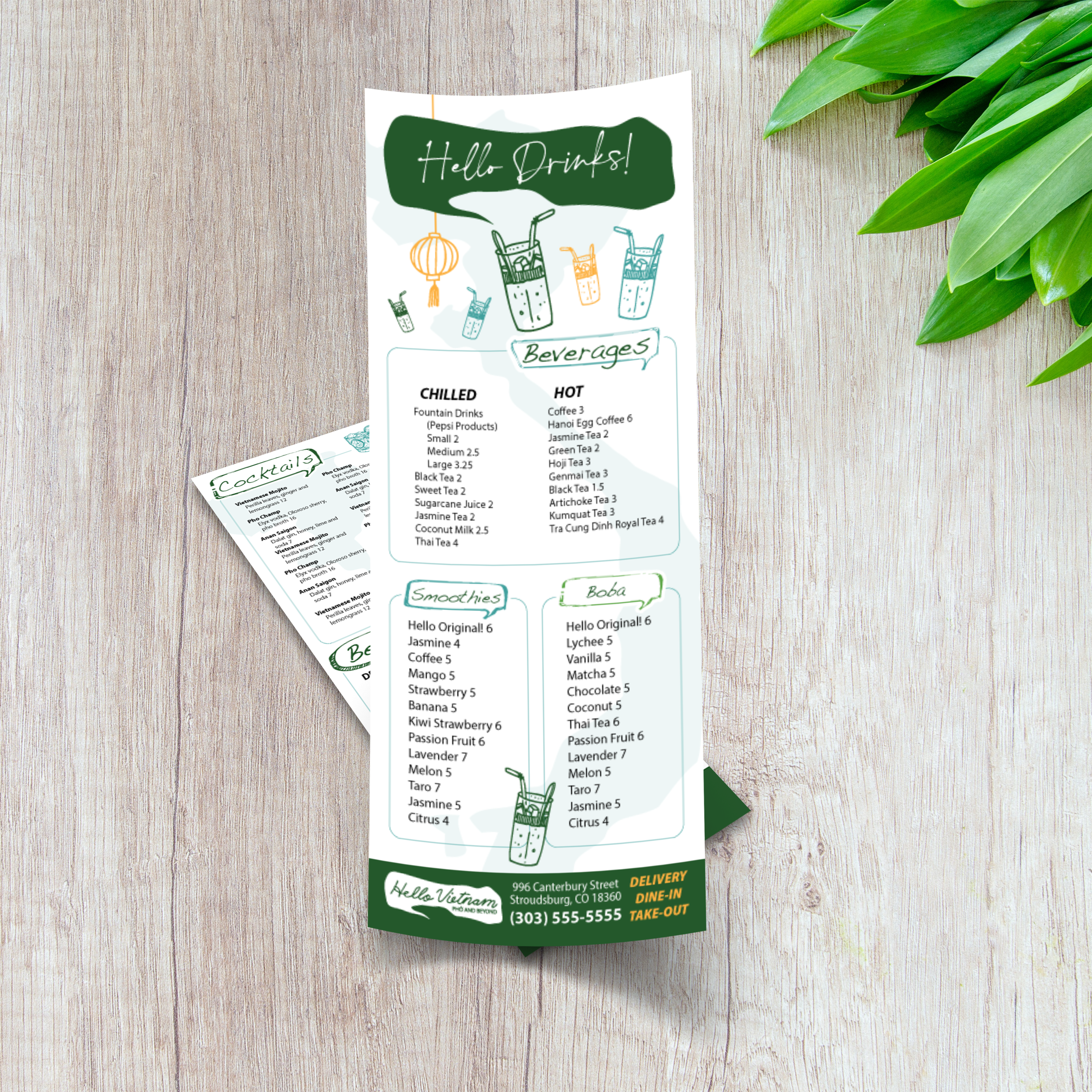
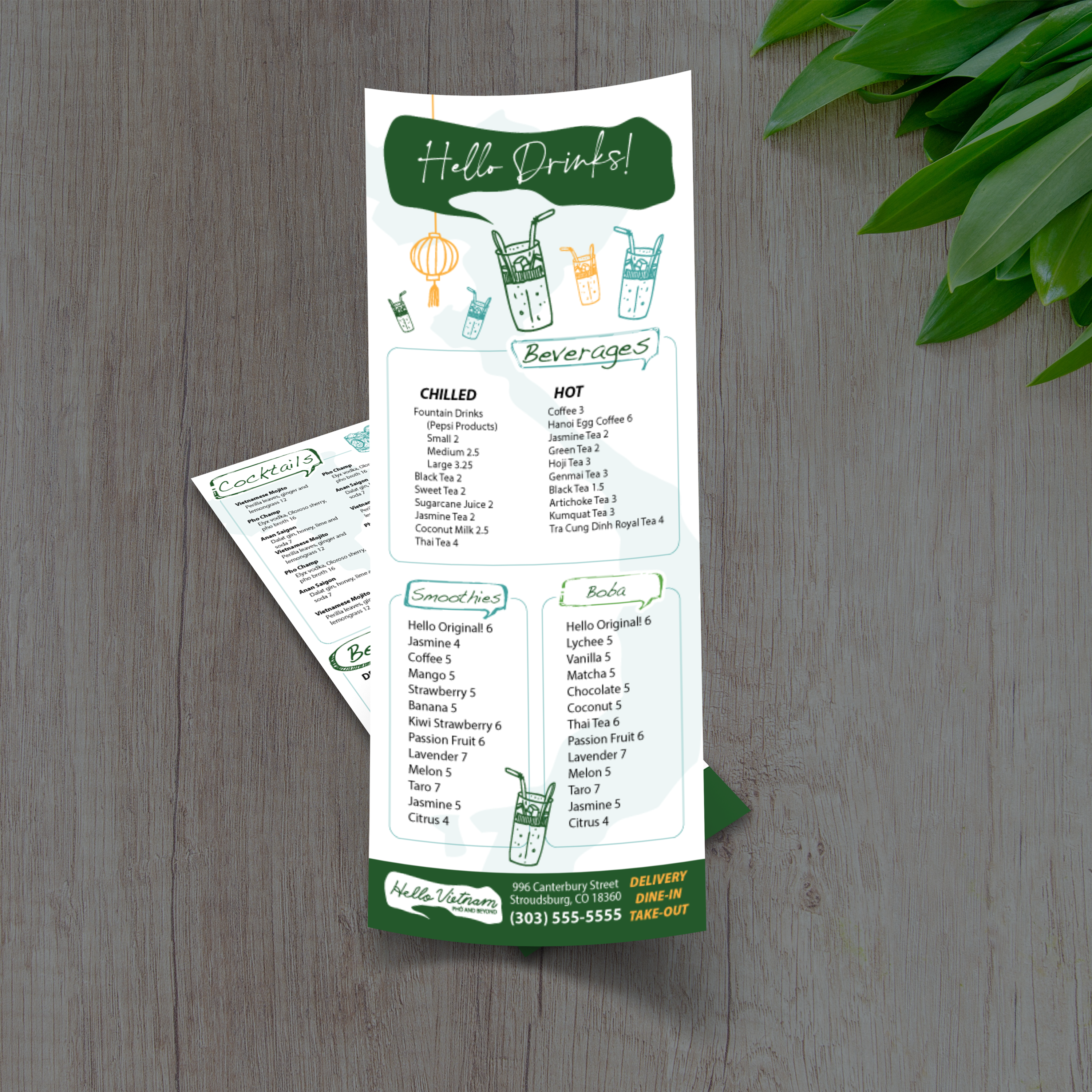
Vietnamese coffee shops often focus on a smaller selection of items, including iced coffee, specialty drinks, teas, and light snacks. A menu template helps group beverages clearly while keeping pricing easy to scan. When drinks are listed in a clean, structured format, customers order faster, and staff spend less time explaining options.
Catering Menus for Office and Event Orders
Catering menus require clarity around portions, package options, and pricing. Templates make it easier to present trays, group orders, and add-ons in a way that feels organized instead of overwhelming. Clear sections enable customers to compare options and place larger orders with confidence quickly.
Meal Prep and Grab-And-Go Pricing Lists
For meal prep programs or grab-and-go counters, menus often function as price lists rather than full descriptions. A structured template keeps item names, portions, and prices aligned, which reduces confusion during busy service hours. Consistent formatting also helps staff restock and update listings without disrupting the layout.
Pop-Ups, Food Trucks, and Market Booth Menus
Temporary setups need menus that are readable at a distance and easy to update. Templates support larger text, clear categories, and simple pricing placement that works well on wall boards or printed menus. This helps guests make quick decisions, even in crowded or fast-paced environments.
Retail and Specialty Grocery Hot Bar Menus
Some Vietnamese concepts extend into retail or grocery settings with hot bars or prepared foods. Menu templates help present items cleanly while keeping pricing and portion information visible. When the layout is consistent, customers understand offerings faster and feel more comfortable making selections.
Vietnamese menus are used in fast-paced environments where spills, sauces, and frequent cleaning are part of daily service. Traditional lamination can look clean at first, but over time, it often clouds up, bubbles, or delaminates, making menus look worn and harder to read. Our waterproof menu printing is designed to remain clear, durable, and professional even after repeated handling and cleaning.
Why Lamination Clouds Up and Delaminates Over Time
Laminated menus rely on an added layer that can degrade with repeated wiping and exposure to moisture. Over time, that layer can haze, bubble, or peel at the edges, which makes menus look unprofessional. Once delamination starts, menus often need replacement, creating unnecessary reprint cycles in busy restaurants.
Soap and Water Cleaning for Broth and Sauce Spills
Vietnamese restaurants handle broths, sauces, and drinks that can easily spill onto menus. We recommend simple soap and water for our paper, which supports daily wipe-down routines without damaging the menu surface. Because the material itself is waterproof, menus stay clear through repeated cleaning without relying on lamination that can cloud up over time.
Folded Menus for Dine-In and Takeout Menus
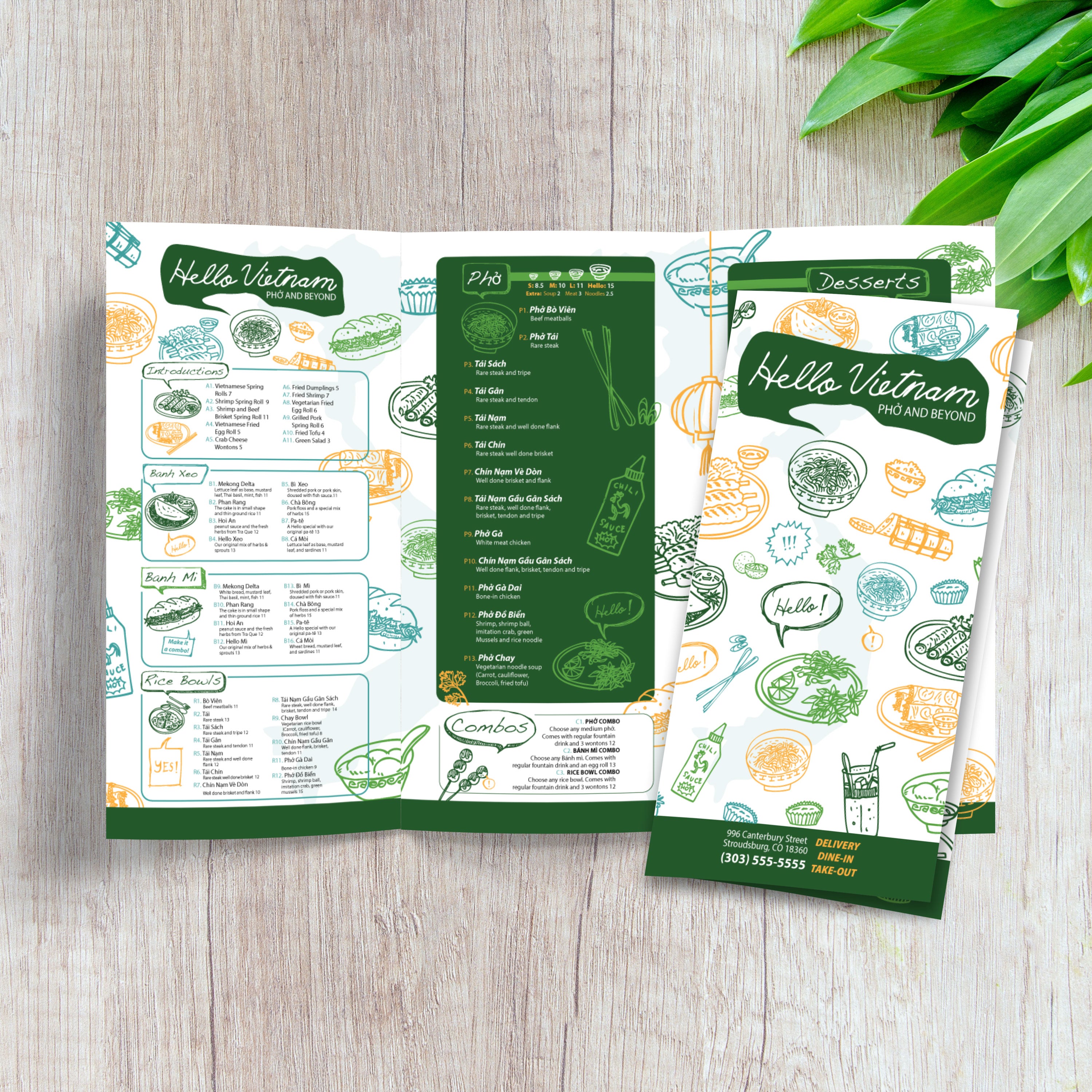
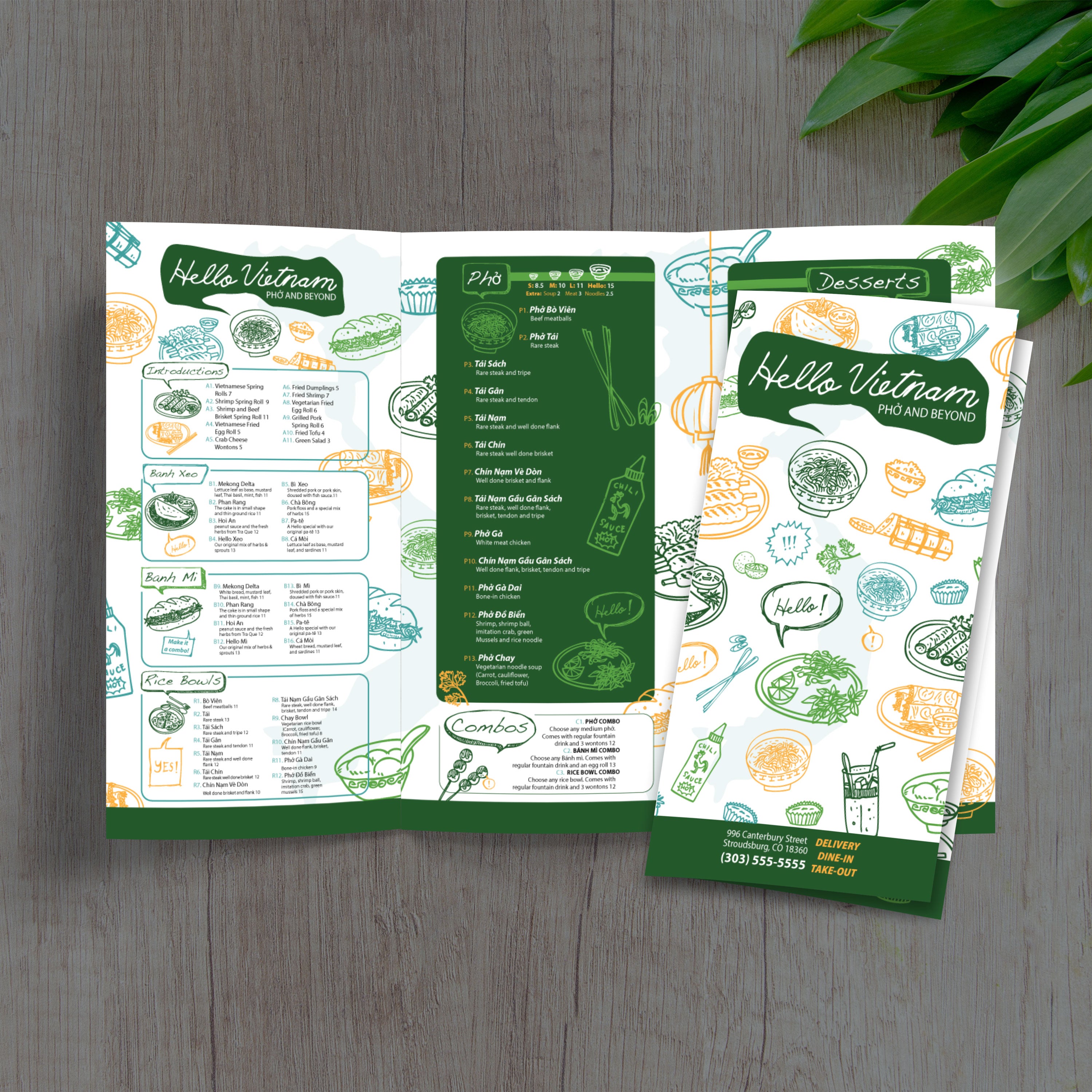
Many Vietnamese restaurants use folded menus to separate pho, banh mi, bowls, beverages, and specials. Traditional lamination typically cannot be folded without cracking or peeling along fold lines. Our waterproof menus offer folding options, such as bi-folds and tri-folds, allowing restaurants to maintain a clean menu structure while ensuring durability.
Thickness Options for Daily Handling
We offer multiple thicknesses, including 5 Mil, 8 Mil, 10 Mil, and 14 Mil. Thinner options are suitable for inserts and lighter menus, while thicker options offer a sturdier feel for menus that are frequently handled. For 14 Mil, printing may require a commercial press or a high-quality printer.
Faster Reprints for Seasonal Specials
Vietnamese menus often feature rotating soups, seasonal specials, and limited-time offers on drinks. We provide industry-leading turnaround and fast shipping, enabling restaurants to refresh their menus quickly without incurring long delays. This helps keep menus accurate and presentable while supporting frequent updates.
Vietnamese restaurants often strike a balance between high daily volume and frequent menu updates, seasonal items, and multiple service formats. Our menu materials and printing services are designed to support that pace while keeping menus clean, readable, and professional in real-world conditions.
TerraSlate Waterproof, Rip-Proof Paper for Everyday Menus
We print menus on TerraSlate waterproof, rip-proof paper built to handle frequent handling, spills, and repeated cleaning. Because the material itself is waterproof, menus stay clear and legible without relying on lamination that can cloud up or delaminate. This helps Vietnamese restaurants maintain a polished appearance across dine-in, takeout, and counter-service menus.
TerraShield™ Anti-Microbial Coating for High-Touch Use
For busy dining rooms and counter-service environments, we can print menus with our proprietary TerraShield™ anti-microbial coating. This option supports cleaner menus that remain presentable even as they are passed from guest to guest throughout the day. It’s instrumental in high-traffic locations where menus are handled constantly.
Menu Printing Services with Industry-Leading Turnaround
Menus change often, whether it’s rotating pho broths, seasonal drinks, or limited-time specials. We can print menus for you with industry-leading turnaround and fast shipping, making it easier to keep menus accurate without relying on temporary fixes. Fast reprints help maintain consistency and avoid outdated pricing or items.
Value-Oriented PolySlate for Inserts and Specials
Not every update requires a complete menu reprint. Our value-oriented PolySlate line provides an economical option for inserts, specials, and short-run menus that require durability and a professional appearance. PolySlate works well for rotating features while maintaining the core menu.
Hydronote for Inkjet Menu Printing Needs
For restaurants that print menus in-house or use inkjet setups, Hydronote supports inkjet users who want waterproof paper options without switching to a laser-based system. This enables quick updates, smaller print runs, and flexible menu changes, while still delivering better durability than standard paper.