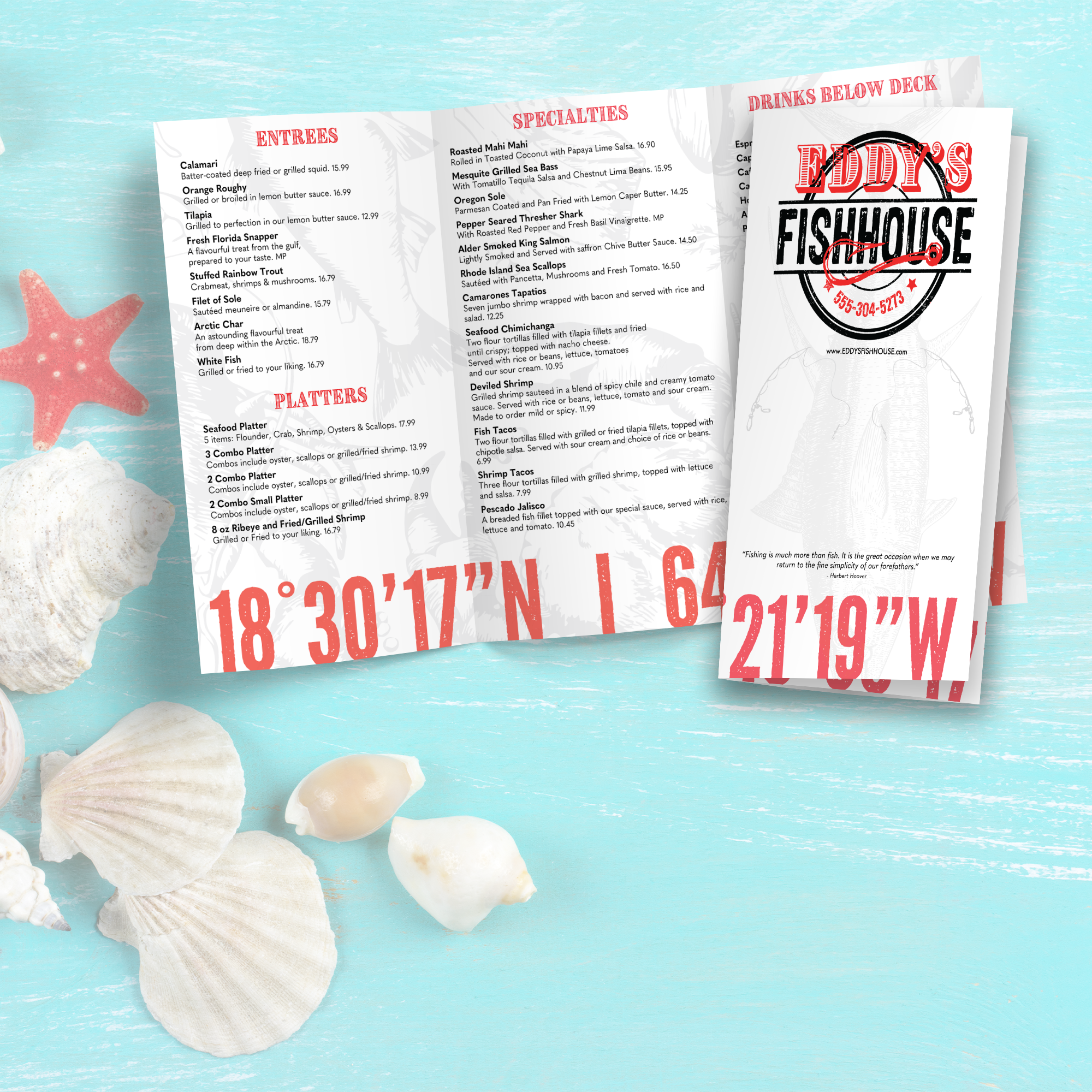
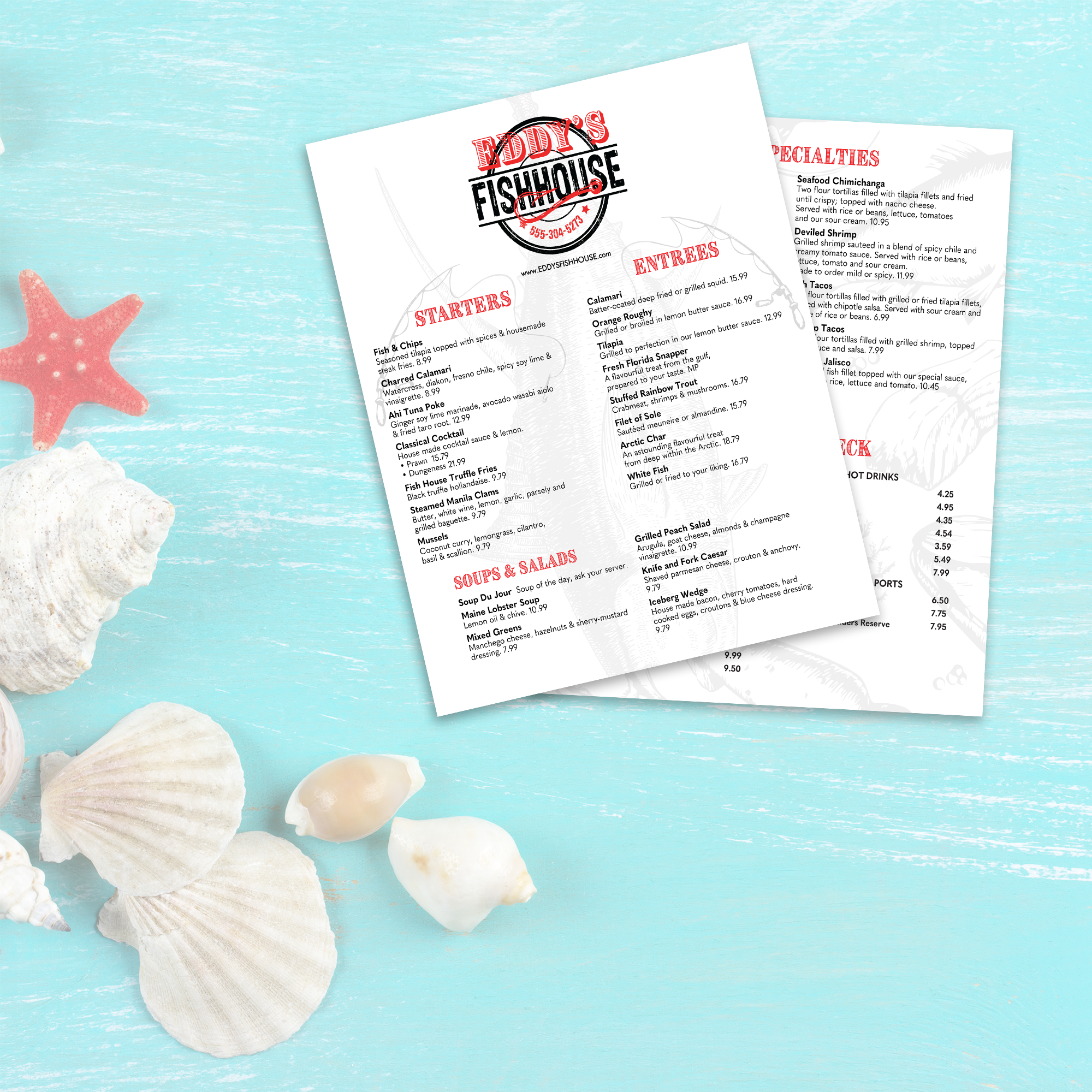
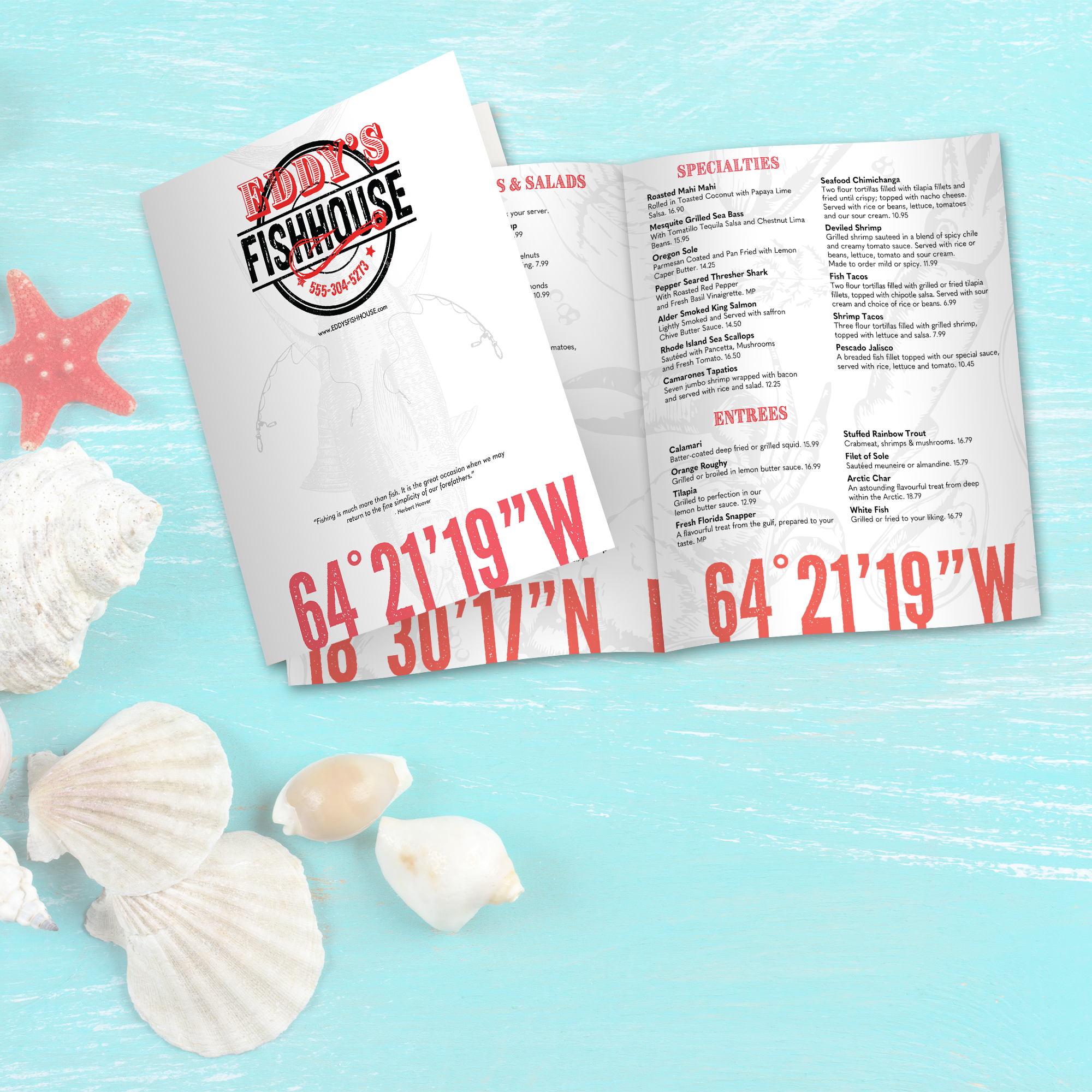
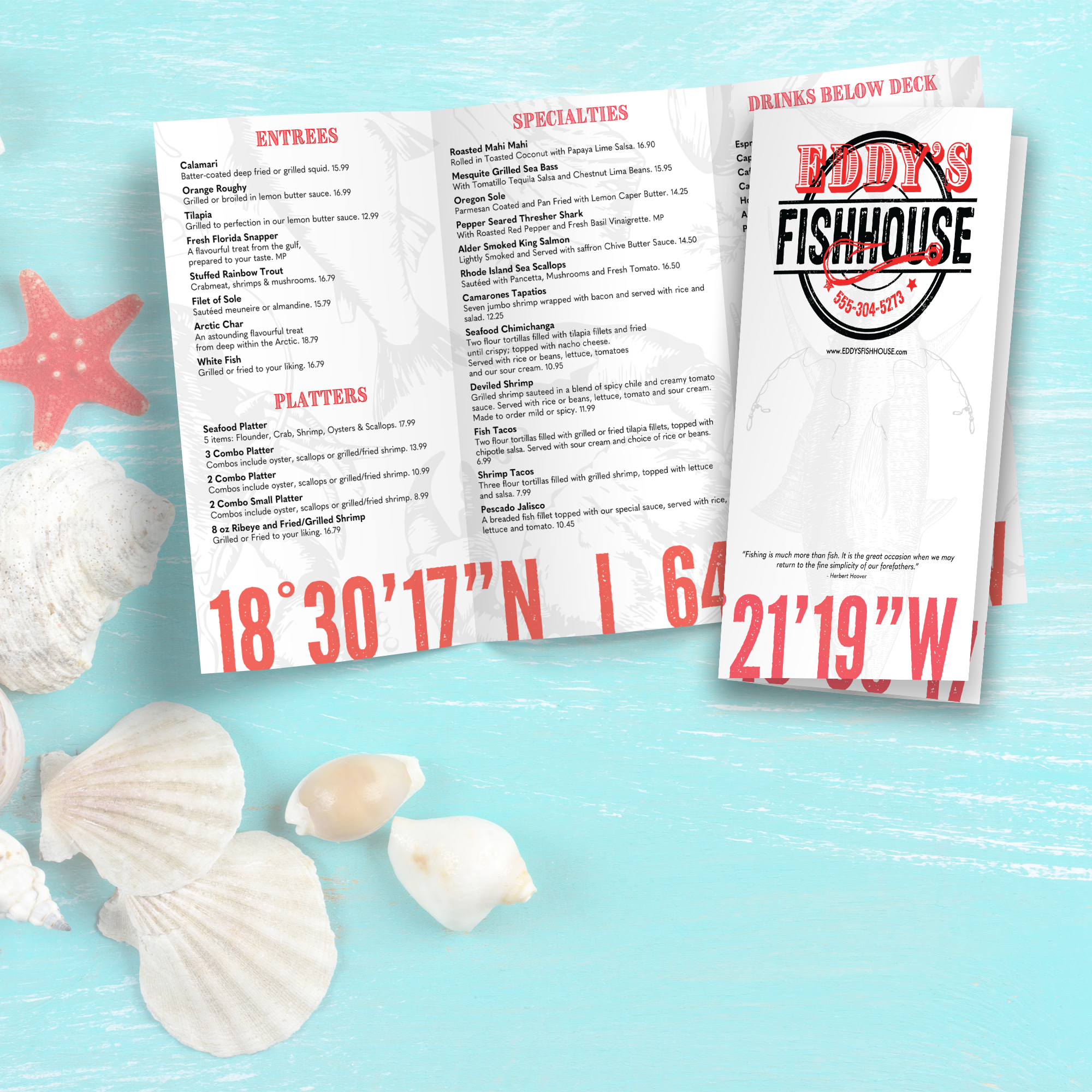
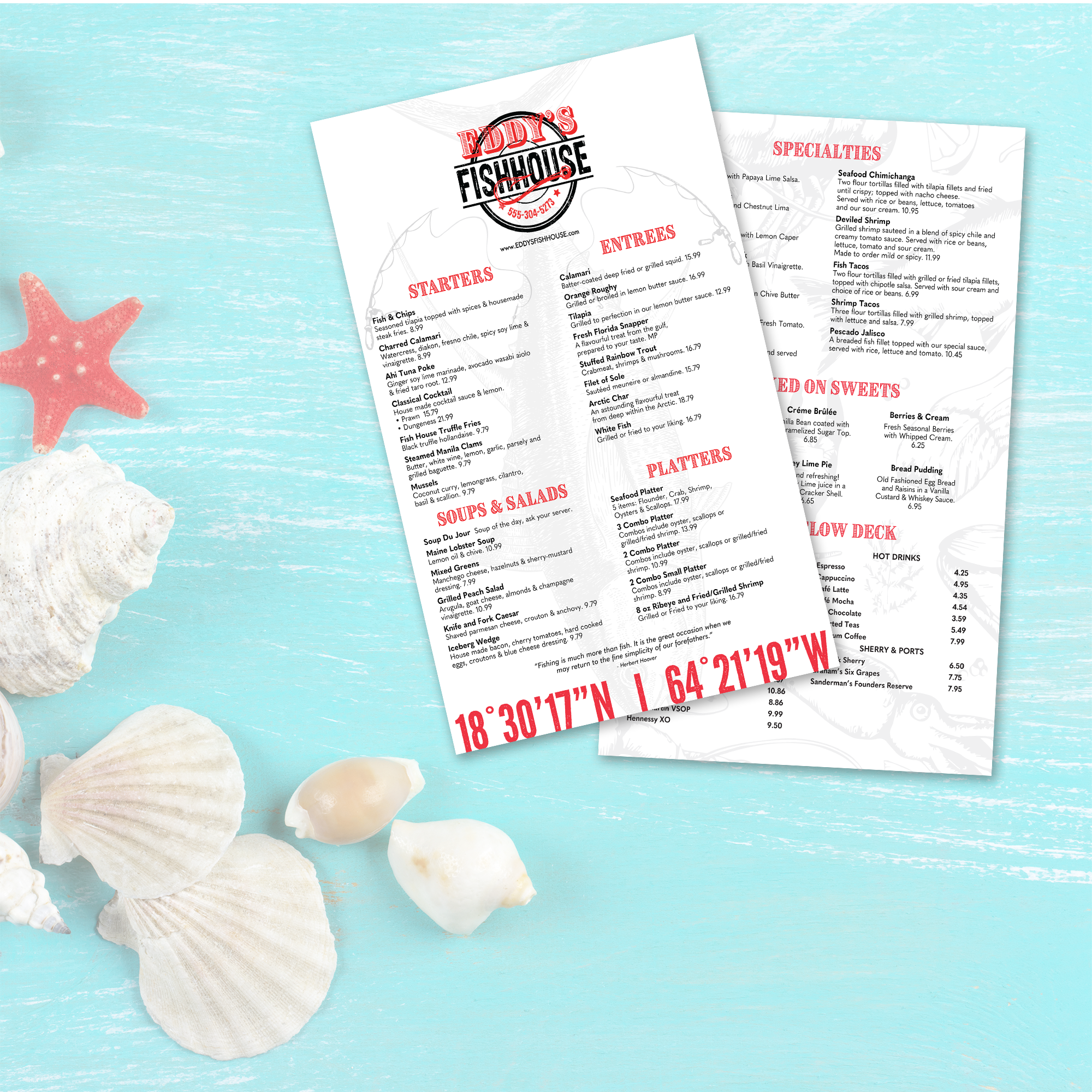
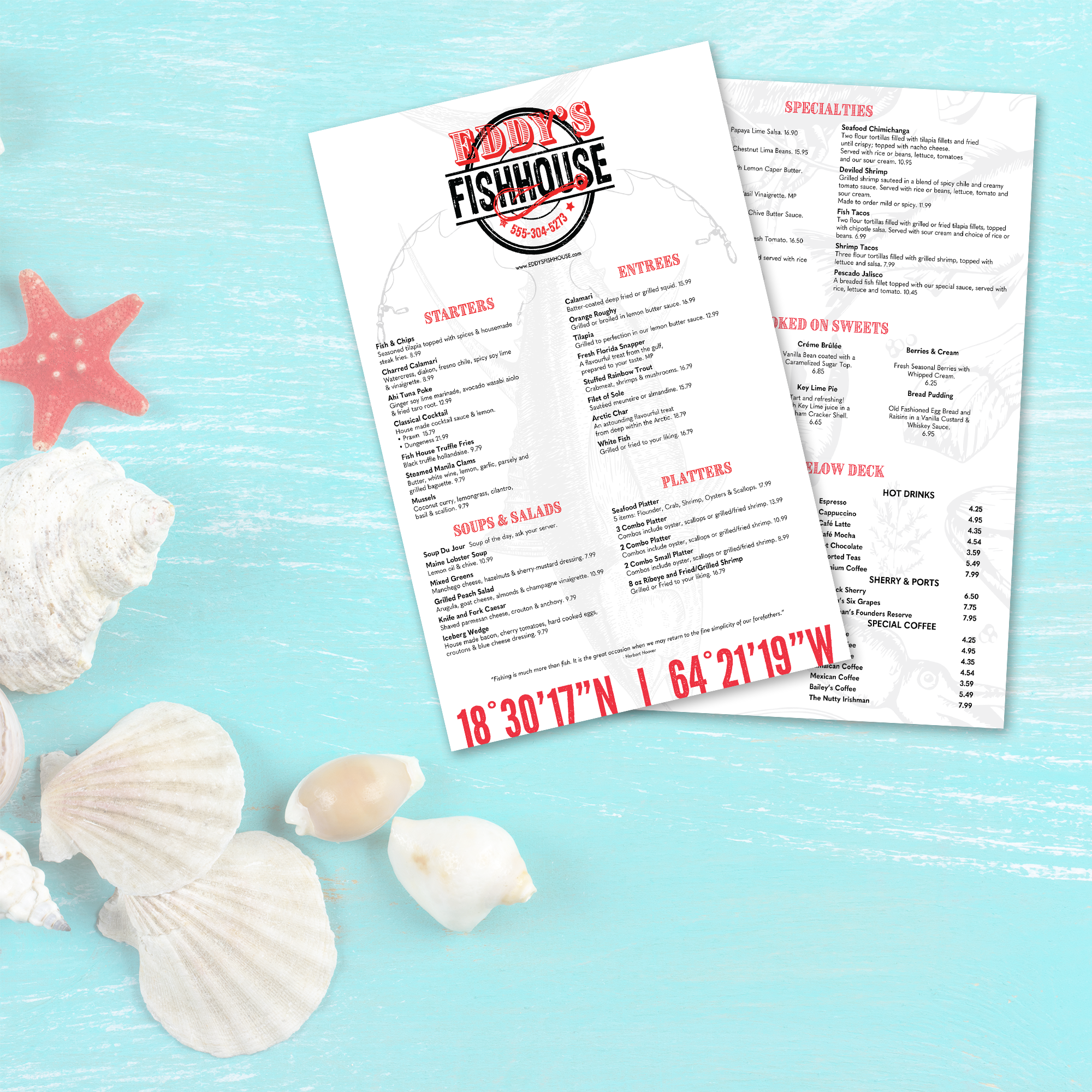
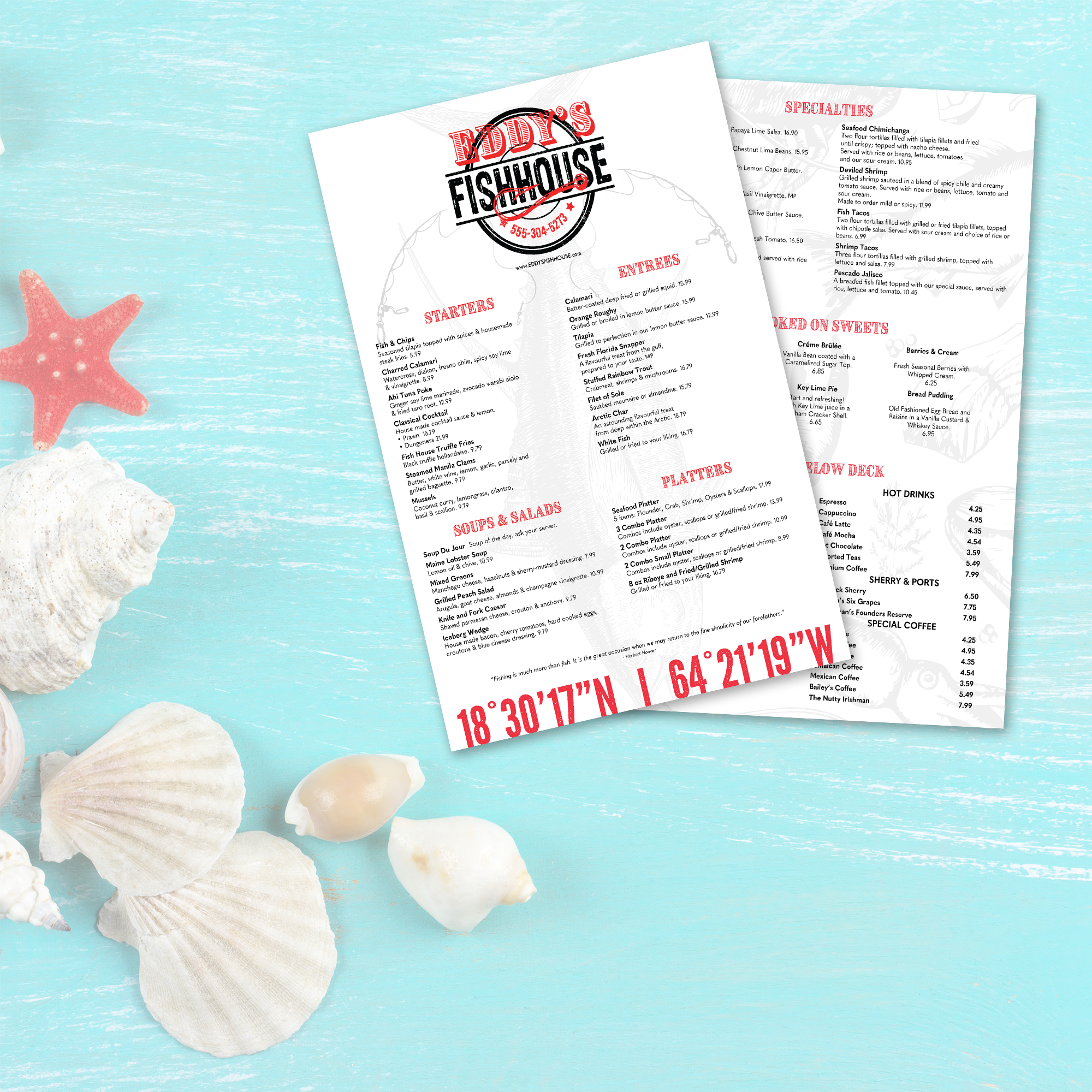
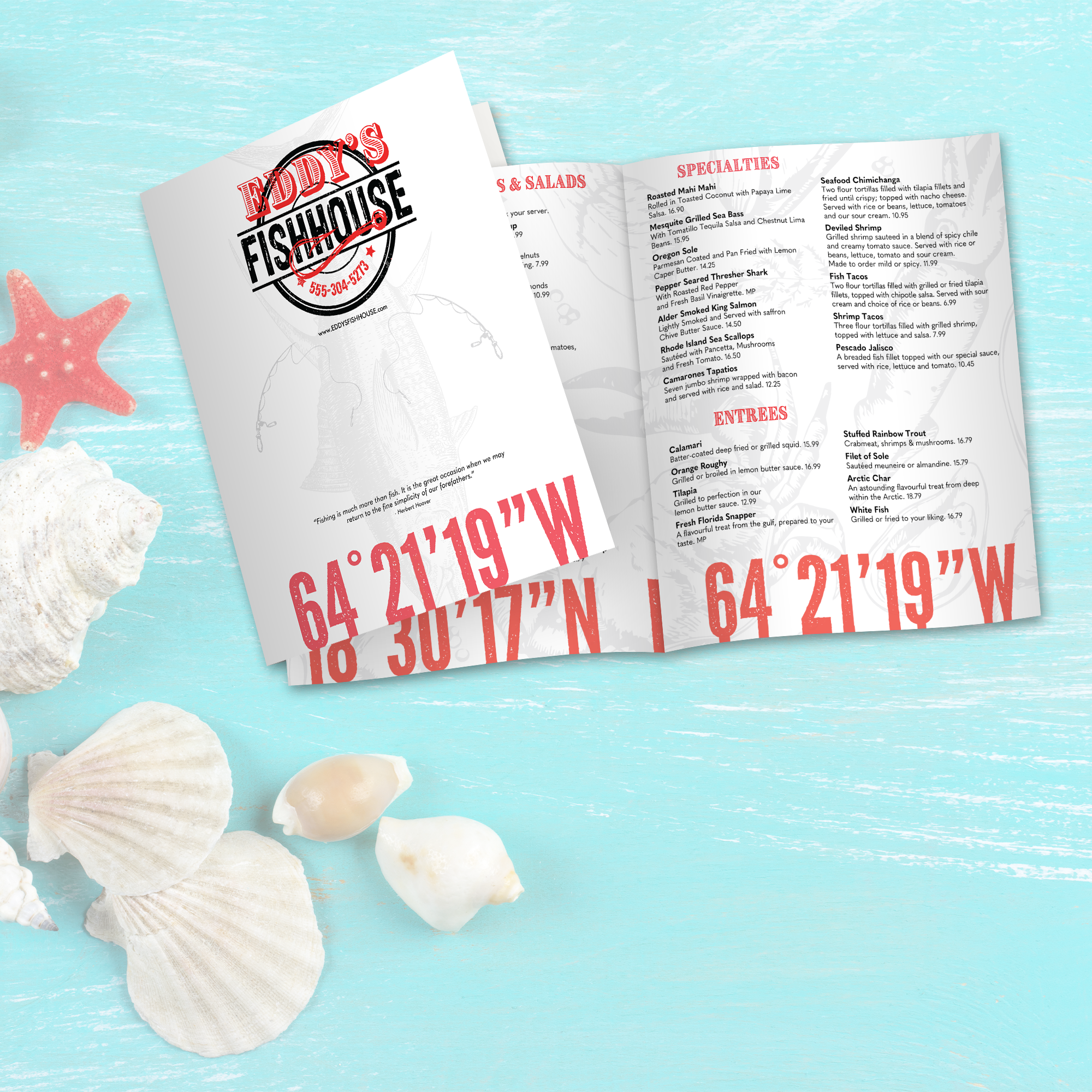
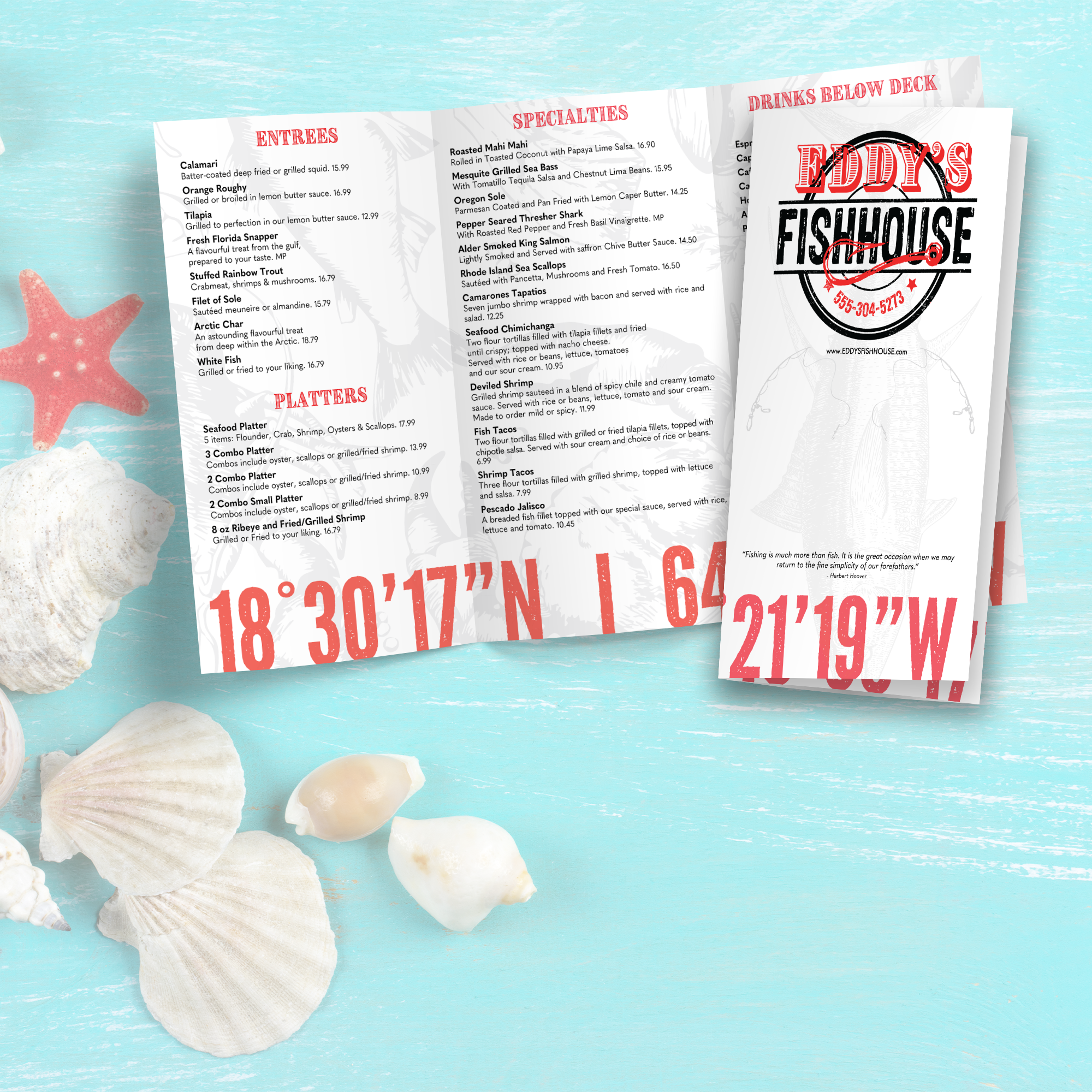
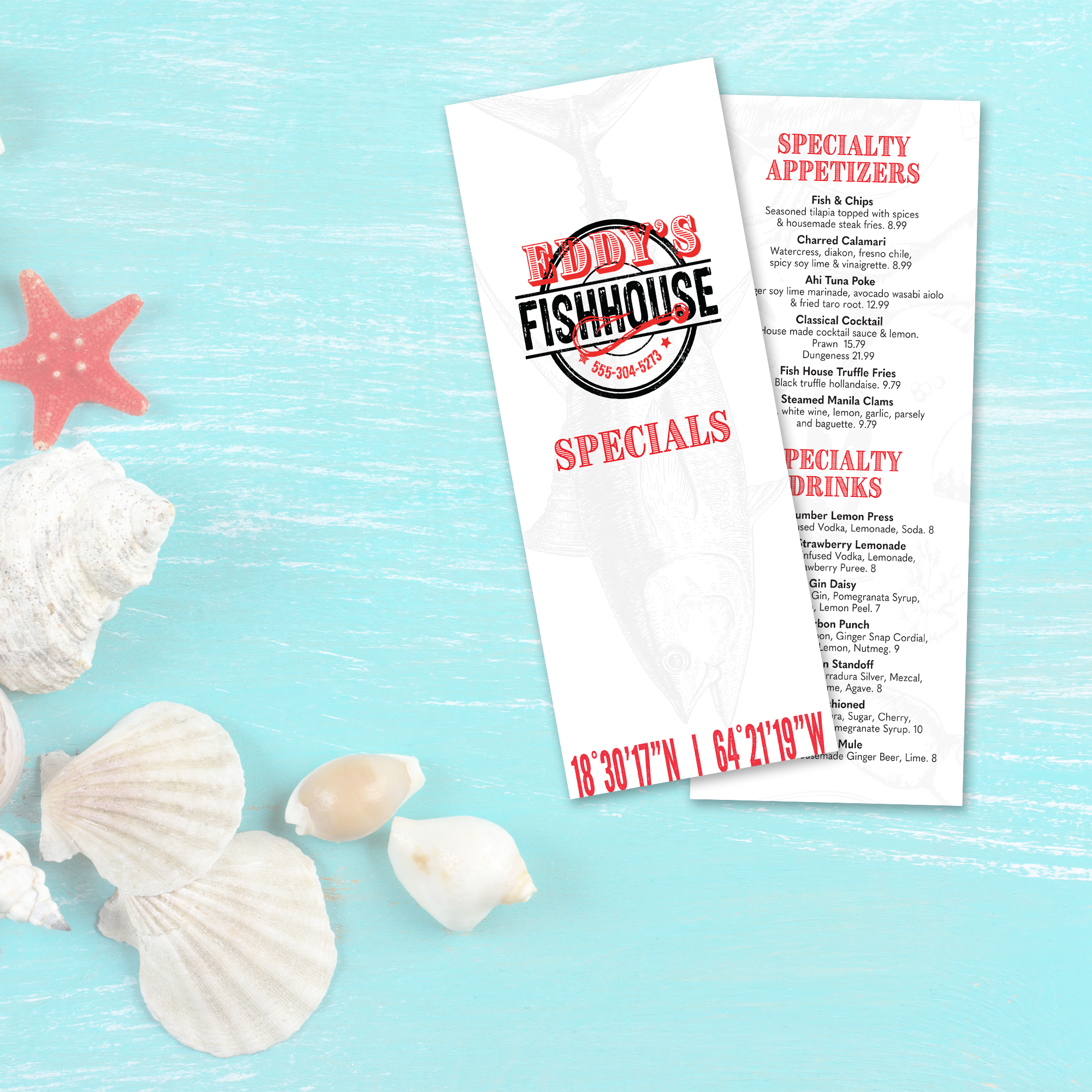
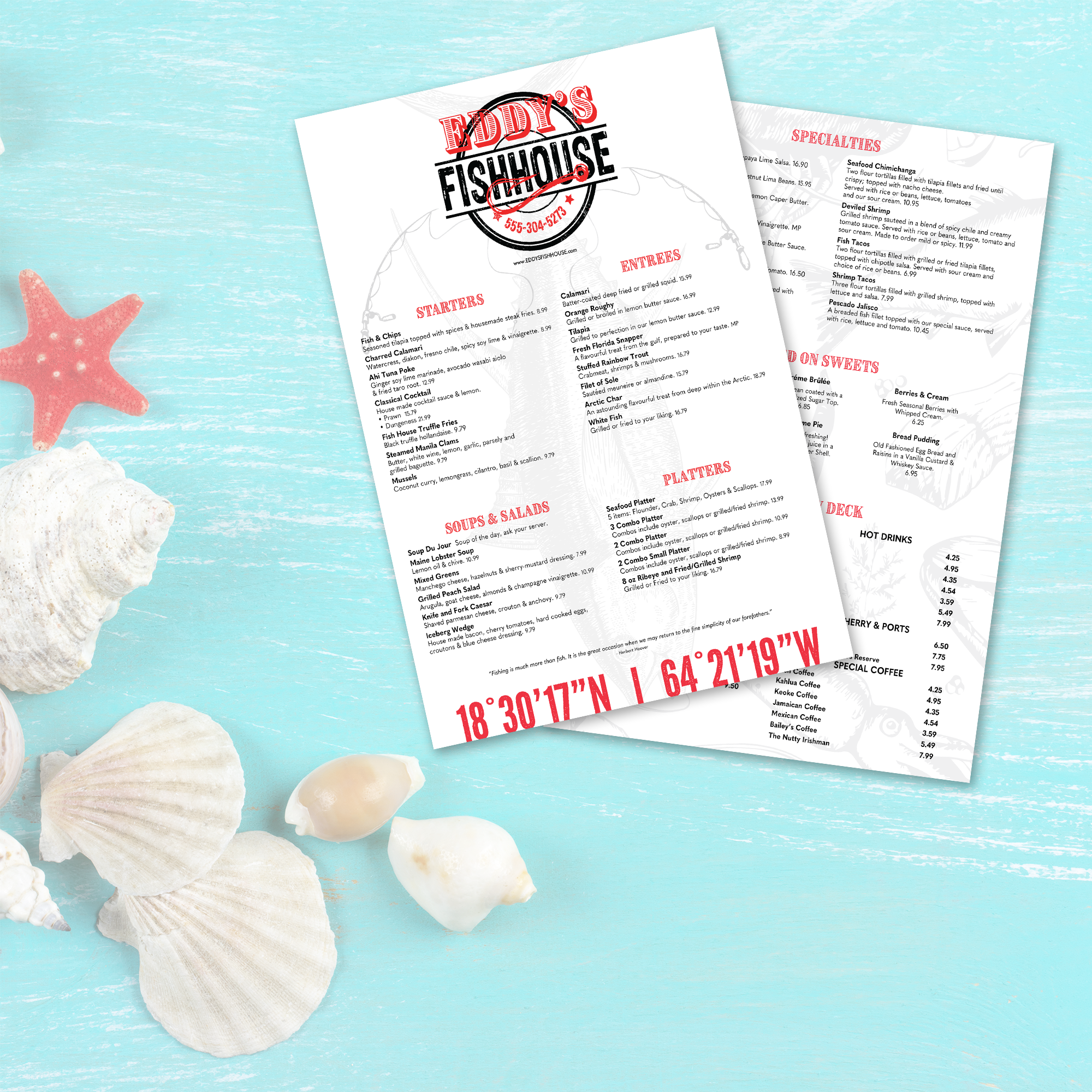
Plantilla exclusiva para menú de Fish House

14 productos

Mostrando 1 - 14 de 14 productos

Mostrando 1 - 14 de 14 productos
Ver

Recently viewed

An upscale fish house menu must convey quality before a guest even reads the first dish description. The design should evoke a sense of calm, intentionality, and premium quality, with layout choices that prioritize readability over visual crowding. That’s why using a free upscale fish house menu template is such a strong starting point. A well-built template provides the proper structure for refined typography, balanced spacing, and a menu flow that feels curated rather than cluttered. Many fish houses also benefit from starting with our proven base layout, like our free fish house menu templates, and then refining the structure to match a more upscale dining experience.

How White Space Creates a Calm, High-End Dining Feel

White space is one of the fastest ways to signal a premium experience. Upscale menus do not try to fit every item possible onto one page. Instead, they create breathing room around categories, item names, and pricing so guests can scan without effort. This also keeps the menu from feeling like a list, making it easier for guests to focus on standout items like chilled seafood towers, fresh catch entrées, or the chef's features.

Typography Choices That Enhance Seafood Presentation

Typography should appear refined yet remain easy to read in real-world service conditions. Upscale menus often feature clean fonts, consistent sizing, and a strong hierarchy, rather than decorative text. The goal is to make item names feel confident and premium while keeping descriptions subtle and supportive. When typography is consistent across categories, the menu looks professional, and the food feels more intentional.

Menu Density Decisions That Prevent Visual Overload

Seafood menus can become crowded quickly because they often feature a variety of items, including raw bar selections, entrées, sides, sauces, and market specials. An upscale layout should avoid dense blocks of text and long descriptions. Instead, it should prioritize fewer words, clean spacing, and consistent formatting so that guests can understand the options quickly. A template helps by enforcing margins, spacing, and predictable formatting patterns that keep the menu from becoming visually overwhelming.

Subtle Design Signals That Communicate Quality

Premium menus use subtle design signals rather than bold visual elements. Simple dividers, light section labeling, and consistent alignment create a sense of refinement that doesn't distract from the food. These details help guests feel that the restaurant has a higher standard of quality. When the menu looks clean and restrained, it reinforces the perception that ingredients and preparation are the focus.

Layout Errors That Undercut an Upscale Impression

Common mistakes include crowded spacing, inconsistent font styles, overly lengthy descriptions, and inconsistent pricing placement. Another issue is overusing design elements, such as multiple font styles, heavy borders, or excessive callouts, which can make the menu look cluttered instead of premium. A strong template prevents these errors by incorporating the upscale structure into the design, ensuring the menu remains readable, balanced, and aligned with the dining experience.

An upscale seafood menu should guide guests through the meal in a natural sequence, making it easy to start with chilled seafood, transition into small plates, and conclude with refined entrées and desserts. Below is a clean structure that supports a premium experience while keeping ordering simple.

  • Open with Raw Bar and Chilled Seafood for Immediate Impact: Leading with oysters, crudo, shrimp cocktail, and chilled towers sets the tone and encourages higher-ticket starters. This is also where coastal concepts can borrow relaxed-but-polished layout ideas from our free beach bar grille menu templates, while still keeping the tone upscale:
  • Position Small Plates to Build Momentum Before Entrées: Place starters and shareable plates immediately after raw bar selections, allowing guests to add one more item before mains naturally. Small plates should be easy to compare with short descriptions and aligned pricing, which increases add-ons and keeps the ordering flow smooth:
  • Organize Entrées by Preparation Style, Not Just Protein: Instead of listing fish entrées as a single block, group them by cooking method, such as grilled, pan-seared, and roasted. This helps guests decide faster and creates a refined structure that feels curated rather than crowded:
  • Keep Sides and Sauces Visible Without Competing for Attention: Sides should be placed near entrées but formatted with restraint. A dedicated section for sauces, butter options, and enhancements supports customization while keeping the main menu clean and premium:
  • Finish with Desserts and Digestifs to Support the Final Upsell: Desserts, after-dinner drinks, and specialty coffee should close the menu in a calm, clearly separated section. When the ending is clean and easy to scan, guests are more likely to add one last item instead of stopping at the entrée:

Upscale seafood menus need to feel premium, but they also need to stay readable. Guests should understand what they’re ordering without having to read long paragraphs or decipher overly complex wording. The best approach is refined, ingredient-forward writing supported by consistent formatting. This is especially helpful for concepts that combine seafood with steak or premium proteins, and layout inspiration, such as our free steak house template, which shows how upscale menus can communicate quality with short, confident descriptions.

Ingredient-Forward Language That Feels Confident

Upscale descriptions should focus on the ingredient that matters most, such as the type of fish, shellfish, or key garnish. Keep wording clean and direct rather than trying to sound overly poetic. When the ingredient is the star, the menu feels premium, and guests trust the quality without needing extra explanation.

Cooking Technique Callouts That Aid Decision-Making

Cooking methods help guests choose quickly. Simple callouts like grilled, pan-seared, roasted, or chilled provide clarity without adding unnecessary words. These details also create structure across the menu, making items easier to compare. When technique is consistent across listings, the menu looks curated and intentional.

Market and Seasonal Notes That Stay Minimal

Market specials and seasonal fish should feel exclusive, but they should not disrupt readability. Keep market notes short, such as a small indicator that the fish is seasonal or priced at market. This maintains an upscale feel while keeping the menu clean. A template helps by placing market callouts in a predictable format so guests understand the meaning immediately.

Allergen Transparency Without Disrupting Design

Seafood menus often require transparency regarding shellfish and dairy. Allergen notes should be visible but subtle, using consistent small markers rather than lengthy disclaimers. This keeps the menu clean while still supporting informed ordering. When allergen information is formatted consistently across categories, it appears professional rather than cluttered.

Signature Dish Callouts That Feel Exclusive

Signature items should stand out without heavy design elements. A subtle highlight, such as a short label or a small icon, is enough. When callouts are used sparingly, they feel more exclusive, and guests notice them faster. This supports upsells without making the menu look sales-driven.

An upscale fish house template should feel refined while still being flexible enough to support different service styles. Whether the restaurant leans towards a formal or relaxed atmosphere, the structure should remain consistent so that the menu feels intentional and easy to navigate. Adaptability stems from a disciplined layout, not from adding more design elements.

Classic Fine Dining Fish Houses with Formal Service

Fine dining fish houses typically benefit from restrained layouts with generous spacing and fewer items per section. A strong template supports this by allowing dish names to stand on their own, with minimal description and precise pricing placement. This approach maintains a calm and focused menu, reinforcing a premium dining experience where pacing and presentation are paramount.

Coastal Seafood Restaurants with Relaxed Elegance

Coastal concepts often want a lighter, more approachable feel without sacrificing quality. The same upscale template can be adapted by adjusting spacing and section emphasis, while maintaining the structure intact. Clear categories, clean typography, and subtle dividers help the menu feel polished while still welcoming, which is ideal for coastal dining rooms that blend refinement with comfort.

Surf-and-Turf Menus Combining Seafood and Steak

Restaurants offering both seafood and steak require a layout that balances two premium categories without allowing one to overpower the other. A well-designed template supports parallel sections with consistent formatting, making it easy for guests to compare options. When both seafood and steak are presented with equal visual weight, the menu feels cohesive rather than split.

Chef-Driven Seasonal Menus and Market Inserts

Seasonal menus require flexibility. An upscale template makes it easy to add or remove sections for market fish, chef specials, or limited-time offerings without disrupting the overall layout. When seasonal inserts follow the same structure as the core menu, guests immediately understand how to read them, and the menu maintains a consistent look year-round.

Private Dining and Event Menus with Seafood Focus

Private dining and event menus often need simplified versions of the main menu. A strong template allows content to be scaled down while preserving the upscale feel. Clear formatting and predictable category flow help guests make choices quickly, even in pre-selected or limited-option settings, while keeping presentation aligned with the restaurant’s brand.

Seafood dining environments present unique challenges for menus. Butter sauces, chilled seafood condensation, ice, and frequent wipe-downs can quickly wear down standard paper menus and cause laminated menus to look cloudy or damaged. In an upscale fish house, menu condition directly affects perception. If the menu appears worn, the dining experience feels less refined, regardless of how well the food is prepared.

Moisture, Butter, and Sauce Exposure in Seafood Dining

Seafood menus are frequently exposed to moisture from ice buckets, raw bar service, and dishes prepared with butter or oil. Over time, this exposure causes laminated menus to bubble, haze, or separate at the edges. Waterproof menus eliminate this weak point by resisting moisture at the material level, helping menus maintain a clean appearance throughout service.

Visual Degradation Caused by Traditional Lamination

Traditional lamination relies on an added film layer that degrades with repeated cleaning. As that layer clouds up or peels, text and pricing become harder to read. In an upscale setting, even minor visual flaws are noticeable. At TerraSlate, our waterproof menus eliminate this issue by removing the laminated layer, thereby maintaining sharp typography and consistent presentation.

Maintaining a Crisp Look Through Repeated Cleaning

Upscale fish houses frequently update their menus to maintain high standards of hygiene. Simple soap and water are often used throughout service. Waterproof menus support this routine without losing clarity, while laminated menus slowly dull with each wipe-down. When menus remain crisp, the dining room maintains a polished and well-managed feel.

Folded Menu Performance in Upscale Settings

Many fish house menus use folded formats to separate raw bar selections, entrées, sides, and wine. Laminated menus typically cannot be folded without cracking or peeling at the fold lines. Waterproof menus support bi-folds and tri-folds without damage, allowing upscale layouts that stay presentable through daily use.

Supporting Frequent Market Price Adjustments

Seafood pricing often changes based on availability and market conditions. Menus need to be reprinted more often than in other restaurant concepts. Waterproof menus, paired with fast reprints, allow fish houses to keep pricing accurate and presentation consistent, rather than stretching worn laminated menus past their prime.

Upscale fish houses often require menus that appear refined, remain clean despite constant handling, and can be updated quickly to reflect market pricing and seasonal catches. Our menu materials and printing services support that workflow with durable options that keep menus professional and consistent in high-touch dining environments.

TerraSlate Waterproof, Rip-Proof Paper for Premium Menus

We print menus on TerraSlate waterproof, rip-proof paper designed for heavy handling and repeated cleaning. Because the material itself is waterproof, menus stay clear and readable without relying on traditional lamination that can cloud up or delaminate. This helps high-end fish houses maintain a crisp, premium look throughout daily service.

TerraShield™ Anti-Microbial Coating for High-Touch Dining

For restaurants seeking added protection, we can print menus with our proprietary TerraShield™ antimicrobial coating. This option supports cleaner menus in busy dining rooms, where menus are passed from guest to guest. It helps menus stay presentable while reinforcing a polished, high-standard dining experience.

Menu Printing Services with Industry-Leading Turnaround

Seafood menus often require frequent updates due to market pricing and seasonal availability. We can print menus for you with industry-leading turnaround and fast shipping, allowing you to update specials, fresh catch listings, and pricing quickly. This ensures menus are accurate and prevents the need for temporary edits that can compromise the upscale impression.

Value-Oriented PolySlate for Inserts and Specials

Some menus require inserts for market fish, chef features, or limited-time offers. Our value-oriented PolySlate line provides an economical option for short-run inserts and seasonal add-ons that require durability and a professional appearance. This helps fish houses update sections efficiently without the need to redesign or reprint the entire menu.

Hydronote for Inkjet Menu Printing Needs

For restaurants that prefer in-house printing or use inkjet setups, Hydronote supports inkjet users who want waterproof paper options without switching to a laser-based system. This is useful for rapid updates, smaller runs, and seasonal insert printing while still maintaining a durable menu presentation.